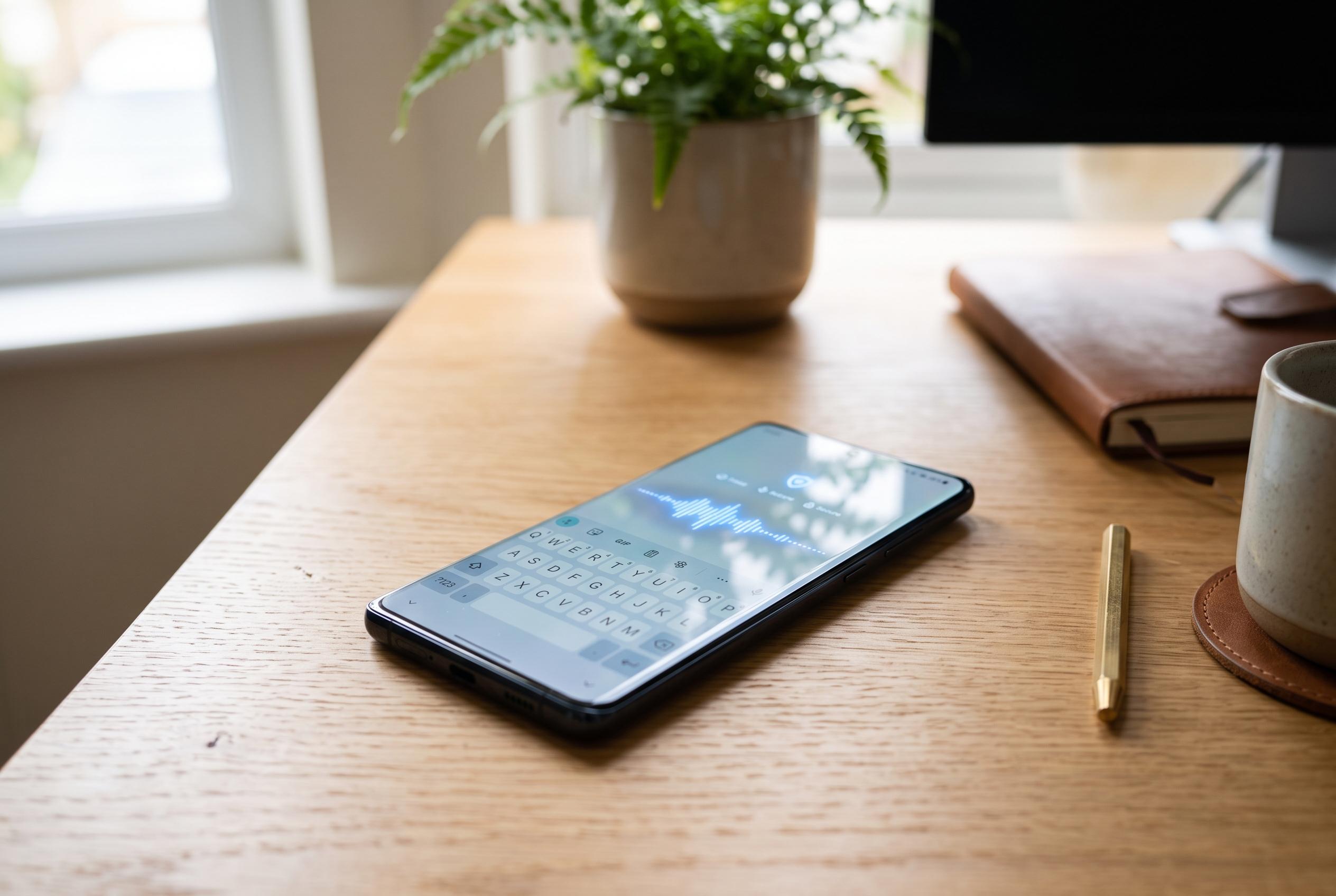

The dominance of Gboard faces new challenges from market segments prioritising offline privacy, customisation, and advanced voice transcription, reshaping user expectations on Android devices.
The strongest challenge to Gboard in 2026 is not a single app claiming to beat it at everything, but a broader shift in what Android users now expect from a keyboard. Recent reporting suggests the market has split into distinct camps: Google still holds the advantage in voice dictation, particularly on Pixel phones; Microsoft SwiftKey has become the more compelling productivity tool for people who want deeper layout control and better clipboard handling; and FUTO has emerged as the most credible privacy-led alternative because it keeps typing and speech processing on the device itself. (androidauthority.com)
SwiftKey’s case is clearest for heavy typists who move between a phone and a Windows PC. Android Authority reported that Microsoft’s keyboard goes well beyond cosmetic theming, offering options such as split layouts, extra cursor keys and clipboard syncing with Windows, while also making its Copilot features easier to ignore than many of Google’s baked-in services. That does not make the decision straightforward. The same outlet said moving from Gboard “requires some time and adjustment” and argued that Google’s keyboard still suits users who rely on familiar predictive behaviour and tight integration with Google’s own tools. (androidauthority.com)
FUTO, by contrast, is gaining traction for doing less in the cloud, not more. Android Authority described it as the closest thing to a like-for-like Gboard replacement among open-source options, noting that its offline voice typing runs on a local Whisper-based model and that users can install larger models if they want better accuracy and have the storage and processing headroom. How-To Geek’s Bertel King, whose piece was syndicated by Yahoo Tech in August, said FUTO became attractive after months with Wispr Flow because it kept speech and typing data local. He also set out the trade-off plainly: FUTO works well for everyday messages and longer writing, but it can still stumble on unusual product names and remains a privacy-first compromise rather than a flawless transcription engine. (androidauthority.com)
That leaves Gboard in an awkward but still powerful position. Ben Schoon of 9to5Google argued in April 2024 that voice typing on the Pixel is “second to none”, praising its speed, accuracy and punctuation handling. Two years later he returned to the same point from another angle, writing that Gboard on Pixel is effectively a different class of experience from Gboard on other Android phones. On non-Pixel devices, he said, recognition is slower, punctuation support is weaker unless spoken aloud, and the overall dictation experience falls off noticeably. That helps explain why users who leave Gboard often complain less about the keyboard’s basic layout than about how uneven its best features feel across Android hardware. (9to5google.com)
Samsung’s keyboard sits in an even more difficult place. On paper it covers the modern essentials, including swipe typing, voice input, password-manager autofill, handwriting with the S Pen and Galaxy AI writing aids such as Chat Assist. In practice, independent reviews have been far harsher. Writing for 9to5Google in February 2024, Schoon said Samsung Keyboard was “very bad”, singling out autocorrect that re-applies corrections after the user fixes them, an unintuitive route into caps lock, weak swipe recognition and voice dictation so poor that he called it “a travesty”. His April comparison piece did not soften that view, arguing that Samsung’s default keyboard remains well behind Gboard even before Pixel-specific dictation advantages come into play. (9to5google.com)
That criticism matters because Samsung ships more Android handsets than any other brand, so for many users its keyboard is the first typing experience they get. Schoon argued that simply installing Gboard on a Galaxy phone fixes most of Samsung Keyboard’s daily frustrations, even if it does not deliver the full Pixel-grade dictation stack. In other words, Samsung’s best argument is no longer that its keyboard is superior on typing quality, but that it is deeply tied into One UI and Samsung hardware features. For users who depend on S Pen handwriting or system-level Galaxy tools, that integration still counts for something. For everyone else, the wider Android ecosystem now offers too many credible alternatives for Samsung to rely on default status alone. (9to5google.com)
Another lesson from the past year is that better Android dictation may not come from switching keyboards at all. In April 2026, 9to5Google highlighted Wispr Flow, an AI transcription app that sits as a floating button or pop-up above existing keyboards rather than replacing them. Schoon said it handled punctuation and context unusually well, while warning that users still had to trust the app’s privacy claims, including a “Private Mode” that says data stays on the device. That sits neatly alongside Bertel King’s account of using Wispr Flow for its transcription quality before moving to FUTO for stronger privacy guarantees. The direction of travel is clear: speech input is becoming its own software layer, separate from whichever keyboard happens to sit underneath. (9to5google.com)
Taken together, these reviews do not support a universal verdict that one keyboard has finished off Gboard for good. They point instead to a more segmented market. If voice dictation is the priority, Gboard on Pixel still sets the benchmark. If workflow, layout flexibility and cross-device clipboard tools matter most, SwiftKey remains the most practical rival. If privacy and offline processing are non-negotiable, FUTO has matured into a serious everyday option rather than an enthusiast’s experiment. The weakest position belongs to Samsung, whose keyboard still appears to depend more on ecosystem lock-in than on excellence at the basic act of typing. (androidauthority.com)
Disclaimer: This content is intended for informational purposes only. Readers are advised to exercise their own judgement, conduct due diligence, or consult a qualified expert before acting on any information provided.