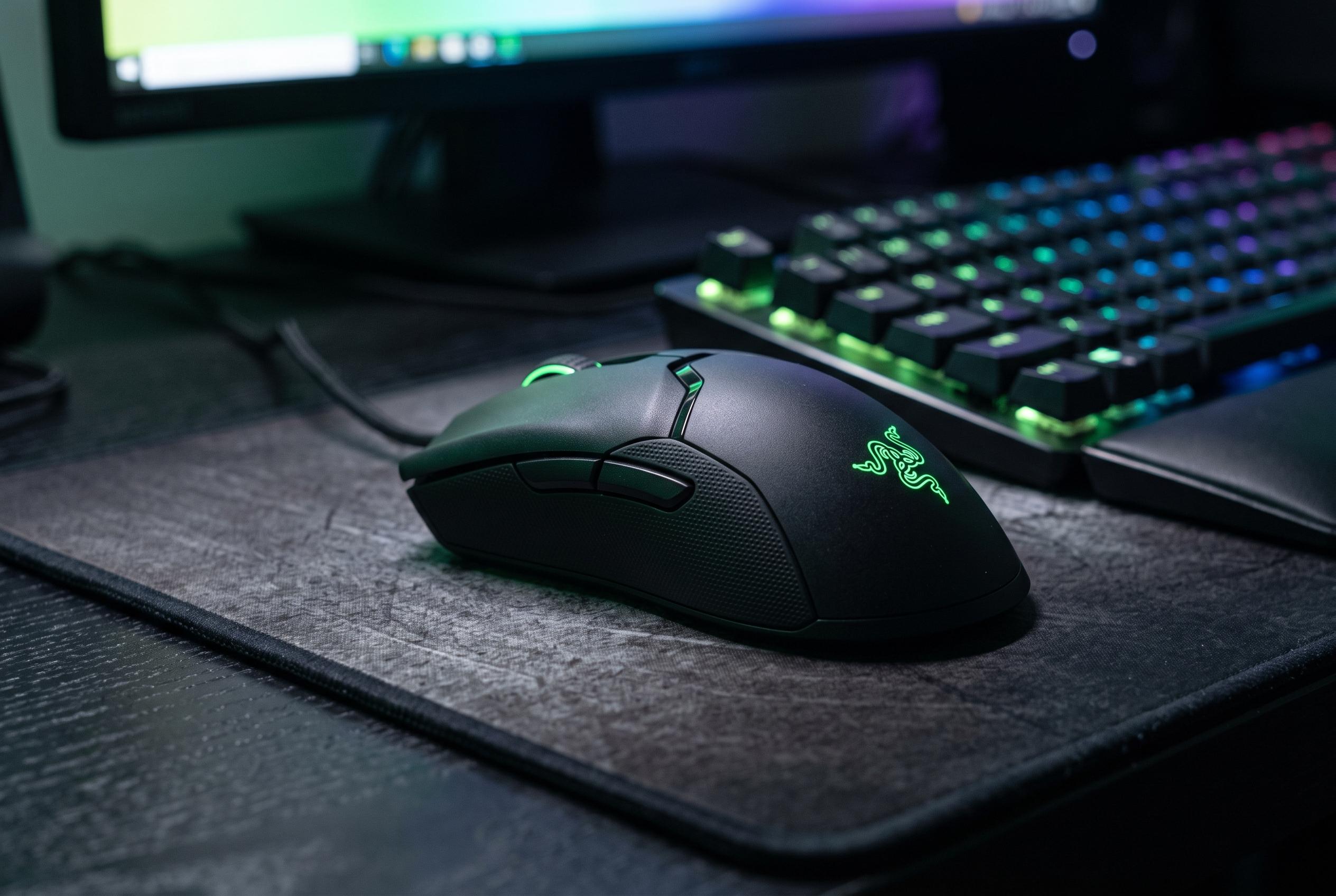

Razer’s Cobra HyperSpeed emerges as a versatile wireless gaming mouse, but its high price and optional upgrades spark debate over value and targeted user base in a competitive market.
Razer’s Cobra HyperSpeed appears to have found a narrow but real place in the gaming-mouse market: it is small, fast enough for most players and notably better specified than entry-level models, yet a series of paid add-ons leaves reviewers questioning whether its $99.99 / £99.99 price is truly mid-range. Across specialist testing, the strongest consensus is that this is a capable all-round wireless mouse whose headline appeal is undermined by the fact that its most enthusiast-friendly feature, 8,000Hz polling, is not included in the box.
That tension runs through the entire product. Razer introduced the Cobra HyperSpeed on 22 July 2025 as the newest member of its Cobra line, positioning it between the simpler wired Cobra and more expensive premium options. Reviews from PC Gamer, RTINGS and GamesRadar+ broadly agree on the hardware brief: a 62g wireless mouse with a compact, low-profile, symmetrical shell intended for right-handed use. The shape is repeatedly described as better suited to claw and fingertip grips than to a full palm grip, particularly for people with larger hands, which means its appeal is strong but not universal.
On paper, however, the specification is competitive. Razer says the mouse uses its Focus X 26K optical sensor, rated at up to 26,000 DPI and 99.6% tracking accuracy, alongside Gen-4 optical switches rated for 100 million clicks. The company also highlights an optical scroll wheel, four-zone Chroma RGB lighting, nine programmable controls and onboard memory for up to five profiles. Those details matter because several reviewers treated the Cobra HyperSpeed less as a stripped-down budget device and more as a deliberate blend of gaming performance and broader desktop versatility.
Where the reviews begin to diverge is in how much that blend is worth. WIRED was the most enthusiastic, scoring the mouse 9/10 and describing its sensor performance as precise and snappy in games including Counter-Strike 2 and Helldivers 2. RTINGS also judged it highly on build quality and general responsiveness. PC Gamer was more cautious, arguing that the Cobra HyperSpeed makes sense as “a gaming mouse for the rest of us” rather than as a pure esports tool. That distinction is important: this is not the lightest, fastest or cheapest mouse in its bracket, but it may be one of the more rounded.
Several smaller design choices help explain that view. WIRED reported that the less slippery feet were intentional, quoting Razer’s director of product development, Ayush Sharma, as saying that average players prefer “slightly more friction” for control. The same review also noted that the internal layout is relatively simple, with a single-sided circuit board and a battery mounted to a removable upper shell, making repair more straightforward than on some sealed rivals. Windows Central added another practical detail: the underside includes a compartment for the HyperSpeed dongle that also serves as the location for the optional wireless charging puck.
The main objection, though, is cost once the extras are counted. PC Gamer, GamesRadar+ and Windows Central all stress that the bundled wireless receiver supports only 1,000Hz polling. To reach the advertised 8,000Hz, buyers must add either Razer’s HyperPolling Wireless Dongle or the Mouse Dock Pro. GamesRadar+ argued that this weakens the value proposition because cheaper competitors, including the $69.99 Keychron M7 8K and $79.99 NZXT Lift Elite, offer high polling rates without an extra purchase. PC Gamer similarly pointed to Corsair’s Sabre V2 Pro as a stronger-value alternative for buyers who care more about raw gaming performance than Razer’s ecosystem features.
That criticism becomes sharper because one of the Cobra HyperSpeed’s most visible additions is not a gaming control at all. Windows Central says the extra button behind the scroll wheel is mapped by default to Razer’s AI Prompt Master, while GamesRadar+ described the feature more bluntly as a shortcut to ChatGPT inside Synapse. Both publications note that the button can be remapped, which softens the complaint, but its default role still illustrates the mouse’s split identity. Razer appears to be selling not just an FPS mouse, but a crossover device intended to move between play, work and software-driven convenience features.
RTINGS goes further, arguing that the mouse occupies an awkward position precisely because its shape evokes something more focused. The site says many enthusiasts regard it as a possible spiritual successor to the original Viper Mini, a mouse remembered for strong value and a well-liked compact shape. Yet the Cobra HyperSpeed arrives with RGB underglow, an AI shortcut and a price that places it against lighter and sometimes faster rivals. RTINGS also contrasts it with the DeathAdder V3 HyperSpeed, which is lighter and shaped for palm or claw users, while the Cobra remains the smaller, symmetrical option for players who prefer a flatter body.
Taken together, the evidence suggests that the Cobra HyperSpeed is easiest to recommend to a specific kind of buyer: someone who wants a compact Razer mouse with Bluetooth, optical components throughout, modest RGB and a path to future upgrades such as wireless charging or faster polling. For everyone else, the market has harsher questions ready. If value is the deciding factor, several reviewers found better answers elsewhere. If balance is the priority, the Cobra HyperSpeed comes much closer to justifying itself.
Disclaimer: This content is intended for informational purposes only. Readers are advised to exercise their own judgement, conduct due diligence, or consult a qualified expert before acting on any information provided.