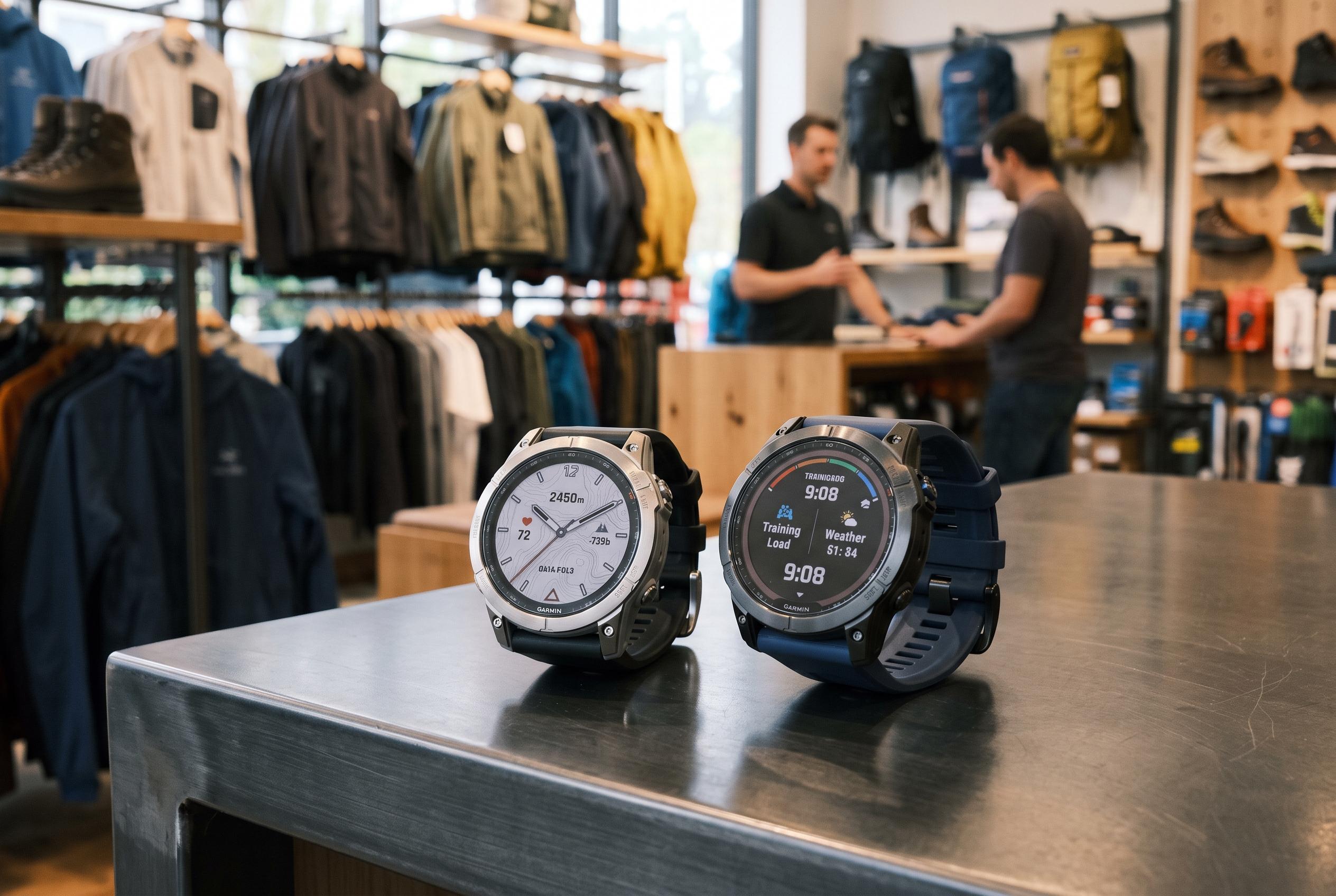

Garmin has unveiled its latest Fenix 9 and Fenix 9 Pro models, introducing a strategic split between mainstream and premium tiers, with significant hardware upgrades, enhanced connectivity, and new endurance tools aimed at performance enthusiasts.
Garmin has brought its latest outdoor watch line to market with a more deliberate split between the mainstream and premium tiers. Orders for the fēnix 9 and fēnix 9 Pro opened on 28 August, with US pricing starting at $999.99 for the standard model and $1,099.99 for the Pro; in the UK, the entry prices are £859.99 and £949.99. Just as notable, Garmin abandoned its habit of spacing out standard and Pro refreshes, choosing instead to launch both generations together. (garmin.com)
The Pro models carry the clearest hardware changes. Garmin says they are the first fēnix watches to use a titanium case, a move intended to make the watch feel lighter and more refined without giving up the rugged build expected of the range. Wareable and Garmin’s own launch material say the Pro display now reaches 3,000 nits, while the 51mm version gets a 1.5-inch AMOLED panel, the largest screen yet on a fēnix and about 15% larger than the Fenix 8 equivalent. The omission is also important: unlike the previous generation, there is no MicroLED option in this cycle. (wareable.com)
The standard fēnix 9 is less visually dramatic, but it is not a minor update. Tom’s Guide and Android Central reported that Garmin has doubled AMOLED brightness compared with the Fenix 8, while retaining a sapphire lens and adding leakproof buttons and 40-metre dive resistance. The watch comes in 43mm, 47mm and 51mm sizes, with Garmin claiming up to 10 days of battery life in smartwatch mode for the smallest model, 16 days for the 47mm and 29 days for the 51mm. (tech.yahoo.com)
Connectivity is where Garmin is pushing the Pro tier hardest. The company says fēnix 9 Pro models include built-in satellite and LTE capability for voice, text and SOS use directly from the wrist, and Wareable reported that those options now extend across all three case sizes. Battery claims also widen the gap: the largest AMOLED Pro is rated for up to 31 days in smartwatch mode, while solar versions stretch to 57 days under Garmin’s stated charging assumptions. Tbreak’s UAE pricing underlines how narrowly Garmin has positioned the step up, with the Pro starting at AED 4,459 against AED 4,259 for the base watch. (garmin.com)
For regular users, the more meaningful change may be navigation performance rather than case material. Android Central reported that Garmin has increased RAM by 50% over the Fenix 8 and introduced a new map engine that makes panning up to 30% faster. Storage has risen to 64GB, which Garmin and several reviewers say doubles offline map capacity and leaves room for around 7,000 songs. A new perspective view is meant to show terrain more clearly across different distances, turning the watch into a more usable offline mapping device rather than simply a tracker with maps attached. (androidcentral.com)
Garmin is also trying to make multi-day training and expedition data more coherent. Its new Garmin Epic feature, which the company says is free on both models, gathers activities recorded over days, weeks or months into a single shareable summary inside Garmin Connect. Garmin’s own description focuses on turning separate workouts or stages of a trip into one story, while Tbreak and The5krunner say the feature can pull in health data, performance highlights and photos. Alongside that, Garmin has added stamina zones and a stamina curve, intended to show how endurance changes over time and to make pacing decisions less guesswork-driven. (garmin.com)
Some of the more specialised additions sit beyond the main launch talking points. Garmin separately announced ArcheryX, a new smartwatch activity for compound-bow archers that tracks shot execution timing and movement to help improve consistency. The5krunner also highlighted a wider spread of niche additions, including expanded rowing metrics and smaller feature changes that were easy to miss in the initial rollout. For rowing, Garmin says users can now see measures such as VO2 max and power curve, though The5krunner noted that FTP and some deeper data depend on a power-meter-equipped machine. Rucking has also been expanded, with Android Central reporting support for changing pack weight mid-activity, GORUCK workouts and targets based on loads of up to 100kg. (garmin.com)
Taken together, the new range suggests a more pragmatic Garmin strategy rather than a flashy one: brighter AMOLED screens instead of another MicroLED push, quicker mapping, more specific endurance tools and a Pro model that is more clearly differentiated by materials and communications. Susan Lyman, Garmin’s vice-president of consumer sales and marketing, said the watches are “purpose-built for those who want to perform better and venture farther”. The claim is familiar corporate language, but the product decisions behind it are more concrete, including Wareable’s observation that the new Pro arrives $100 below the launch price of last year’s Fenix 8 Pro. (garmin.com)
Disclaimer: This content is intended for informational purposes only. Readers are advised to exercise their own judgement, conduct due diligence, or consult a qualified expert before acting on any information provided.