
The Whoop MG, launched as a hardware update and part of a subscription-based health platform, aims to redefine wearable focus from activity tracking to recovery, sleep, stress, and longevity, amidst market and subscription challenges.
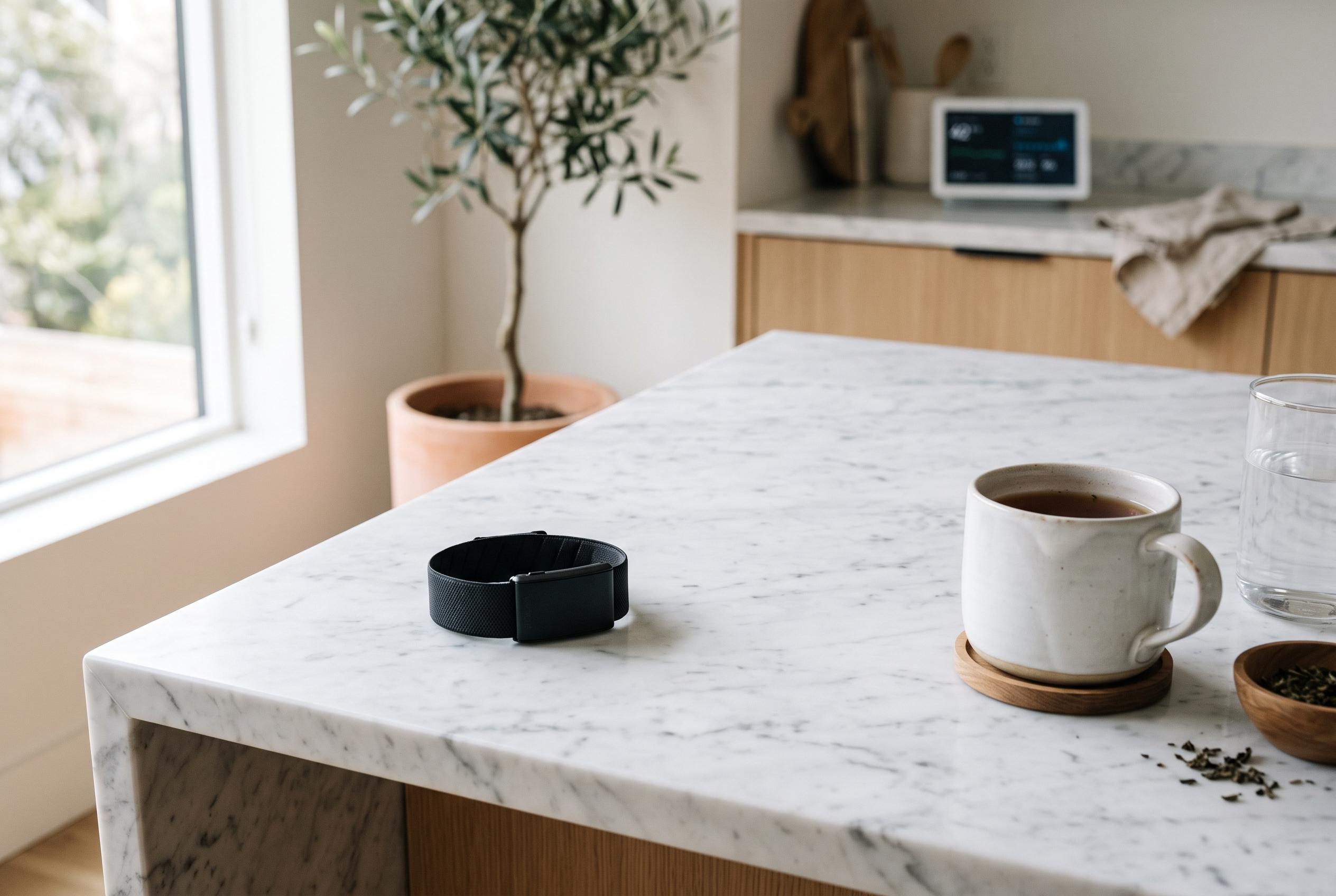
The Whoop MG is trying to turn recovery into the main event. The screenless band does not attempt to rival a running watch on pace, mapping or on-wrist controls; instead, it is sold through Whoop Life, the company’s highest membership tier, and is designed to keep tracking when a workout has ended. That makes it a different proposition from most wearables: less about what happens during a run, and more about sleep, stress, strain and cardiovascular signals gathered over the rest of the day.
When Whoop launched the 5.0 and MG in May 2025, it presented them as a substantial hardware update rather than a routine refresh. Forbes reported that the new devices were 7% smaller, 10 times more power-efficient and 60% faster in processing, with sensors capturing data 26 times a second. The Irish Times said battery life was about 14 days per charge, while a wireless power pack could extend practical use to roughly a month. Announcing the range, founder and chief executive Will Ahmed said: “We’ve taken everything we’ve learned over the past decade and built a platform to help our members perform and live at their peak for longer.”
The product line was also reorganised around memberships rather than a straightforward hardware sale. Tom’s Guide reported that Whoop One launched at $199 or £169 a year and included the 5.0 band, recovery, sleep and strain metrics, plus features such as VO2 max, heart-rate zones, steps, cardiovascular strain and musculoskeletal load. Above that came Peak, which added broader health monitoring and stress tools. Life, the top tier, bundled the MG hardware and the features that make the device different: on-demand ECG readings, blood-pressure insights and irregular heart-rhythm notifications where regulations allow them.
The most ambitious software addition was Healthspan, an attempt to package long-term health into a consumer score. Forbes said the feature estimates a user’s physiological age from nine biomarkers, including sleep duration, sleep consistency, steps per day, average heart rate, time spent in heart-rate zones and VO2 max. The algorithm was developed with the Buck Institute for Research on Aging; the Irish Times said the work was linked to Dr Eric Verdin, the institute’s chief executive. Whoop calls the outputs “WHOOP Age” and “Pace of Aging”, shifting the platform beyond daily readiness towards a broader longevity pitch. Forbes also reported that the company introduced Women’s Hormonal Insights, designed to relate hormonal changes to recovery, sleep, stress and performance, with settings that can be personalised by contraceptive use.
The MG’s medical claims, however, come with important limits. Whoop’s own launch materials said Heart Screener can take an ECG from the wrist, while the Irish Times reported that the feature is intended to detect signs of atrial fibrillation and alert wearers to irregular rhythms. Blood Pressure Insights work differently: users first calibrate the system with a standard cuff, after which the band provides estimated systolic and diastolic readings. Whoop says those readings are for insight rather than diagnosis. The company also states that ECG is a medically regulated feature, is not available in every market, and is not intended for users under 22 or for some people with implanted cardiac devices.
That distinction matters because Whoop is ultimately selling a service model, not simply a tracker. Tom’s Guide noted that the MG was available from launch day, but only through the Life subscription. Whoop’s launch announcement priced that tier at $359 a year in the United States and £349 in Britain, with the less expensive tiers tied to the standard 5.0 hardware. In other words, the most heavily promoted health functions are not add-ons to a basic band; they are the reason to pay for the highest tier in the first place.
That business model became the company’s biggest problem within days of launch. Bloomberg reported that Whoop faced subscriber backlash after initially telling existing members they would need either to pay a $49 upgrade fee, or $79 for the MG version, or extend their subscriptions to get the new hardware. The company then reversed part of that policy. TechCrunch reported that members with more than 12 months remaining would receive a free Whoop 5.0 upgrade or a refund if they had already paid, while those with less than 12 months left could extend in order to upgrade. In a statement quoted by TechCrunch, the company added: “We also want to acknowledge that a previous blog article incorrectly stated that anyone who had been a member for just 6 months would receive a free upgrade. This was never our policy and should never have been posted.” Bloomberg treated the episode as a trust problem as much as a pricing dispute.
Taken together, that leaves the Whoop MG in a precise but narrow category. The hardware is smaller and more capable than the previous generation, the software goes well beyond basic fitness logging, and the heart-health tools give the band a distinctive position in a crowded market. Yet the appeal depends on whether a runner wants a second device that interprets recovery, sleep and stress, rather than another watch that displays pace and route data. For athletes already covered on navigation and training metrics, the MG makes a coherent case. For everyone else, the real question is whether those extra layers of health analysis are useful enough to justify a premium subscription year after year.
Disclaimer: This content is intended for informational purposes only. Readers are advised to exercise their own judgement, conduct due diligence, or consult a qualified expert before acting on any information provided.