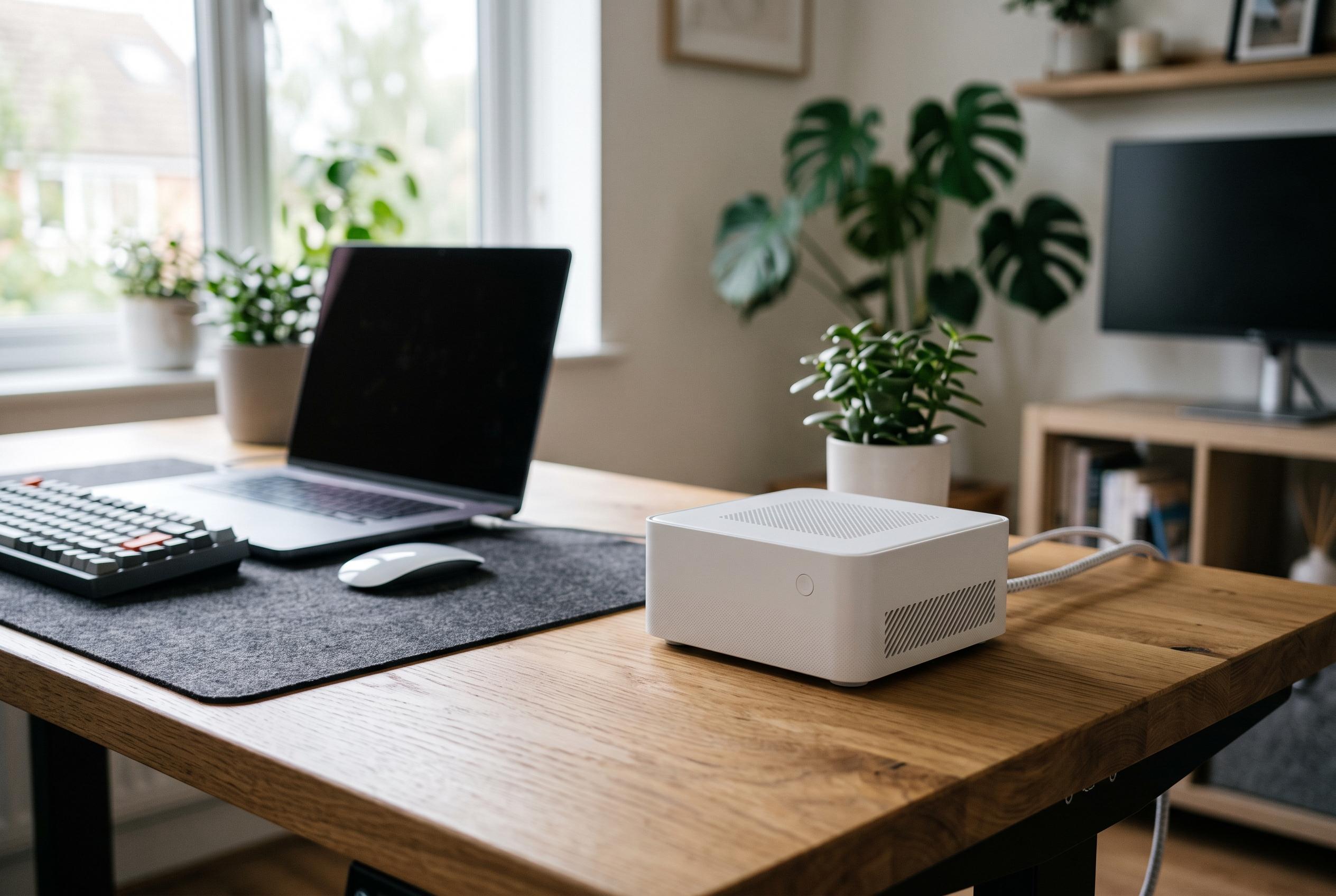

A widely advertised deal on the Acemagic K1 mini PC in the US raises questions over inconsistent specifications and the lingering shadow of malware incidents linked to the Chinese manufacturer, urging cautious purchasing decisions.
An Acemagic K1 mini PC has been pushed into mainstream US deal coverage at about $430, but the discount comes with two complications that matter more than the headline price. One is basic product clarity: the public descriptions of the K1 do not fully match. The other is trust: Acemagic is still living with the consequences of a 2024 malware incident whose full scope was never publicly quantified.
PCWorld’s deals roundup, updated on 31 August 2026, listed the Acemagic K1 at $430, described it as 26% off, and presented it as a compact productivity machine with triple 4K display support, 16GB of RAM and a 512GB SSD. That is not the same specification as some other K1 listings now circulating under the same product name. For shoppers, the immediate practical point is simple: before treating the K1 as an unusually cheap office desktop, check the exact processor, memory configuration and storage in the live listing rather than relying on the model name alone.
The reason that caution extends beyond ordinary deal-hunting is well established in earlier reporting. Tom’s Hardware reported in February 2024 that Jon Freeman of The Net Guy Reviews found malware on an AceMagic AD08 mini PC supplied through Amazon’s fulfilment network. Windows Defender flagged suspicious files in the recovery partition, and Tom’s said the executables ENDEV and EDIDEV were tied to the Bladabindi and Redline malware families. The publication added that VirusTotal showed 50 security vendors marking the files as malicious. TechSpot separately reported that Freeman said similar problems appeared on the AD15 and S1 models, also sold on Amazon.
Risky Biz later added that the malicious code had been found not only in the Windows recovery section but, in some cases, in the RGB lighting driver as well, making a normal factory reset an unreliable fix. It said the findings were later corroborated by The Gadgeteer, other reviewers and some customers. TechSpot identified AceMagic as a brand operated by Shenzhen Shanminheng Technology, which meant the problem was not an isolated marketplace seller incident but a supply-chain failure attached to a named manufacturer selling into the US market.
Acemagic’s own account, published on PR Newswire on 27 February 2024, said the problem affected a “specific batch of mini PCs” made before November 18, 2023. The company said developers had altered software to reduce boot times, and that those changes affected network settings and omitted digital signatures. It offered full refunds and return shipping for products made between September and November, said customers who kept affected systems could receive compensation of up to 25% of the order price, and promised a minimum 10% discount on a later purchase after verification. Risky Biz reported that Acemagic said most of the affected machines had been sold in Europe and the US.
That response did not answer the central question of scale. Tom’s Hardware said Acemagic had not issued a recall and that it remained unclear how many compromised systems had reached customers. The same report suggested the weakness may have stemmed from outsourced Windows images and advised anyone still running an original AceMagic installation to scan the system. Risky Biz also noted that the company never published a definitive list of affected models, even though public comments had already linked the incident to several product lines. The public record therefore supports a limited-batch explanation, but not a fully audited one.
A separate issue, raised in the Federal Register rather than in product reviews, concerns the legal environment around any Shenzhen-headquartered hardware maker. A US government analysis published there said China’s 2021 Data Security Law makes private data available to the state when required for “national security”. It also said the 2017 National Intelligence Law places entities under Chinese jurisdiction under an affirmative duty to cooperate with intelligence agencies, and that Chinese officials can compel firms to provide data, logical access, encryption keys and other technical information, as well as require the installation of “backdoors or bugs”. That does not show that today’s K1 machines are compromised, but it does describe a statutory risk framework that corporate assurances cannot remove.
Set against all of that, the K1 still has an obvious commercial appeal. PCWorld’s listing shows why it surfaces in bargain roundups: for buyers who simply want a small Windows desktop for office work and multiple displays, $430 is a low entry point. Yet this is not a straightforward value story. The inconsistent K1 specifications now visible in public listings, the documented malware episode, the absence of a public recall and the wider legal exposure attached to a China-based vendor turn the purchase into a judgement about acceptable risk. Anyone proceeding should verify the exact hardware in the live offer, assume nothing from the box name alone, and replace the factory software with a clean Windows installation before using the machine on a home or office network.
Disclaimer: This content is intended for informational purposes only. Readers are advised to exercise their own judgement, conduct due diligence, or consult a qualified expert before acting on any information provided.