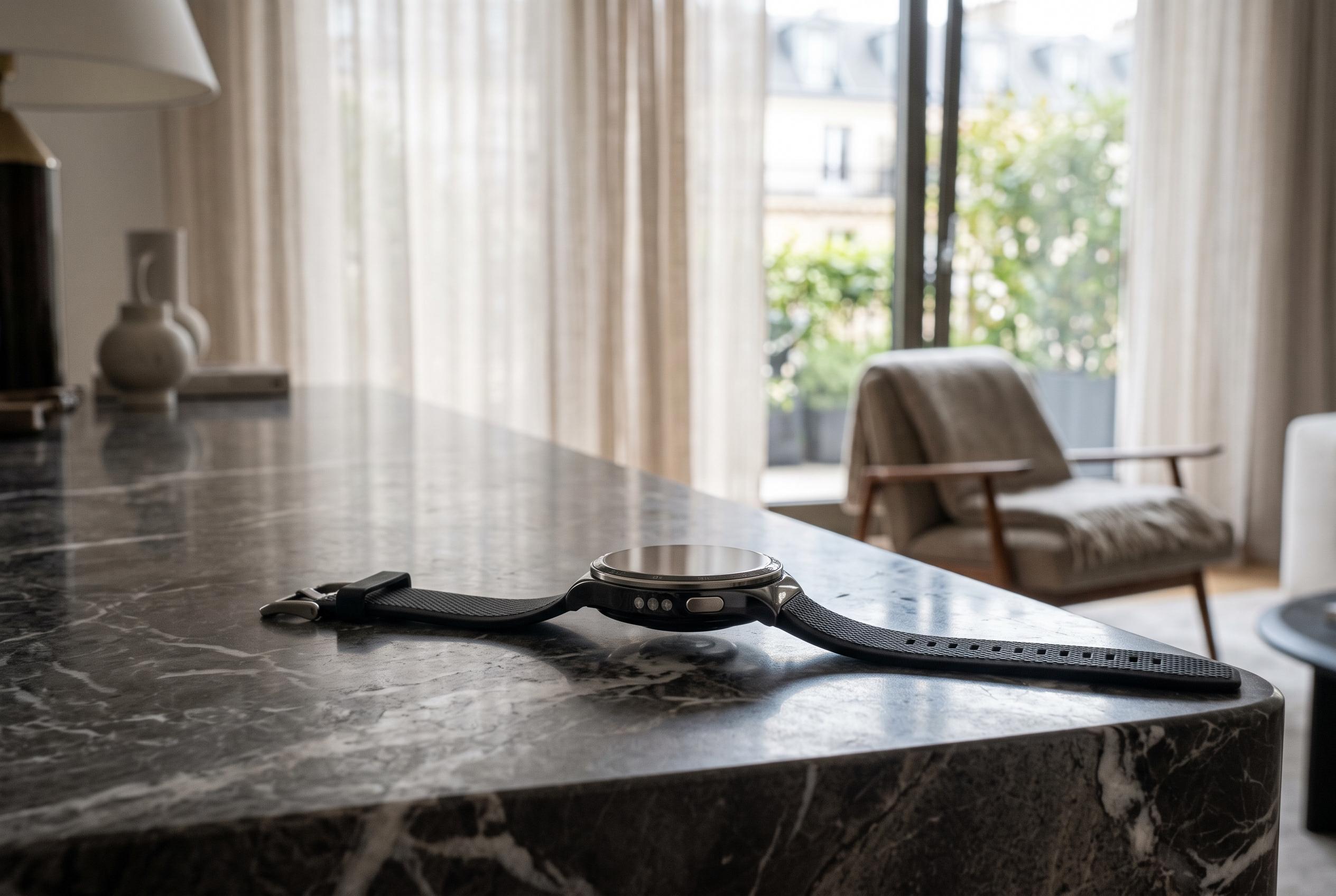

Huawei reintroduces the Watch 6 in Europe, showcasing a high-end smartwatch focused on health, self-sufficiency, and sophisticated materials, challenging rivals from Google and Samsung amidst a resurgence of the brand’s presence on the continent.
Huawei has brought the Watch 6 back to Europe after a one-year absence, using its “Chase the Wild” launch event at SHOWPALAST Munich on 2 September to reintroduce the line before UK sales begin on 23 September. The regular Watch 6 will start at £399.99 in Britain, while the Watch 6 Pro starts at £599.99. Tech Advisor and Gizmochina both reported a £50 introductory discount running until 26 October, with sales through Huawei’s own store and Amazon. (prnewswire.com)
Huawei is positioning the device as more than a design-led refresh. Its press material describes the Watch 6 as an “all-round smart flagship” built around independent calling, navigation and payment functions, alongside a broader health and fitness push. That matters because the watch is being aimed squarely at premium rivals from Google and Samsung, yet it continues to run Huawei’s HarmonyOS rather than Wear OS. The standard model comes in 42 mm and 46 mm sizes, while the Pro is offered in 43 mm and 46 mm versions; Tech Advisor said the smaller Pro is a new Ceramic Edition with 18K gold accents, while PhoneArena reported that the larger Pro uses titanium alloy. (prnewswire.com)
On hardware, Huawei has split the range quite sharply by size and material. Specification listings show the 42 mm Watch 6 at 42.3 x 42.3 x 10.2 mm and 38 g without the strap, while the 46 mm version measures 46.4 x 46.4 x 10.9 mm and weighs 60 g. The smaller model uses an aluminium alloy front case; the larger standard model moves to stainless steel and a spherical sapphire crystal. Gadgets & Wearables lists 1.38-inch and 1.5-inch LTPO 2.0 AMOLED displays, both at 466 x 466 resolution, with peak brightness up to 3,500 nits. The watch is also rated to 5 ATM and IP69, with freediving support to 40 metres under EN 13319. (gadgetsandwearables.com)
The most important upgrade appears to be the X-TAP sensor system on the side of the case. PhoneArena reported that Huawei has doubled tactile pressure sensitivity from 10 to 20 levels and expanded the underlying optical PPG array from four channels to 12, changes intended to pick up weaker pulse-wave signals and improve cardiovascular assessment. Huawei’s launch material says the watch supports hypertension, diabetes and coronary heart disease risk studies, including work developed with Peking Union Medical College Hospital, the United Arab Emirates and Dubai Health. There is, however, some inconsistency in Huawei’s launch messaging. Tech Advisor said X-TAP now summarises 11 metrics across four categories, while PhoneArena described a 14-metric Health Glance completed in 60 seconds. Huawei’s own press release also cautions that Health Glance, Health Insights and Healthy Living are not intended for medical diagnosis or treatment. (phonearena.com)
Beyond health, Huawei is trying to make the Watch 6 a more self-sufficient device. The company says the line supports calling, navigation and payments from the wrist, while Tech Advisor added that contactless transactions are handled through Curve Pay. PhoneArena reported eSIM support and dual-phone connectivity, saying the watch can stay linked to two smartphones across Android and iOS. Fitness remains a major selling point: Tech Advisor said there are more than 100 workout modes and AI-driven workout analysis, while PhoneArena added that the Pro model inherits an Expedition app with offline colour maps, waypoint logging, compass tools and track-back routing. Gesture controls are also expanding, with reports of a wrist-rotation shortcut for one-handed navigation and a 90-degree wrist flip to mute calls, plus a double-pinch gesture to confirm actions. (prnewswire.com)
Battery life remains one of Huawei’s stronger arguments against Wear OS watches. Technical listings put the 42 mm Watch 6 at up to three days of typical use in standard mode, or two days with always-on display enabled, while the 46 mm model is rated at 4.5 days typical and three days with always-on display. In battery-saver mode, those figures stretch to a quoted seven days maximum on the 42 mm model and 11 days maximum on the 46 mm version. Gadgets & Wearables lists wireless fast charging, and Huawei is shipping the range as part of a wider flagship push that also included the Watch D3 blood-pressure model at the Munich event. (gadgetsandwearables.com)
The launch had been telegraphed days earlier. Notebookcheck reported on 27 August that Huawei had already shown the Watch 6 in a teaser video ahead of the 2 September presentation, with gold, silver and black versions visible alongside the digital crown and X-TAP sensor. That preview also linked the smartwatch to the same Munich event used to unveil the Watch GT 7 range and the Watch D3. Interestingly, Notebookcheck noted that a titanium bracelet version did not appear in the teaser, suggesting Huawei held back some of the more premium styling until the formal launch. (notebookcheck.com)
For buyers in the UK, the Watch 6 therefore arrives as a premium Huawei alternative rather than a direct clone of the Pixel Watch or Galaxy Watch formula. It offers stronger battery claims than many Wear OS competitors, more variation in case materials than the outgoing model, and a visibly heavier emphasis on wrist-based health screening. At the same time, the reliance on HarmonyOS means the buying decision will still turn on Huawei’s software ecosystem, payment support and app availability as much as on the watch itself. Tech Advisor reported that early UK purchases will also include a Worry-Free Care package covering the display, crown, back cover and battery for two years, plus a one-month Premium watch face subscription, reinforcing Huawei’s attempt to sell the Watch 6 as a full flagship package rather than a simple annual update. (techadvisor.com)
Disclaimer: This content is intended for informational purposes only. Readers are advised to exercise their own judgement, conduct due diligence, or consult a qualified expert before acting on any information provided.