
The battle between Google’s Fitbit Air and Garmin’s CIRQA reveals a shift towards specialised wellness and training devices, offering consumers distinct choices based on their health and fitness priorities.
The first serious head-to-head between 2026’s two most visible screenless fitness trackers suggests the cheaper device is not necessarily the simpler story. In a comparison highlighted by Geeky Gadgets from The Quantified Scientist, Google’s Fitbit Air came out ahead on sleep-stage detection and was slightly steadier during higher-motion exercise such as running and weight training, while Garmin’s CIRQA showed an advantage in resting heart rate and made a stronger case for buyers already committed to Garmin’s training ecosystem. That distinction matters because interest in the category is now broad enough to register beyond specialist reviewers: Tom’s Guide said 313 readers answered its recent poll, with Fitbit Air on 41% and Garmin CIRQA on 31%. (geeky-gadgets.com)
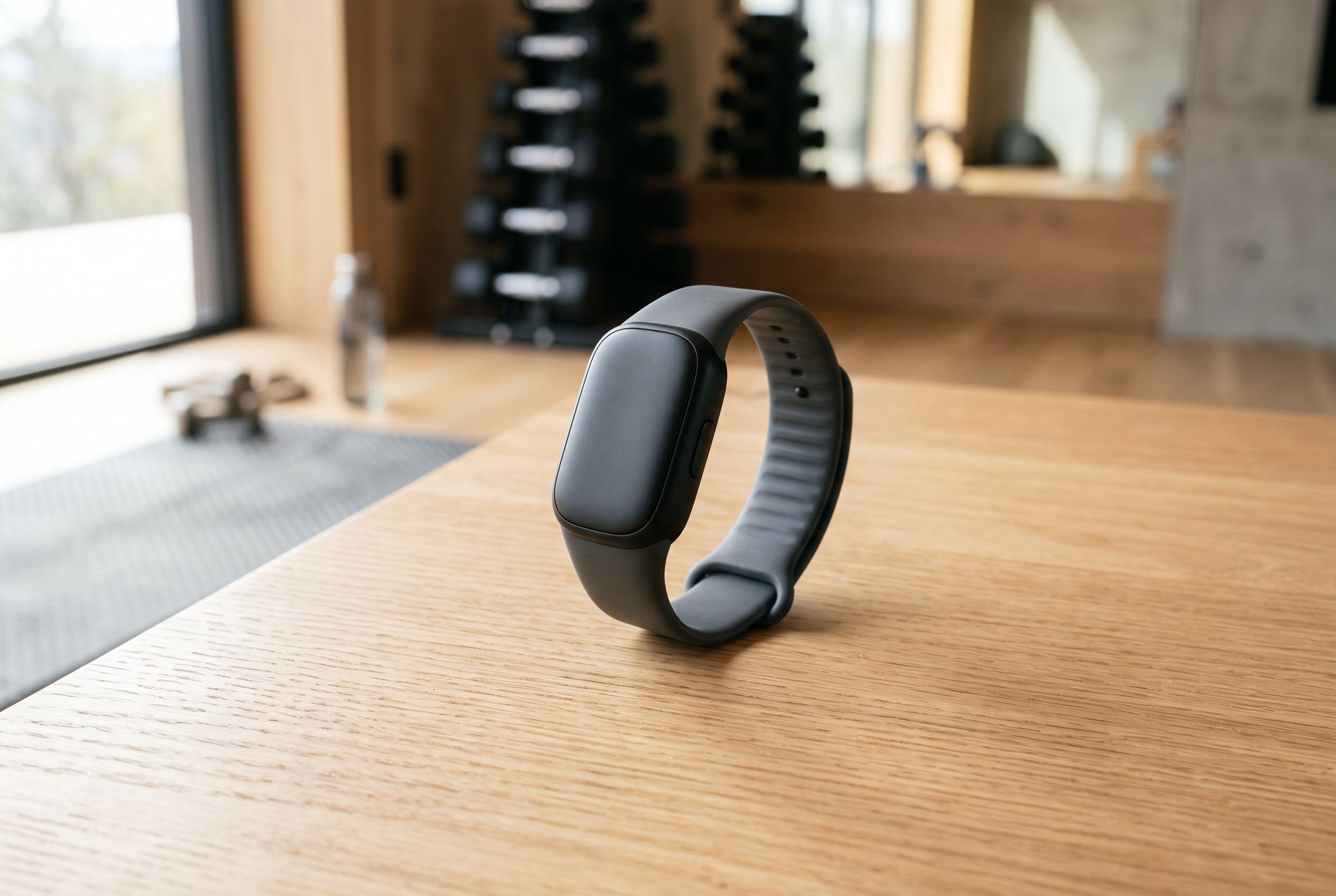
Google introduced the Fitbit Air on 7 May 2026 as its “smallest and most affordable tracker”, with pre-orders starting at $99.99 and a three-month Google Health Premium trial included. The company said it was built for people who find wearables too bulky, too complicated or too expensive, and pitched the device as a screenless, week-long tracker for round-the-clock monitoring through the Google Health app. Android Authority broadly agreed with that positioning, describing the Air as extremely comfortable, compatible with both Android and iOS, and easy to use alongside a Pixel Watch. But it also said the tracker has no onboard GPS, depends on connected GPS for mapped outdoor workouts and is aimed more at passive health monitoring than serious run training. (blog.google)
The clearest strength in the wider reporting is sleep. Google says the Air tracks sleep stages, resting heart rate, heart rate variability and blood oxygen, while Ars Technica noted that the tiny device carries many of the sensors expected in a higher-end smartwatch, including blood-oxygen and skin-temperature monitoring, though not ECG. Android Authority went further, saying the Air reliably separated genuine sleep from time spent awake in bed and calling it one of the best sleep trackers it had tested. Ars made a similar practical point, writing that even “fussy sleepers” should have little trouble wearing it all night because the tracker is so unobtrusive. (blog.google)
Garmin arrived later and at a higher price, but with a more explicitly athletic pitch. The company announced CIRQA on 21 July 2026 at $199.99, promising up to 10 days of battery life, no required subscription and continuous access to data through Garmin Connect. Garmin says the band can be worn on the wrist or upper arm, tracks more than 80 activities, uses a single side button for manual workout control and can borrow a phone’s GPS for outdoor route tracking. In a recent Forerunner 970 review, Cycling Weekly described CIRQA as the most compelling alternative for riders who mainly want Garmin’s sleep and wellness features without wearing a full sports watch around the clock. (garmin.com)
That specification gap helps explain why the two products are pulling in different directions. Wareable found CIRQA to be a sports-first device, built around training readiness, training status, workout benefit and Body Battery, all available without extra fees. The same review said Fitbit Air feels more wellness-led: lighter at about 12g against CIRQA’s 17g, easier to forget overnight and more approachable for users who care less about training vocabulary than about stress, readiness and basic health trends. Tom’s Guide framed the choice in similar terms, arguing that buyers were effectively deciding between Google’s cheaper screenless health hub and Garmin’s more integrated training platform, even though Fitbit was leading its reader poll. (wareable.com)
There is, however, no single critical verdict. The Geeky Gadgets summary of The Quantified Scientist’s testing said Fitbit had the edge during running and weightlifting, and that both trackers became more accurate when shifted from the wrist to the biceps. Wareable, after several weeks of use, reached a different practical conclusion and named CIRQA the better overall purchase because of longer battery life, more capable workout handling and subscription-free ownership. Android Authority was also careful not to oversell the Air as a performance device, saying its heart-rate accuracy was “good, but not great” and that the lack of built-in GPS limited its appeal for runners who do not want to carry a phone. (geeky-gadgets.com)
Software may prove the more divisive issue than sensors. Google has made the Air a showcase for its Health Coach, a Gemini-powered assistant tied to Premium, and Tom’s Guide said the paid coach was the best subscription service it had tested in this new tracker class. Ars Technica took a much cooler view, arguing that the assistant’s tone was too agreeable and its summaries too long-winded to justify the attention it demands. Android Authority was similarly sceptical, listing the coach as “overly chatty and optimistic” and saying the Google Health app still needs refinement. Garmin’s approach is less ambitious in AI terms, but several reviewers saw that restraint as part of its appeal: more raw training context, fewer nudges. (tomsguide.com)
Taken together, the reporting points to a clean split rather than a single winner. Buyers who want the lightest, cheapest route into constant health tracking, especially for sleep, have a strong case for Fitbit Air at $99.99. Those who already live inside Garmin Connect, want upper-arm wear treated as a first-class option, or place more value on recovery metrics and multi-sport logging than on app polish are more likely to accept CIRQA’s $199.99 price, or £179 in the UK. What looked at first like a simple Fitbit-versus-Garmin comparison is turning into something more useful: a choice between a wellness-first tracker and a training-first companion. (blog.google)
Disclaimer: This content is intended for informational purposes only. Readers are advised to exercise their own judgement, conduct due diligence, or consult a qualified expert before acting on any information provided.