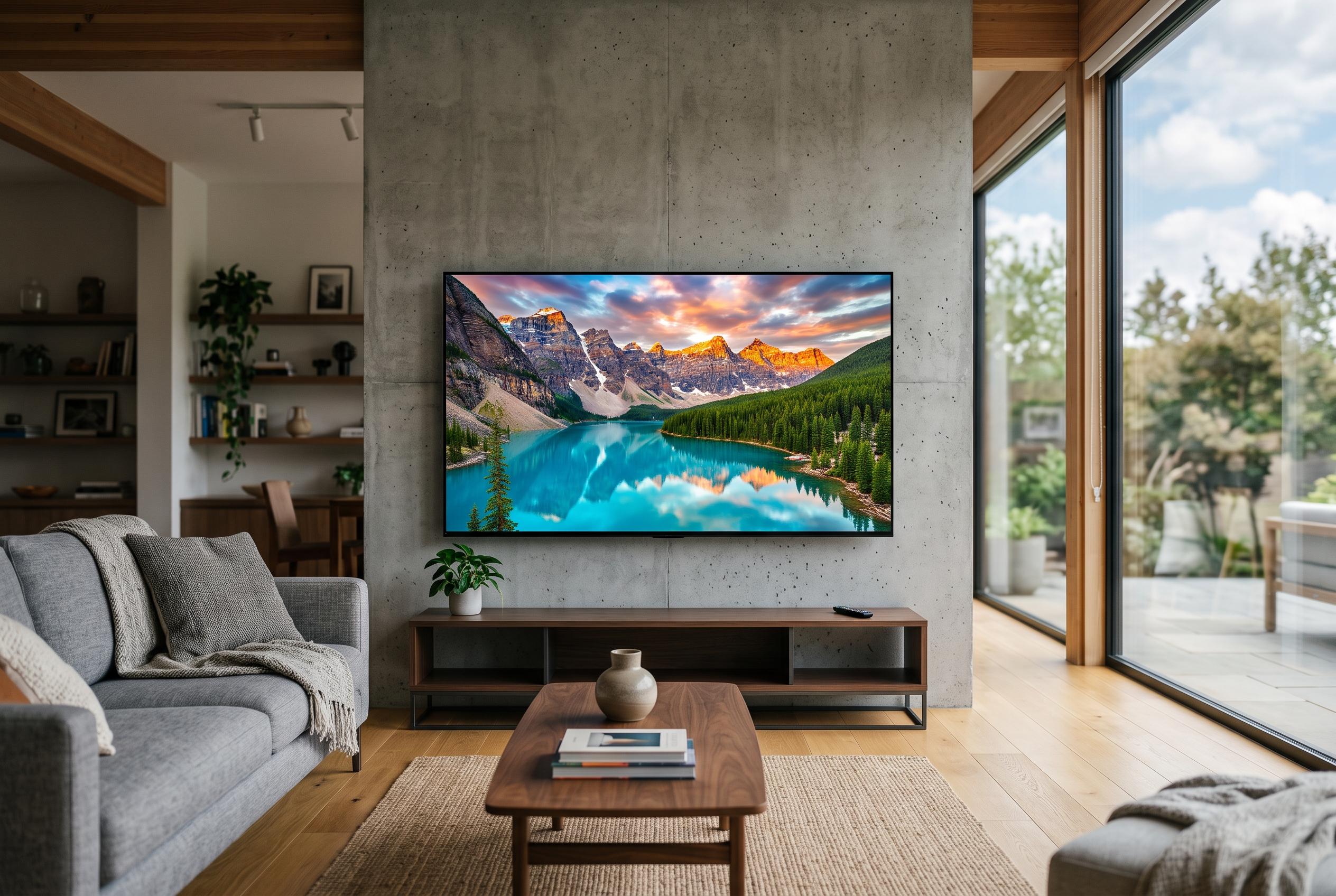

As 2026 unfolds, the premium TV landscape is increasingly defined by a fierce technological rivalry between RGB Mini LED and SQD Mini LED displays, reshaping consumer options and industry standards.
The clearest pattern in the premium TV market at the start of autumn 2026 is that LCD technology is no longer playing a supporting role to OLED. The most interesting sets now split into two camps: RGB Mini LED, backed by Sony and Hisense, and TCL’s rival SQD Mini LED approach. Read across the latest reviews, the Sony Bravia 7 II, Hisense UR9S and TCL X11L stand out not because they do the same job, but because each represents a different answer to the same question: how to deliver higher brightness and richer colour without giving up flagship ambitions. (wired.com)
That technology race matters because the engineering choices are now visible in real products, not just trade-show claims. WIRED said Hisense’s UR9 was the first RGB Mini LED set to reach the market, while AV Magazine traced Hisense’s commitment back to CES 2025 and described the UR9S line as the company’s first series designed for the mass market. TCL, by contrast, has deliberately kept its flagship on a quantum-dot-based path. What Hi-Fi? reported that the X11L uses Super QD rather than RGB Mini LED, with TCL arguing that the design can be slimmer, push more dimming zones and avoid the colour crosstalk that can affect RGB backlights. (wired.com)
On value, Hisense looks the most disruptive of the three. WIRED rated the 65-inch UR9 at 8/10 and priced it at $2,498 on Amazon or $2,200 at Best Buy, calling it a “brilliant, low-cost television” that reaches into territory normally occupied by more expensive Samsung, Sony and LG rivals. AV Magazine went further, saying the UR9S is the best Hisense TV it has tested so far and especially well suited to bright rooms. Its review also adds substance behind the claim: a VA panel, 1,056 local dimming zones, 3,168 RGB zones, a matte anti-reflection filter, and Dolby Vision 2 support promised through a future update. The trade-offs are familiar: a complicated remote, inconsistent picture presets and halos that become easier to spot from wider seating angles. (wired.com)
Sony’s Bravia 7 II looks more conservative, but also more polished in day-to-day use. TechRadar places it below the Bravia 9 II in Sony’s True RGB range and says the 65-inch model launched in July 2026 at $2,599 or £2,299, before dropping to $1,799 or £1,899 by the time of review. The publication measured 87.7% BT.2020 coverage and recorded input lag of 10.4ms at 4K 60Hz and 5.7ms at 1080p 120Hz, with support for 4K 120Hz, VRR, ALLM and Dolby Vision gaming. Those figures make it a serious gaming set, even if Sony still restricts buyers to two HDMI 2.1 sockets. (techradar.com)
Even so, the Bravia 7 II is not receiving unanimous praise. TechRadar said dark scenes can reflect the room “like a mirror” and noted that blooming remains visible when viewed off-centre. WIRED was more sceptical still, giving the set 6/10 and describing the overall results as a “mixed bag”. Its criticisms are less about laboratory performance than product execution: the single-piece Mirage Stand is meant to create a floating effect, but the transparent support was said to look foggy and too obvious, while the Google TV setup was slowed by a QR-code failure before the reviewer finally got the system running in about 10 minutes. (techradar.com)
TCL, meanwhile, is pursuing scale and spectacle. Tom’s Guide said the X11L starts at $6,999 for 75 inches, rises to $8,000 for the 85-inch version and reaches $9,999 at 98 inches, making it one of the most expensive TVs the site has tested. In return, buyers get a specification sheet that looks deliberately excessive: four HDMI 2.1 ports with 4K at 144Hz, an ATSC 3.0 tuner, eARC, Bang & Olufsen-tuned audio and a backlit remote rechargeable over USB-C. In testing, Tom’s Guide measured 2,679 nits of HDR brightness, 91.77% Rec.2020 coverage and 11.7ms of input lag, then said it had “officially crowned it the new king of color”. (tomsguide.com)
What Hi-Fi?’s hands-on account helps explain why TCL believes the X11L can justify that price. The publication said UK buyers should actually be able to purchase this flagship, unlike some top-tier TCL sets from 2025, and reported that TCL claims 10,000 nits of peak brightness and 20,736 dimming zones. It also said the X11L made a “strong first impression”, combining unusual slimness with striking contrast and surprisingly restrained haloing for such an aggressively bright LCD. Yet TCL’s own argument against RGB Mini LED carries an implicit warning for its flagship too: the company says Super QD prioritises brightness, zone density and thinness, while admitting that purer reds, greens and blues can still look richer on its separate RGB Mini LED models. (whathifi.com)
Taken together, the three sets suggest that premium LCD is now splitting into clear buyer profiles. Hisense is making the strongest value case and appears to have brought RGB Mini LED closest to the mass market. Sony is offering a more mainstream, gaming-friendly interpretation, but one that still looks expensive once its port limits and reflective screen are taken into account. TCL is aiming for outright theatre, with colour volume and brightness that push into statement-product territory, though at prices that move it far beyond the other two. The broader lesson is that 2026’s TV contest is no longer simply LCD versus OLED; it is increasingly RGB Mini LED versus SQD, with neither side yet free of blooming, off-axis compromises or pricing pressure. (techradar.com)
Disclaimer: This content is intended for informational purposes only. Readers are advised to exercise their own judgement, conduct due diligence, or consult a qualified expert before acting on any information provided.