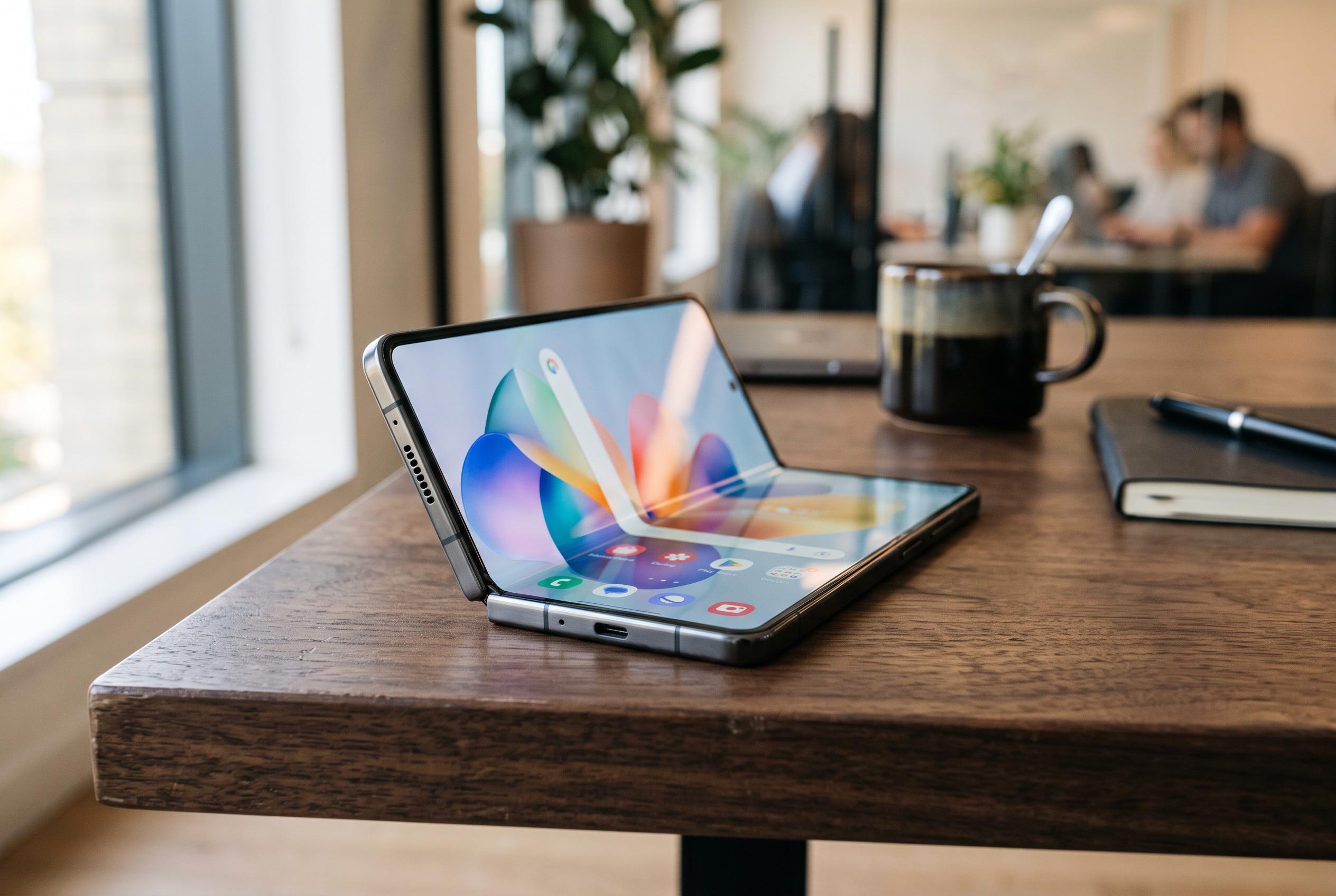

As Apple prepares to unveil its first foldable iPhone, industry experts highlight ongoing design trade-offs, including camera wobble and slim form factors, echoing similar issues faced by Android rivals.
Apple is three days away from a hardware event that could drag foldable phones back into the mainstream, but the category’s most stubborn design compromise has not gone away. Apple has formally scheduled its “Surprise and shine” presentation for Wednesday, 9 September 2026, and several rumour round-ups say its first foldable iPhone, widely referred to as the iPhone Ultra, is expected to appear alongside the iPhone 18 Pro range. If that happens, the device is likely to arrive with the same tension now shaping the rest of the market: manufacturers want ever thinner bodies, while cameras still need physical depth. (apple.com)
Samsung’s latest Fold illustrates the problem in practical terms. SamMobile argued that the Galaxy Z Fold 8’s vertically stacked rear cameras have become more awkward on a chassis that is both thinner and shorter than earlier models, writing: “Put the phone down on a table and the wobble is hard to ignore.” The same piece said the camera island now sits close to where fingers naturally rest when taking photos, which can lead to accidental obstruction. Android Authority had already made a similar complaint about the previous generation, calling the Galaxy Fold 7 “the biggest culprit” among the phones it tested on a desk, because even light taps on the display could make the device rock from corner to corner. (sammobile.com)
That wobble is not merely a cosmetic irritation. Android Authority noted that better image quality usually requires larger sensors, while telephoto and periscope systems need additional internal space, so camera housings are not shrinking at the same rate as the rest of the handset. The effect is more obvious when brands stop bundling cases, because a thicker case can partly level the back and dampen movement on a table. Both Android Authority and SamMobile pointed to design alternatives: a centred camera housing spreads weight more evenly, while a horizontal camera bar, as seen on Pixel phones, can make a handset more stable and leave more uninterrupted space for chargers and magnetic accessories. SamMobile also linked Samsung’s issue to a rear-camera layout the company has broadly kept since the Galaxy S20 generation in 2020. (androidauthority.com)
Leaks suggest Apple is heading into the same engineering trade-off rather than escaping it. MacRumors’ running guide says the foldable iPhone is expected to use a book-style design with an outer screen of roughly 5.5 inches and an inner display of about 7.8 inches, using a 4:3 aspect ratio that makes it closer in usable area to an iPad mini than to a Pro Max handset. Dummy units that emerged in April, and the early case designs that followed, point to a device that is short and wide when shut rather than tall and narrow. According to 9to5Mac, that passport-like shape clearly prioritises the unfolded experience, potentially at the cost of making the closed phone feel somewhat awkward in one hand, although the wider layout should be better suited to landscape video than the squarer panels common on many Android foldables. MacRumors and its April recap both say the rear camera module still protrudes rather than sitting flush, a consequence of trying to fit a dual-camera system into a body reportedly around 4.5mm thick when open and roughly 9 to 9.5mm when folded. (macrumors.com)
The same thinness appears to be dictating what Apple may leave out. MacRumors says there is not enough room for the TrueDepth hardware needed for Face ID, so the device is instead expected to use Touch ID in the side button. The site also says Apple is likely to limit the rear system to two lenses, omitting a telephoto camera, and that dummy models show no obvious Action Button or SIM tray. Those dummy units also lack a visible MagSafe ring, although MacRumors notes that charging magnets could still be present in the final device and that leaked cases already include space for them. Tom’s Guide has presented the same package of compromises in more consumer terms: dual rear cameras, Touch ID and a rumoured effort to minimise or hide the display crease, all in what it describes as Apple’s most radical iPhone form factor to date. (macrumors.com)
Software may decide whether those hardware compromises feel acceptable. Tom’s Guide argues that Apple’s arrival could be the moment foldables move from a specialist category towards something more mainstream, and that view fits with Apple’s own recent developer guidance. At WWDC26, Apple told software makers to build for a “dynamic range of sizes and aspect ratios”, while UIKit sessions stressed that iPhone apps must now adapt fluidly when resized. That matters for a foldable with two very different displays. 9to5Mac says Apple’s layout choices are designed to make the opened handset feel more like a small tablet, and Tom’s Guide has warned that developers will need to optimise for both the smaller cover screen and the larger internal one. In other words, Apple’s first foldable is not just a hardware bet. It is also a test of whether the company can use its tighter software ecosystem to solve a problem that has lingered on Android: many apps still look as though they were stretched on to a larger canvas after the fact. (tomsguide.com)
What is now clear, in contrast to older spring reporting, is the timing of the public reveal. Apple’s event is officially set for 9 September 2026, not next month. What remains unclear is shipping. Tom’s Guide says the expectation is still an unveiling alongside the iPhone 18 Pro and Pro Max, while MacRumors has repeatedly noted disagreement over whether the foldable will reach buyers at the same time or follow later in the year because production is difficult and early supply may be tight. Either way, Apple seems unlikely to abolish the basic foldable compromise. If it does enter the market this week, it will probably do so with a thinner body, a more restrained camera system and polished software, not with a miracle solution that makes physics disappear. (apple.com)
Disclaimer: This content is intended for informational purposes only. Readers are advised to exercise their own judgement, conduct due diligence, or consult a qualified expert before acting on any information provided.