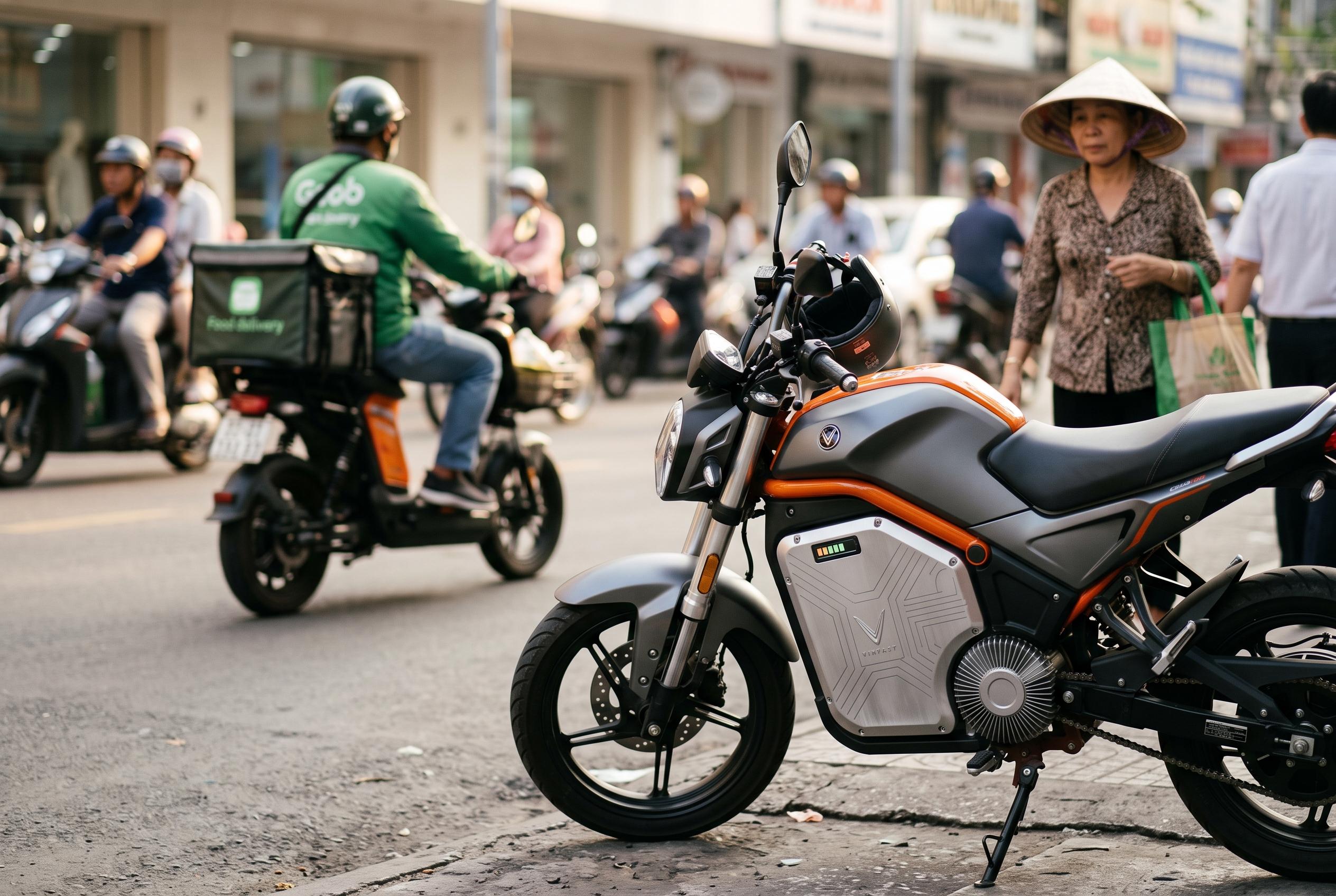

Fears of fuel shortages and rising prices are rapidly transforming the global electric motorcycle landscape, from Pakistan’s urgent shift to EVs to Vietnam’s mass-market growth and Kenya’s innovative battery-swapping models, amid evolving regulatory environments in California.
Pakistan’s fuel shock is spilling directly into its two-wheeler market, with electric motorbike sellers reporting a sudden jump in demand after disruption to shipping through the Strait of Hormuz heightened fears of both higher prices and outright shortages. Reuters reported that Haseeb Bhatti, who converts petrol bikes to battery power in Rawalpindi, saw March sales rise 70 per cent, while franchise owner Ali Gohar Khan said the recent rise in enquiries was the sharpest his business had experienced in seven years. Khan told Reuters: “People have this fear that maybe in the near future, they might not get petrol at all.”
That reaction matters because Pakistan’s exposure is unusually high. Reuters said the country imports nearly all of its oil through the Strait of Hormuz, and that about 40 per cent of its petrol is consumed by roughly 30 million two-wheelers and three-wheeled auto-rickshaws. The same report said the government launched its Pakistan Accelerated Vehicle Electrification plan in February, pairing subsidies with interest-free loans for electric vehicles. Analysts cited by Reuters argued that the crisis could also speed adoption because charging can draw on Pakistan’s expanding supply of relatively cheap solar power, making electric bikes more attractive not only as a climate choice but as a hedge against volatile imported fuel.
Vietnam offers a different picture: not a sudden crisis response, but industrial-scale growth in a market where motorcycles already dominate daily travel. VinFast said it delivered 143,136 e-scooters and e-bikes in the first quarter of 2026, up 219 per cent from a year earlier, and received more than 135,000 e-scooter orders in March alone. The company said it shipped more than 93,000 e-scooters to dealers in Vietnam during that month, had 447 showrooms globally at the end of March, and held the leading share of Vietnam’s e-motorcycle market. In March, it said, that was enough to account for 17 per cent of the country’s overall motorcycle market.
The scale of that expansion is drawing in established manufacturers as well as domestic champions. Honda said in January that it would begin selling its fixed-battery UC3 commuter in Thailand and Vietnam in spring 2026, describing the machine as equivalent to a 110cc internal combustion model. The company also said it was building charging infrastructure in major cities, with stations due to operate from June at Honda motorcycle dealerships in Hanoi, Ho Chi Minh City and Da Nang. Production began in Thailand in December 2025, but Honda said it planned to transfer local manufacture of the UC3 to Honda Vietnam during 2026, underlining Vietnam’s role as a regional base for electric two-wheelers.
In Africa, the commercial model is evolving around battery swapping rather than home charging. Kofa says its electric motorcycle was designed in Ghana and built by TAILG for African customers, with an emphasis on quick turnaround for working riders. The company says the bike, marketed as the Jidi, uses a 72V, 3,500W mid-mounted motor, can reach speeds of up to 85 km/h, and offers up to 90 km of range between swaps when fitted with two Kore2 batteries. Its central claim is operational convenience: batteries can be exchanged through Kofa’s Swap & Go system and returned to full charge in under two minutes.
Kenya shows why that model is attracting attention. UNIDO said electric motorcycle registrations there rose from fewer than 50 units in 2020 to nearly 5,000 in 2024, and that electric vehicles now account for more than 7 per cent of new motorcycle registrations. It identified Roam, Ampersand and Spiro as major companies establishing large assembly plants around Nairobi, with expected combined manufacturing capacity of about 100,000 units a year by 2026. According to UNIDO, that ecosystem is positioning Kenya not simply as a buyer of imported machines, but as a regional production and export hub for Tanzania, Uganda and Somalia.
The story is less straightforward in California, where consumer enthusiasm has run into stricter legal definitions. A bulletin from the state’s Off-Highway Motor Vehicle Recreation Division said electric off-highway motorcycles, often referred to as “eMotos”, had frequently been advertised as e-bikes even though they did not qualify as electric bicycles or mopeds under California law. From 1 January 2026, the state said, those vehicles meet the definition of electric off-highway motorcycles, and mislabelling them as electric bicycles is now a crime. The bulletin listed brands including Sur-Ron, Talaria, Ventus, E Ride Pro, Stacyc and Stark Future, and said such machines are intended for off-highway use and cannot be made road-registrable simply by fitting aftermarket equipment.
Taken together, these markets suggest that electric motorcycle adoption is being driven by more than one force at once. In Pakistan, Reuters showed how fuel insecurity can push riders towards electrification almost overnight. In Vietnam, VinFast’s order book and Honda’s manufacturing plans point to a market moving into mass scale. In East Africa, Kofa’s battery-swapping approach and Kenya’s assembly build-out indicate that the technology is being adapted to local power and transport conditions rather than copied wholesale from richer markets. And in California, regulators are making clear that rapid growth in high-powered electric two-wheelers does not remove the need to classify them properly. The result is not one global trend but several overlapping ones: cost pressure, urban practicality, industrial policy and regulation are all shaping who buys these machines, and why.
Disclaimer: This content is intended for informational purposes only. Readers are advised to exercise their own judgement, conduct due diligence, or consult a qualified expert before acting on any information provided.