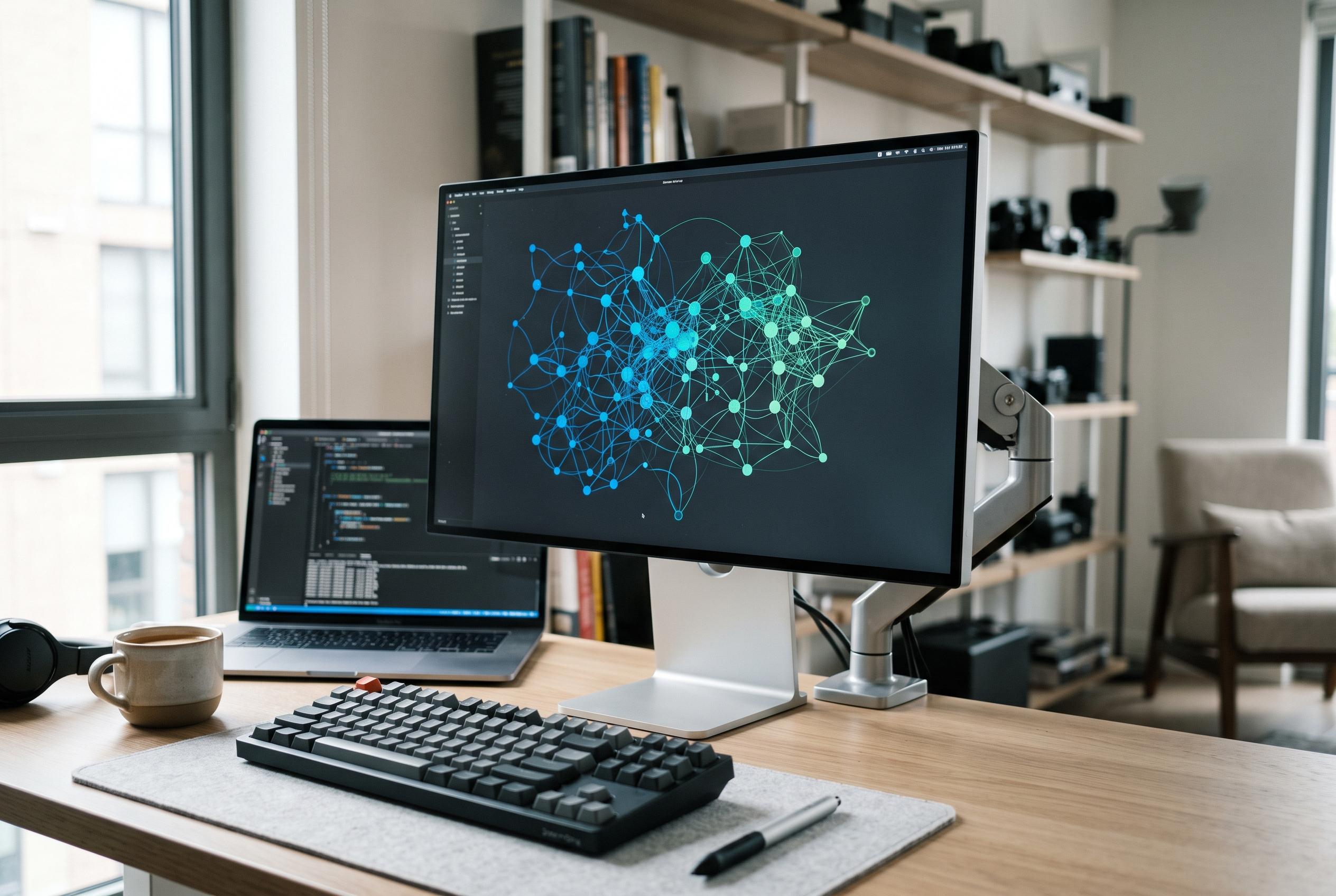

A wave of recent open-source releases injects fresh competition into the desktop software market, emphasising privacy, cost-effectiveness, and enhanced functionality against subscription-based options.
A fresh run of releases across the open-source desktop stack has weakened one of subscription software’s oldest selling points: the idea that only paid tools keep pace with modern work. In the past year, Thunderbird has moved further into Microsoft-managed email, GIMP has adopted genuinely non-destructive layer types, LibreOffice has sharpened typography and compatibility, and Kdenlive has continued to expand the editing features expected of a serious video package. Bitwarden, meanwhile, still offers a free tier broad enough to undercut much of the password-manager market rather than merely tempt users towards an upgrade. (blog.documentfoundation.org)
LibreOffice 26.8, released on 26 August 2026, is perhaps the clearest statement of what the new open-source pitch looks like. The Document Foundation says the suite has no generative AI features, needs no network access to function, carries no advertising or subscription requirement, and withholds no capability behind an account. The release adds a Paragraph Composer in Writer to balance spacing across a whole paragraph, deeper right-to-left and complex-text support, native handling for OpenType font variations, and round-trip preservation for newer OOXML chart types even where LibreOffice still cannot render them itself. The Register, which called the suite a mature product bundled by default by many Linux distributions, noted the political edge of that launch: an anti-cloud, anti-AI message from software that still shipped its own press materials in both ODT and DOCX because Microsoft compatibility remains commercially unavoidable. (blog.documentfoundation.org)
Thunderbird’s argument against paying for Outlook has also become more practical, especially in workplaces that live inside Microsoft infrastructure. Since version 145, Thunderbird has offered native Exchange email over Exchange Web Services, removing the need for a third-party add-on for core mail access. The project says that support includes full folder listings, message synchronisation, folder management on both the local machine and the server, attachment handling, automatic account detection and Microsoft’s standard OAuth2 sign-in for Microsoft 365. The catch is that the Exchange story is still incomplete: calendar and address book support remain on the roadmap. That omission matters more now because Thunderbird said in an early-September 2026 post that it had added native Microsoft Graph API support ahead of Microsoft’s phased shutdown of EWS on Microsoft 365, due to begin in October 2026 and conclude in 2027. Users on Microsoft 365 who still depend on Thunderbird’s EWS connection will need to set up a new Graph account, and the project says Graph, like EWS before it, is email-only for now. (blog.thunderbird.net)
Bitwarden stands out less because it is cheap than because its free tier is unusually hard to outgrow. The company says individuals can store unlimited passwords across unlimited devices and platforms “for free, no strings attached”, and adds that free users are not monetised through advertising because its paid plans fund the business. It has also localised the service into more than 50 languages. In a January 2026 category review, TechRadar said many free password managers still restrict device count, vault size or support options, and named Bitwarden the best free option overall because of its “unrivaled feature-set for non-paying users”. Bitwarden’s transparency claims are also unusually concrete: its compliance page lists repeated third-party assessments, including multiple Cure53 audits and a 2025 review of core cryptography by ETH Zurich’s Applied Cryptography Group. (bitwarden.com)
Kdenlive makes the case that video editing is no longer automatically a subscription category. KDE says the editor supports an unlimited number of audio and video tracks, can work directly with almost any format that FFmpeg can decode, and includes three-point editing, configurable workspaces, multi-cam editing, keyframeable effects, a built-in title editor and analysis scopes including waveform, vectorscope and RGB parade. Its proxy workflow automatically creates low-resolution copies of source clips for smoother editing on weaker hardware while preserving full-resolution media for final render. Kdenlive’s documentation also shows that speech-to-text can be used not only to generate subtitles but to build transcripts and place clips on the timeline from those transcripts, using VOSK or Whisper models once the required components are installed. (kdenlive.org)
GIMP has arguably made the sharpest advance towards the kind of layered, revisable workflow that keeps many casual editors tied to Photoshop. In its 3.2 release notes, the GIMP team said the first major update since 3.0 was built around “non-destructive layers”. Link Layers let users place an external image inside a composition while keeping it connected to the source file, so changes made elsewhere can flow back into the working image automatically. Vector Layers add editable fill and stroke properties to the Path tool, and the new Rasterize and Revert Rasterize process is meant to stop users from accidentally destroying editable text, link or vector layers. Linuxiac reported that the release also improved PSD compatibility, added SVG export, expanded PDF export options and introduced DDS BC7 export, alongside refreshed babl and GEGL libraries. (gimp.org)
None of this means open-source software has erased every trade-off. LibreOffice is unapologetically desktop-first rather than collaboration-first. Thunderbird still has work to do before Exchange users can treat it as a full Outlook replacement, especially for calendars and contacts. Kdenlive and GIMP remain more willing than Adobe’s tools to ask users to adapt to the application rather than the other way round. Even The Register, while applauding LibreOffice’s rejection of AI and cloud dependency, said Microsoft Word displayed the foundation’s sample DOCX more attractively than the LibreOffice build it tested. But the practical threshold has moved. For many people, the core jobs that trigger recurring bills , documents, email, passwords, routine image work and mainstream video editing , can now be handled by mature, actively developed software that keeps both the files and the workflow closer to the user’s own machine. (theregister.com)
Disclaimer: This content is intended for informational purposes only. Readers are advised to exercise their own judgement, conduct due diligence, or consult a qualified expert before acting on any information provided.