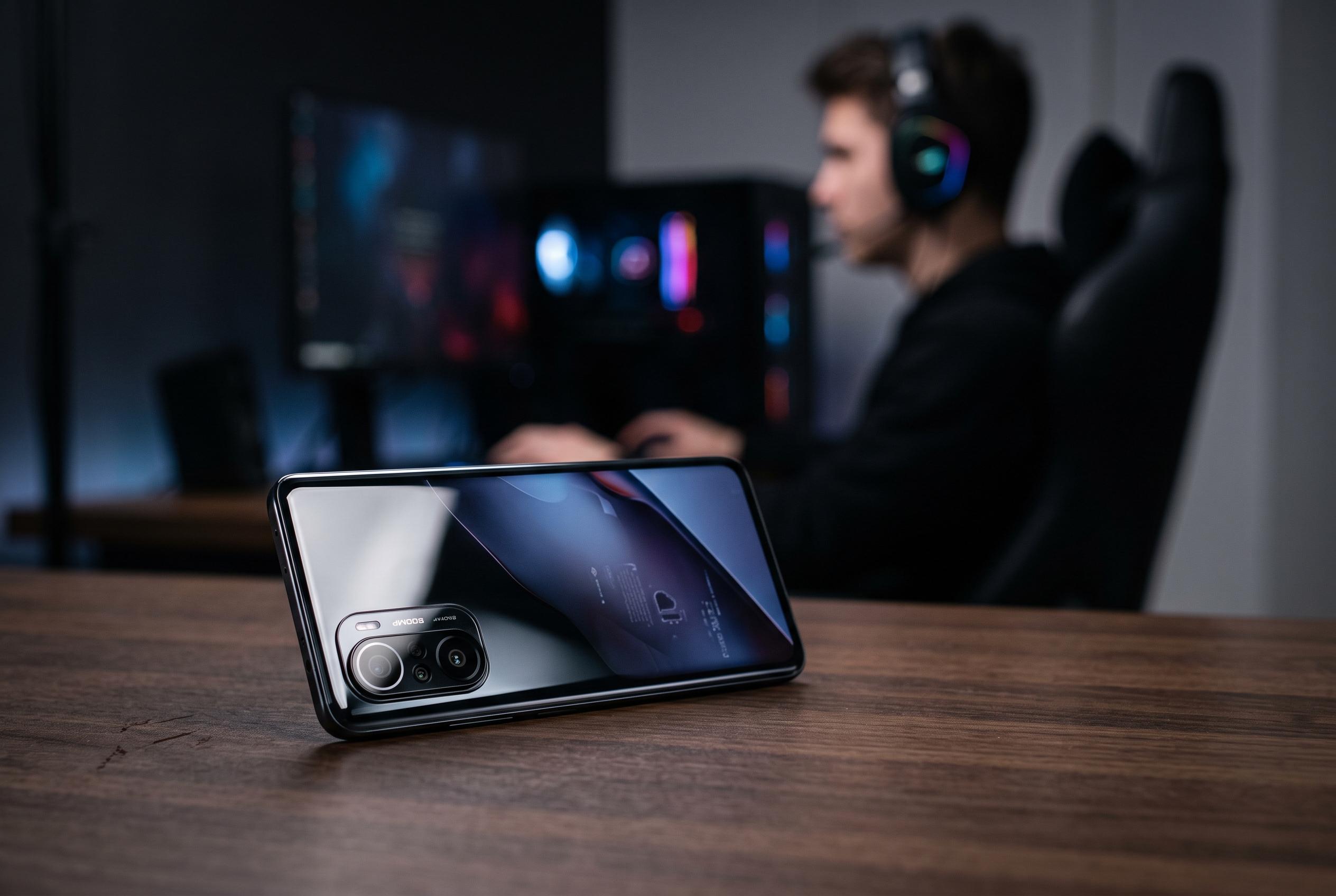

POCO has launched the F9 Ultra in Australia, offering a premium gaming-focused smartphone with high refresh rates, a 200MP camera, and long-term support, at a compelling price point during promotional discounts.
Australian pre-orders for the POCO F9 Ultra are now live, with Xiaomi’s local launch page showing shipment from 10 September and a launch campaign that matters at least as much as the list price. While the handset is pitched at A$1,499, Xiaomi Australia is offering A$300 off through 30 September, taking the effective price to A$1,199, and pre-order buyers before 10 September are promised extras including a Xiaomi Sound Play speaker and a magnetic power bank. That makes the opening move less about a simple shelf price and more about whether POCO can carry its value reputation into territory usually reserved for mainstream flagships. (mi.com)
That shift is visible in the Australian configuration itself. Pickr reported that local buyers will get only one version, with 16GB of RAM and 512GB of storage, in Cherry or Black, and said the device would arrive from the following week. In Japan, by contrast, 4Gamer reported that Xiaomi released the phone on 1 September in both 12GB/256GB and 16GB/512GB trims at about ¥149,800 and ¥169,800 respectively, with a ¥20,000 early discount running until 23 September. Australia is therefore getting only the higher-spec version, which reinforces the sense that POCO is treating this as a premium push rather than a broad-volume launch. (pickr.com.au)
The hardware pitch is unapologetically performance-led. Digital Reviews said the F9 Ultra pairs Qualcomm’s Snapdragon 8 Elite Gen 5 with a separate VisionBoost D8 chip for visual processing, while POCO claims the combination can drive more than 21 games at up to 185 frames per second natively, with another four able to reach that level through Smart Frame Rate. The same report detailed a 4,800Hz instant touch sampling rate in Game Turbo Mode, 480Hz multi-finger touch sampling and a 200Hz gyro sampling rate, backed by a 3D IceLoop cooling system aimed at sustaining output over longer play sessions. For a brand that built its name on specification-heavy phones, the gaming brief remains the centre of the product. (digitalreviews.net)
What is more unusual is POCO’s explanation of a decision that enthusiasts would normally question. TechRadar reported that the F9 Ultra uses the same Snapdragon 8 Elite Gen 5 as the previous F8 Ultra, breaking with POCO’s habit of moving to the latest Snapdragon tier each cycle. In comments reported from a launch press conference, senior product manager Kang Lou said rising memory costs were “putting a lot of pressure” on the industry and added that “performance is not always about chasing the latest chipset”. He also said “having the latest chipset will cost [us] a lot more”, while POCO’s PR team argued that launch timing should follow readiness and price competitiveness rather than a rigid component roadmap. (techradar.com)
That balancing act extends to the display and audio claims, where the fine print matters. DPReview noted that the phone’s 185Hz AMOLED panel can reach 10,000 nits only over 1% of the screen for HDR highlights, with 4,500 nits over a 25% window being the more realistic figure. On sound, Digital Reviews said POCO has combined two symmetrical speakers with a separate 1620 subwoofer in a Bose-tuned 2.1-channel arrangement, while Pickr highlighted the built-in subwoofer as the feature most likely to set the handset apart from a market full of near-identical slabs. Digital Reviews also said a Game Audio mode that makes footsteps more prominent is due in an over-the-air update during September, initially for selected games. (dpreview.com)
The camera system is also more ambitious than the brand’s past upper-tier efforts. DPReview said this is the first POCO phone to offer a dedicated 200MP capture mode, though it defaults to binned 12.5MP or 50MP output in normal use and needs a few seconds to process full-resolution shots, with the best results expected in strong light. Pickr said the rear camera array for Australia comprises a 200-megapixel main camera, a 50-megapixel ultra-wide and a 50-megapixel 5x telephoto, while Digital Reviews added that the battery is an 8,050mAh silicon-carbon unit, supports 100W wired and 50W wireless charging, and can even reverse-charge other devices at up to 27W wired or 22.5W wireless. In practice, that combination makes the F9 Ultra as much a battery-first flagship as a gaming phone. (dpreview.com)
POCO is also trying to soften the shock for buyers who still associate the brand with cheaper hardware. Digital Reviews said Australian launch-period purchases include one free screen replacement within the first six months for eligible buyers, alongside four Android OS upgrades and six years of security updates. Those promises matter because, as DPReview observed in its broader coverage of the F9 Ultra and F9 Pro, the series is designed to undercut conventional flagships while still offering comparable headline specifications. At A$1,499 before discounts, the F9 Ultra no longer sits in obvious bargain territory, so long-term support and launch protection are becoming part of the value argument. (digitalreviews.net)
Taken together, the Australian launch suggests that POCO is not abandoning its old formula so much as stretching it upwards. The official sales window shows aggressive incentives through September, but the product itself is defined by a huge battery, unusually elaborate onboard audio, a high-refresh gaming display and a cost-disciplined processor choice that POCO is prepared to defend publicly. For Australian buyers, the question is no longer whether POCO can make a cheap, fast phone. It is whether a single high-spec trim at A$1,499, or A$1,199 during the launch offer, is enough to persuade shoppers to treat the brand as a credible flagship alternative. (mi.com)
Disclaimer: This content is intended for informational purposes only. Readers are advised to exercise their own judgement, conduct due diligence, or consult a qualified expert before acting on any information provided.