
Garmin launches its first screen-free smart band in Indonesia, offering continuous health and activity tracking with a focus on software-driven data analysis and regional market differences.
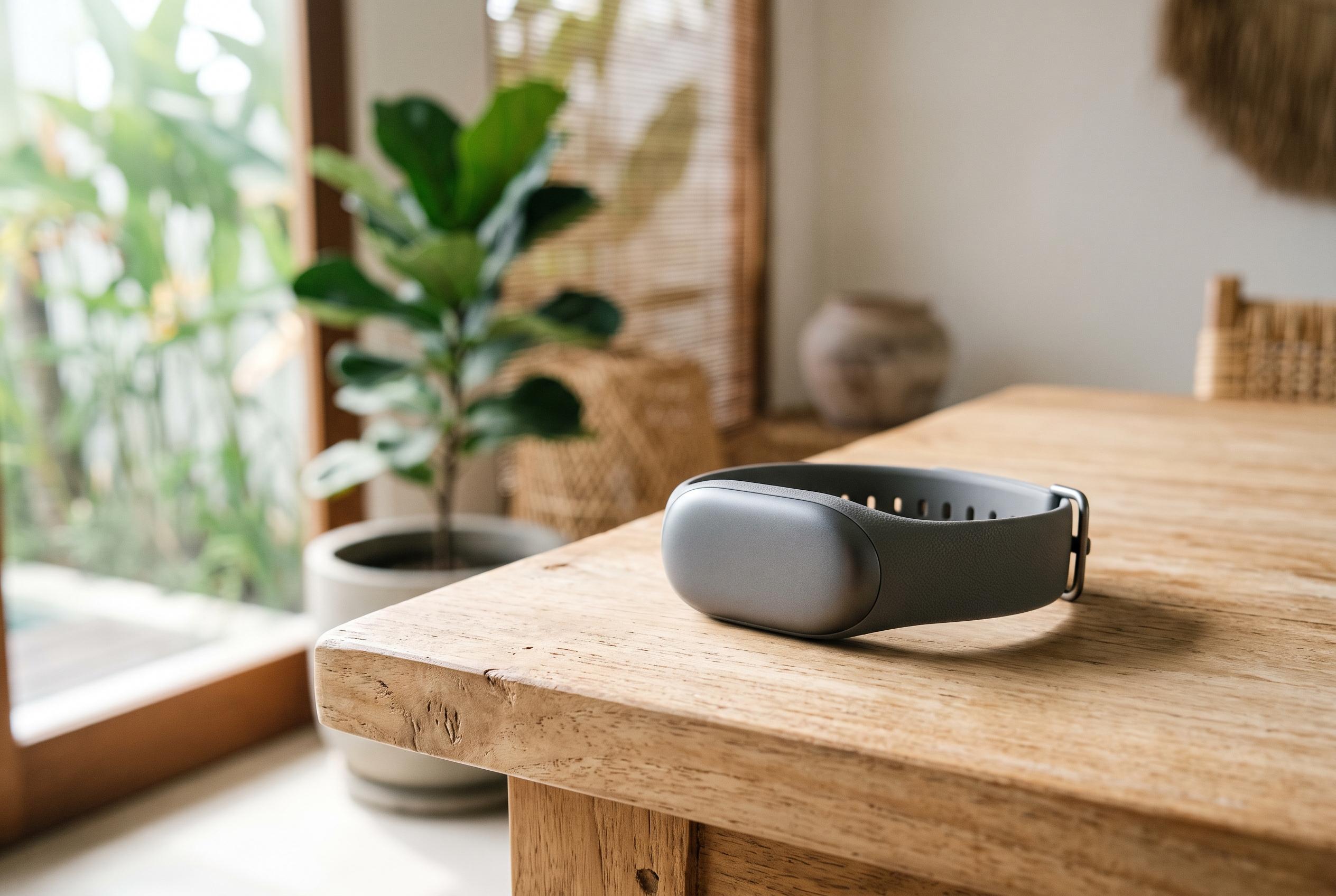
Garmin has now put its CIRQA Smart Band on sale in Indonesia, extending to the local market a product line that began abroad in July and marks the company’s first serious move into screen-free wearables. Instead of showing metrics on the wrist, CIRQA records health, sleep and activity data continuously and pushes the results into Garmin Connect. The Indonesian price of Rp3.729 million also lands noticeably above the roughly Rp3.2 million equivalent cited when the device was first introduced locally in July, before tax and country-level price adjustments.
The product first appeared in the United States on 21 July 2026, when Garmin described CIRQA as its first screen-free smart band. A broader launch followed on 24 July at $199.99 or £179.99, according to Wareable, which framed the device as Garmin’s entry into a category better known for Whoop-style subscription trackers and screenless recovery wearables. That makes CIRQA more than a simplified watch. Garmin is effectively asking buyers to give up constant on-wrist prompts in exchange for quieter tracking, lighter wear and a phone-led view of readiness, sleep and training load.
Garmin’s own messaging suggests CIRQA is meant to sit alongside its watches rather than replace them. Susan Lyman, the company’s vice-president of consumer sales and marketing, said the band was created for “those who are passionate about staying healthy and active” and presented it as a complement to Garmin’s smartwatch and wellness range. Garmin’s Japanese launch notes are more specific about who that means in practice: people who prefer to keep wearing a conventional watch, cannot wear a watch at work, play team sports where a wrist device is awkward, or simply dislike sleeping with a bulkier wearable.
On paper, CIRQA is unusually full-featured for a product with no display. Garmin says it can track more than 80 activities, start sessions from a single side button and identify some workouts automatically, with the classification improving as users edit results in Garmin Connect. Core monitoring includes heart rate, Body Battery, Pulse Ox, stress, skin temperature and respiration. Sleep functions run from stage breakdowns and sleep score to nap detection, heart rate variability trends and guidance on recommended sleep duration. For outdoor training, the band can use a connected phone’s GPS and supports LiveTrack location sharing. Garmin also says women can log menstrual cycles and pregnancy, although synchronisation with Natural Cycles still requires a separate subscription.
The hardware is light even by fitness-band standards. Detik reported a 14.8g main module, while Garmin’s Japanese specifications list the sensor at 27mm by 47mm by 9mm, with total weight rising to 20.7g for the smaller wrist band and 21.2g for the larger one. The casing uses fibre-reinforced polymer, the strap is fabric and the water-resistance rating is 5ATM, which Garmin says is suitable for swimming and water-based use. Regional product pages do not fully agree on colour choices, however. Singapore and Japan list Black, French Gray, Captain Blue and Mauve, while the Philippines release adds Citron Gray, Dark Olive and French Blue.
Garmin’s South-East Asian rollout has also been staggered rather than simultaneous. Singapore said sales would begin in August at SGD279 through Garmin stores, Lazada, Shopee, Takashimaya and other authorised retailers. In the Philippines, pre-orders opened on 24 July and general availability was set for 14 August through brand stores, speciality outlets, The Loop and Garmin’s own e-commerce channels. Japan scheduled pre-orders for 30 July and first sales for 6 August at ¥32,800 including tax. Indonesia, then, is arriving later than several neighbouring markets even though local reporting on the device first appeared in July.
That delay matters because screen-free wearables are judged heavily on software rather than hardware alone. Wareable argued that Garmin Connect remains “far from as polished” as the strongest screenless platforms when it comes to presenting recovery and readiness information, even if Garmin still excels in deeper sports analysis. The same report noted that CIRQA uses Garmin’s previous-generation Elevate 4 optical sensor and that an upper-arm strap costs an extra $49.99 or £49.99. In Wareable’s assessment, the band may end up being less of a direct Whoop substitute than a premium secondary device for existing Fenix or Forerunner users who want continuous data without another glowing screen on the wrist.
That is also the most plausible reading of Garmin’s Indonesian debut. CIRQA brings advanced metrics, a claimed battery life of up to 10 days and subscription-free core tracking into a lighter and less obtrusive form factor, but it still depends on Garmin Connect and the wider Garmin ecosystem to make the data useful. For users who want something discreet under a shirt cuff, beside a conventional watch or on the upper arm while sleeping, training or working, that trade-off may be worthwhile. For buyers expecting a cheaper smartwatch minus the display, the proposition is more complicated.
Disclaimer: This content is intended for informational purposes only. Readers are advised to exercise their own judgement, conduct due diligence, or consult a qualified expert before acting on any information provided.