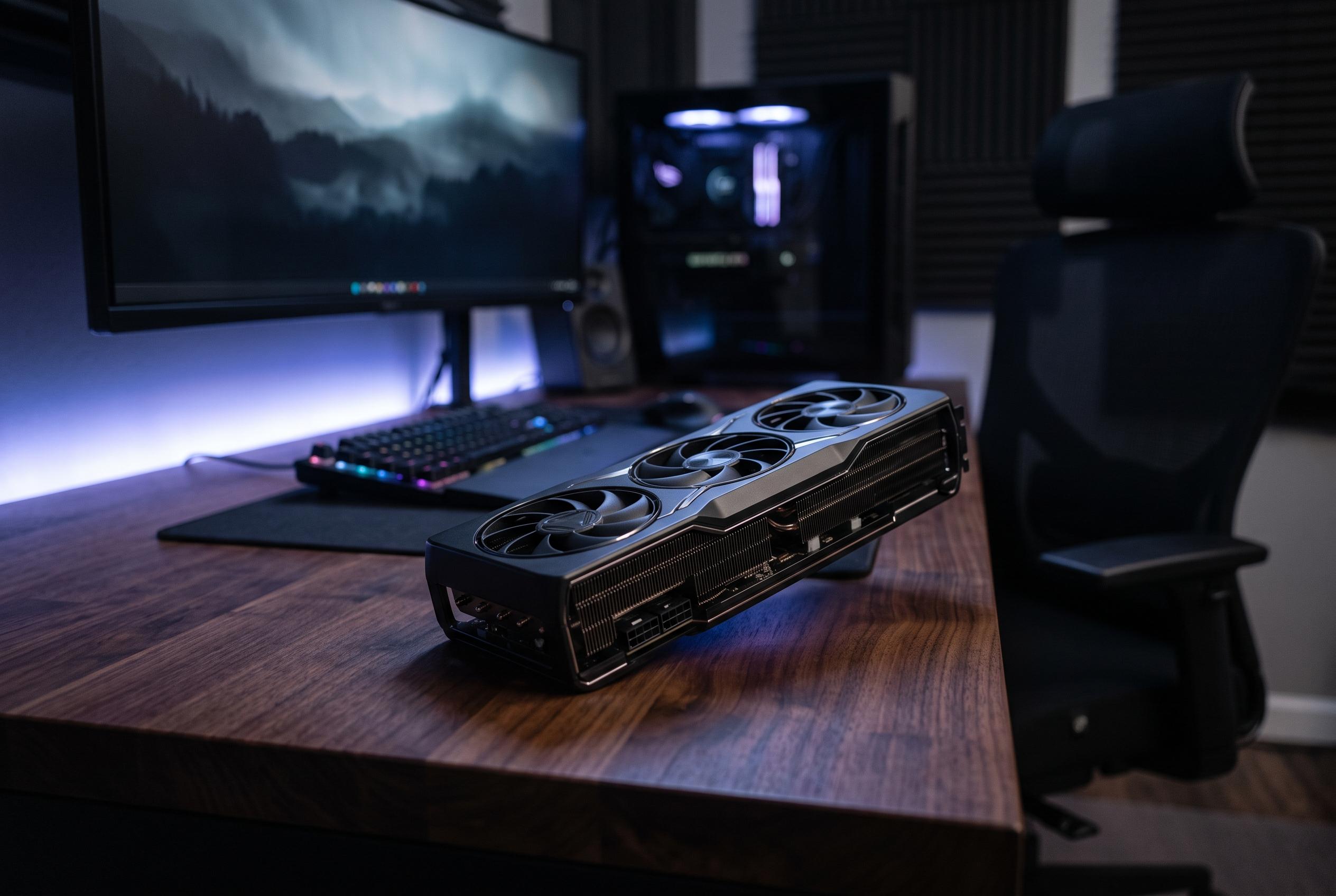

Eighteen months after launch, the AMD Radeon RX 9070 XT now leads the Nvidia RTX 5070 in performance and price, challenging Nvidia’s market dominance amid ongoing supply and pricing issues.
When AMD introduced the Radeon RX 9070 XT on 28 February 2025, it positioned the card at a suggested price of $599 and said partner boards would go on sale from 6 March with 16GB of memory and upgraded ray-tracing and AI hardware. Nvidia, announcing the GeForce RTX 5070 a day earlier for retail sale on 5 March, presented it as a Blackwell card for DLSS 4-era gaming and said partner models were shipping immediately, with the Founders Edition due later that month. Eighteen months on, the comparison looks very different: TechSpot’s new 52-game retest finds the 9070 XT not only faster overall, but also selling for less than the RTX 5070 in the US market.
That reversal matters because the 9070 XT was not originally framed as a cheap substitute for a weaker GeForce model. Early reviews from Ars Technica and Engadget treated it as a card that could beat the RTX 5070 in conventional rendering while also threatening the RTX 5070 Ti from below. Ars said the 9070 XT was between 15% and 28% ahead of the RTX 5070 in 1440p rasterised play, while Engadget said AMD’s new boards were “the best midrange GPUs from AMD in years” and noted that the XT was $150 cheaper than the 5070 Ti while sometimes outperforming it.
The September 2026 picture drawn by TechSpot is harsher for Nvidia than those March 2025 launch reviews. Across 52 games, the publication reports that the 9070 XT led the RTX 5070 by 24% on average at 1440p and 25% at 4K, with stronger 1% lows as well. Some of the largest gaps came in titles such as Final Fantasy XVI, Cyberpunk 2077: Phantom Liberty and Battlefield 6, while only a small handful of tests were close. The important point is not that every game breaks heavily in AMD’s favour, but that a pattern already visible in reviews from Ars Technica and Tom’s Hardware has become harder to dismiss with a larger and newer test set.
Memory capacity is another reason the gap is more consequential than a simple average frame-rate chart suggests. AMD’s launch material made a point of the 9070 XT’s 16GB frame buffer, and that now looks increasingly relevant in late-generation game workloads. Engadget argued in March 2025 that AMD’s cards would be better suited to larger textures over time because of that memory provision. In TechSpot’s retest, the RTX 5070’s more limited buffer appears to become a practical problem in some demanding cases, including heavy presets in games such as Mafia: The Old Country and at 4K in Star Wars Outlaws, where the Radeon card keeps a clearer lead.
None of that means Nvidia’s case has disappeared. Tom’s Hardware said at launch that RDNA 4 made “significant generational improvements in AI and ray tracing performance”, but still concluded that AMD trailed Nvidia in ray tracing, AI performance, software support and features. Engadget made the same point more bluntly, saying AMD’s Fluid Motion Frames was “not nearly enough” to match the maturity of DLSS 4 multi-frame generation. Nvidia’s own launch post leaned heavily on that feature advantage, claiming the RTX 5070 could run Cyberpunk 2077 and Alan Wake 2 at more than 120fps with full ray tracing at 1440p. TechSpot’s latest numbers broadly support the caveat: once full path tracing or full ray tracing is enabled in certain games, the balance can still swing back towards GeForce.
What is striking is how accurately some of the early caveats foreshadowed the market that buyers now face. Ars Technica warned in March 2025 that retail pricing and availability for the RX 9070 family might be “all over the place”. Tom’s Hardware said the one question it could not answer at launch was what real retail supply would look like. TechRadar, while positive on the 9070 XT’s value, also framed its recommendation around a distorted GPU market in which older high-end options were scarce or overpriced. TechSpot’s 2026 update suggests those concerns were not temporary launch noise: the 9070 XT itself has risen well above its official starting price, but the RTX 5070 has climbed even further, leaving Nvidia’s nominally lower-tier card carrying a street-price premium.
That pricing distortion also reshapes how the product stack should be read. Tom’s Hardware described the 9070 XT as a mainstream card in a market where mainstream had stretched to roughly $400 to $600, and TechRadar reported a 309W peak draw in testing, underscoring that this is not a low-power compromise product. Ars Technica found the 9070 XT’s power use broadly similar to the RTX 5070 Ti’s, which made sense because its performance in non-ray-traced games often landed in the same territory. In other words, AMD launched the 9070 XT as an upper-mainstream or near-enthusiast card; current pricing merely reinforces that reality, even if it does so in a way that is unhelpful for buyers.
For shoppers deciding between these two boards now, the conclusion is narrower than triumphalist rhetoric from either side would suggest. Buyers who place the highest value on DLSS 4, creator workloads, or the best results in the heaviest ray-traced modes still have reasons to consider the RTX 5070. But on the evidence of launch positioning, third-party reviews and TechSpot’s September 2026 retest, the 9070 XT has become the more coherent gaming purchase. It was launched with more memory, it has long held the stronger case in raster performance, and at today’s US street prices it no longer asks buyers to pay extra for those advantages.
Disclaimer: This content is intended for informational purposes only. Readers are advised to exercise their own judgement, conduct due diligence, or consult a qualified expert before acting on any information provided.