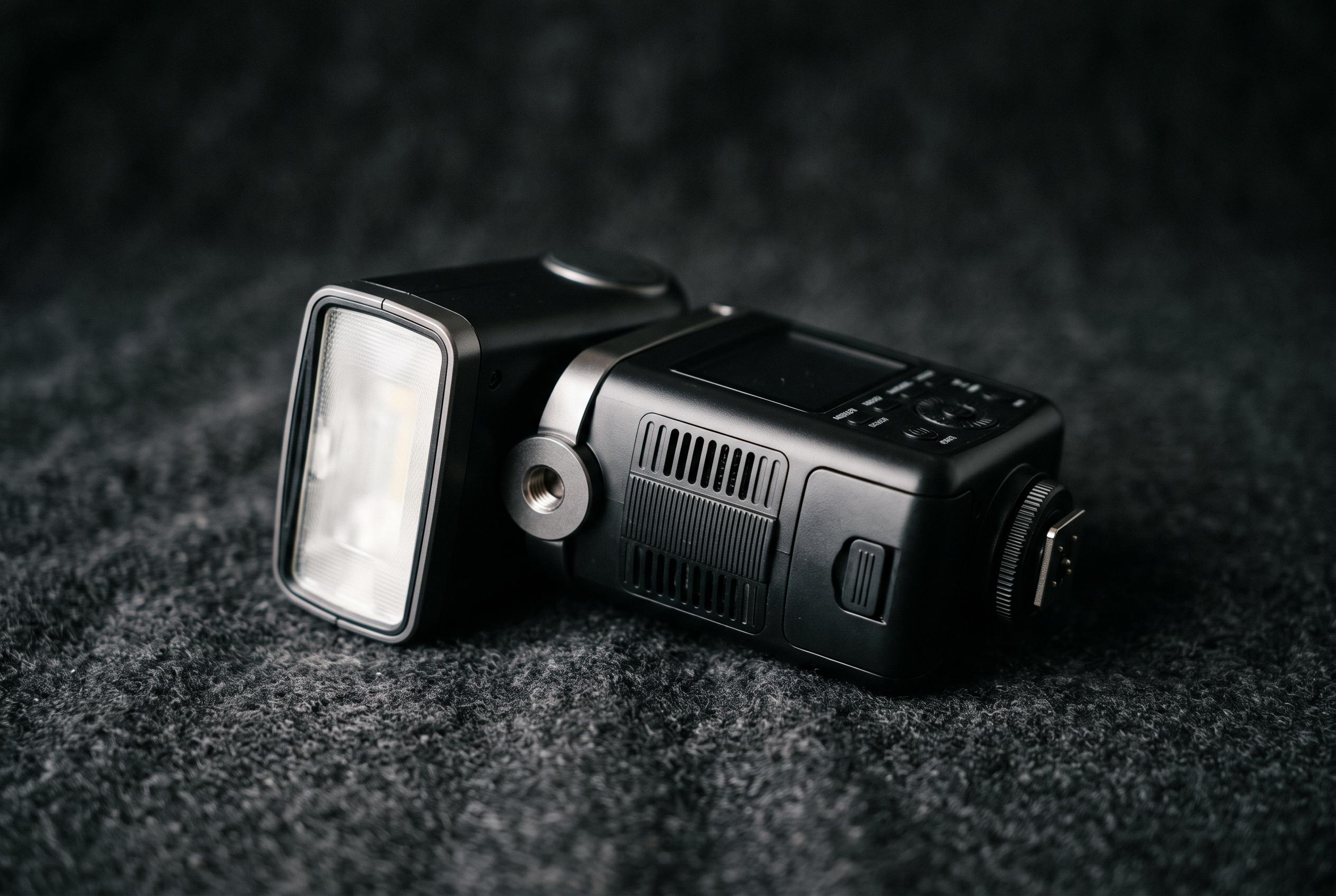

The Neewer Q120 LED flash redefines portability and flexibility for photographers with its hybrid system compatibility, bridging the gap between speedlights and studio strobes in an innovative compact design.
Across reviews published in March and June 2026, the Neewer Q120 has been treated less as another inexpensive flash than as a compact 120Ws location strobe that can slip into mixed-brand lighting kits. The feature that has attracted the most attention is not simply output, but the ability to work with Neewer’s own triggers and, through configuration, with the Godox X radio system. That makes it relevant to photographers who already own transmitters, speedlights and battery strobes from a different maker.
Officially listed at $219.99 on Neewer’s website, with a two-year warranty and 30-day returns, the Q120 is being positioned in the space between a hotshoe flash and a conventional studio head. Neewer markets it as a stand-mounted outdoor flash rather than an on-camera unit, and PetaPixel’s launch coverage placed it beside the Z3R speedlite to make that distinction clear: the Q120 is the compact off-camera option, while the Z3R is aimed at photographers who still want a more familiar round-head TTL flash on or near the camera.
Its core specifications are straightforward but competitive for the size. Neewer says the flash supports TTL, manual and multi modes, power adjustment from 1/256 to full output, and high-speed sync up to 1/8000sec with supported triggers. The quoted recycle time is 0.01 to 1.5 seconds, the modelling lamp is rated at 3W, and the 3000mAh battery is said to deliver about 410 to 420 full-power bursts. The unit measures 81 x 81 x 143 mm, weighs 671 g including the battery, and offers wireless control at up to 100m. SonyAlphaBlog’s technical review also highlighted smartphone control through the Neewer app and the digital display interface.
The more consequential question is how the flash behaves inside a wider lighting system. SonyAlphaBlog reported that the Q120 works with Neewer’s QPro and QZ transmitters, but can also be configured for a Godox XPro or X3. Dustin Abbott pushed that point further by comparing the Q120 with the Godox AD100 Pro II and by noting that it joins a broader list of Neewer lights able to operate with Godox X, including the Z2, Z3R, Z880, Q200, Q4 and Q6. For a working photographer, that matters more than a single headline watt-second figure. It means a compact location head can be added without replacing an entire radio setup.
Field reports suggest that Neewer has aimed the Q120 at practical location work rather than purely at studio users. In a sponsored Fstoppers review published on 18 June, Kim Simpson tested it during a portrait shoot inside an abandoned subway car and described it as a “compact 120 Ws TTL pocket strobe” for photographers who want more power than a speedlight without moving up to a full-size flash head. Julie Powell’s later review was framed specifically for portrait photographers and appeared under her Lighting and Reviews coverage, reinforcing the sense that this is a tool for mobile portrait workflows rather than a piece of specialist studio hardware.
That positioning also explains the broader compatibility messaging. Neewer’s own product page lists support for Canon, Nikon and Sony cameras, and specifically names Sony’s ZV-1, ZV-1F and ZV-E10 alongside more conventional bodies. PetaPixel’s launch article presented the Q120 as part of a wider 2026 lighting push built around portability and simplified operation, contrasting it with the companion Z3R, whose 100Ws output and battery performance were used to show how Neewer is splitting its flash range between off-camera location use and more conventional speedlite shooting.
There are, however, signs that the product story was still settling during the review cycle. SonyAlphaBlog quoted the flash at $229 in its English section and $299 in its French section, while Neewer’s own store listed it at $219.99. Some of the early attention also came through sponsored coverage, including articles on Fstoppers and PetaPixel. That does not make the hands-on impressions worthless, but it does mean buyers are better served using the official page for exact pricing, warranty terms and supported features, then using the reviews to judge how the light performs in real shoots.
Even with that caveat, the direction of travel is clear. The Q120 is not being sold as a miniature studio replacement, and it is not simply another rebadged speedlight. It is a compact 120Ws off-camera flash designed for photographers who need straightforward TTL control, modest carrying weight and the flexibility to work inside a mixed Neewer-Godox setup. In a category where the Godox AD100 Pro II is an obvious point of comparison, Neewer’s strongest argument is system interoperability packaged in a smaller, comparatively accessible location light.
Disclaimer: This content is intended for informational purposes only. Readers are advised to exercise their own judgement, conduct due diligence, or consult a qualified expert before acting on any information provided.