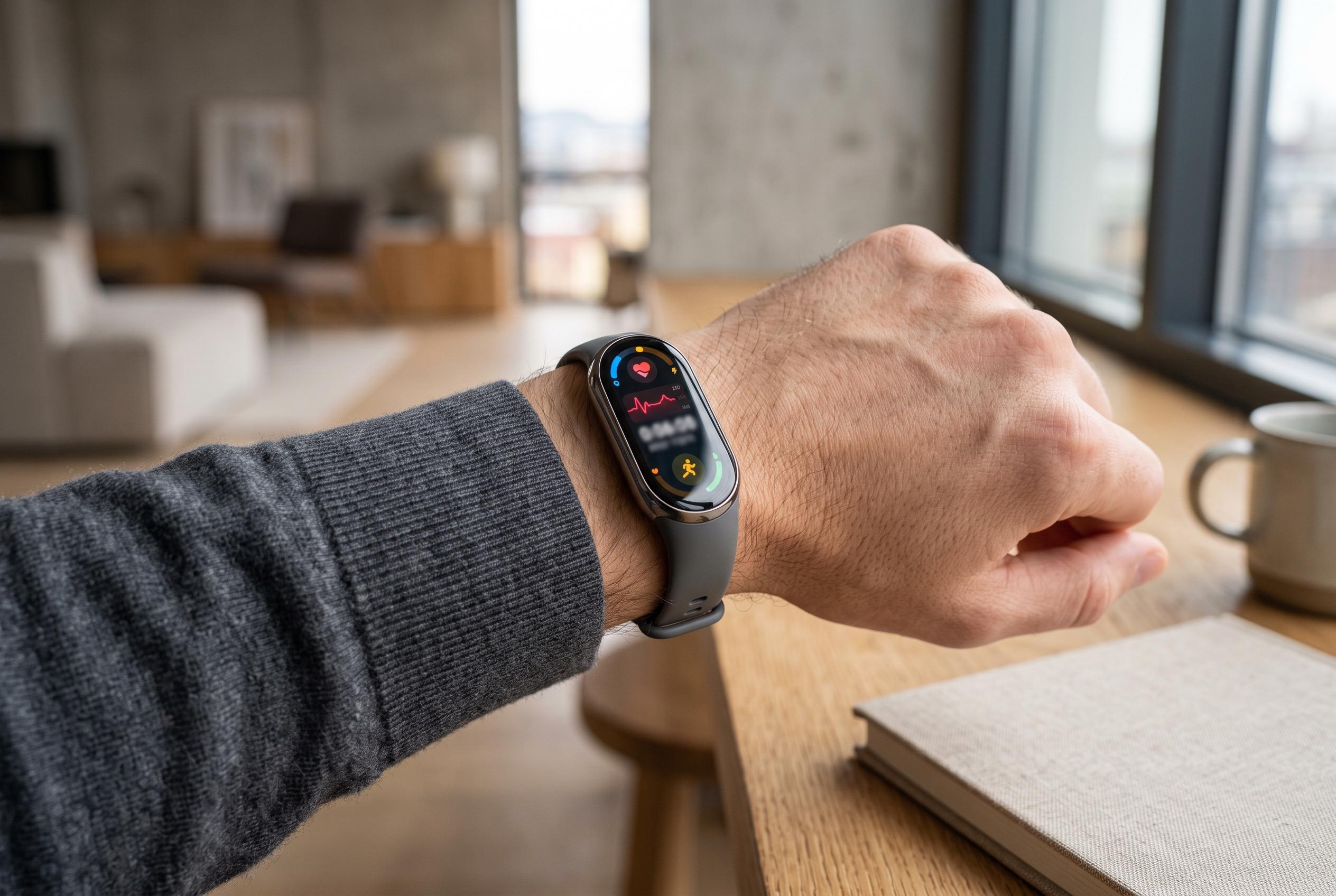

Xiaomi launches a four-model Smart Band 11 range in China, adding premium materials and enhanced health features ahead of a wider international rollout, highlighting a strategic shift towards higher-end wearable options within its budget lineup.
Xiaomi has opened Chinese pre-orders for its Smart Band 11 on 7 September, broadening what is usually a straightforward budget fitness tracker launch into a four-model range that now includes standard, NFC, ceramic and new all-metal versions. Xiaomi’s own retail presentation indicates that the NFC listing is being used as the umbrella page for the ceramic and all-metal models, while the standard band sits separately. That product structure suggests the company is using materials and payment features, rather than a major hardware split, to create tiers within the line-up.
The pricing tells a similar story. Most reports put the standard model at 289 yuan, the NFC version at 339 yuan, and both the ceramic and all-metal editions at 399 yuan, with sales starting at 10am Beijing time on 7 September. Tech-ish noted that those prices are 20 yuan to 30 yuan above the Smart Band 10 range introduced in June 2025. There is, however, one point of disagreement in the coverage: Notebookcheck published a price list that placed the NFC version at 399 yuan and the all-metal and ceramic variants at 339 yuan. Xiaomi’s own product segmentation makes the higher price for the premium-material models look more likely, but the inconsistency underlines how early launch listings can still produce confusion.
On specifications, the changes appear measured rather than radical. Android Authority and Tech-ish both reported that Xiaomi has retained the same 1.72-inch AMOLED display size and 212 x 520 resolution, along with very slim 2mm bezels, but raised peak brightness from 1,500 nits to 2,000 nits. For a screen worn outdoors, that is one of the more practical upgrades in this cycle. The body has also been trimmed to 9.99mm, down from 10.95mm on the previous generation, while the metal version is listed at 15.58g without the strap, slightly below the Band 10’s 15.95g. Android Authority added that Xiaomi is continuing with alternative finishes and colours, including pink and green for the metal model and purple for the ceramic edition.
Xiaomi is also leaning harder into wellness software. The company says the Smart Band 11 offers improved heart-rate and blood-oxygen measurement, while broader monitoring covers stress and women’s health alongside activity tracking. Reports from Android Authority and The Tech Outlook put the fitness catalogue at 150 or more than 150 workout modes, which is consistent with the feature inflation seen across the lower-cost wearables market. Water resistance remains at 5ATM, meaning the band should continue to be suitable for shallow-water use such as swimming, though not for high-pressure water sports or diving.
Sleep tracking is one area where Xiaomi appears to be adding a more distinct software message. Gadgets & Wearables said the Smart Band 11 introduces sleep HRV, or heart rate variability during sleep, while The Tech Outlook reported AI-based sleep interpretation and recommendations. Xiaomi is also promoting “professional sleep management”, a phrase repeated across launch coverage. Whether these tools produce genuinely useful coaching will depend on how clearly Xiaomi presents the data in the app, but the emphasis shows where the brand believes extra value can be found without redesigning the device itself. Battery capacity is reported at 233mAh, and Xiaomi is still quoting up to 21 days of use on one charge despite the thinner case.
Software compatibility may matter just as much as sensors for buyers outside Xiaomi’s Android core. Several reports say the band runs software based on HyperOS 4 and that iPhone users should see fewer restrictions when syncing notifications and alerts than before. That does not necessarily mean full parity with Android, but it is a notable claim given how often inexpensive wearables offer only partial support on iOS. NFC, by contrast, still appears to be heavily localised. Tech-ish reported that the feature remains limited in China to offline payments and access cards, which sharply reduces its relevance for overseas buyers unless Xiaomi expands service support market by market.
For now, that international question remains unanswered. Gadgets & Wearables said there is no global launch information yet for the Smart Band 11 itself, even as pre-orders are available through Xiaomi’s own channels and major Chinese e-commerce platforms. The broader wearable picture is slightly more complicated: The Tech Outlook reported that Xiaomi has separately begun rolling out the Smart Band 11 Active in parts of Oceania, Southeast Asia, West Asia and Europe. In other words, Xiaomi is already moving globally with a lower-tier sibling while keeping the main Smart Band 11 launch centred on China.
Taken together, the Smart Band 11 looks like a careful refinement rather than a reset. The brighter display, slimmer body and new unibody metal option give Xiaomi a clearer hardware story, while sleep HRV, AI-led sleep analysis and improved iOS behaviour are meant to strengthen the software case. The unresolved issue is reach. Until Xiaomi confirms wider availability, the Smart Band 11 remains a China-first upgrade whose most interesting extras, particularly NFC and some premium variants, may not travel with equal usefulness beyond its home market.
Disclaimer: This content is intended for informational purposes only. Readers are advised to exercise their own judgement, conduct due diligence, or consult a qualified expert before acting on any information provided.