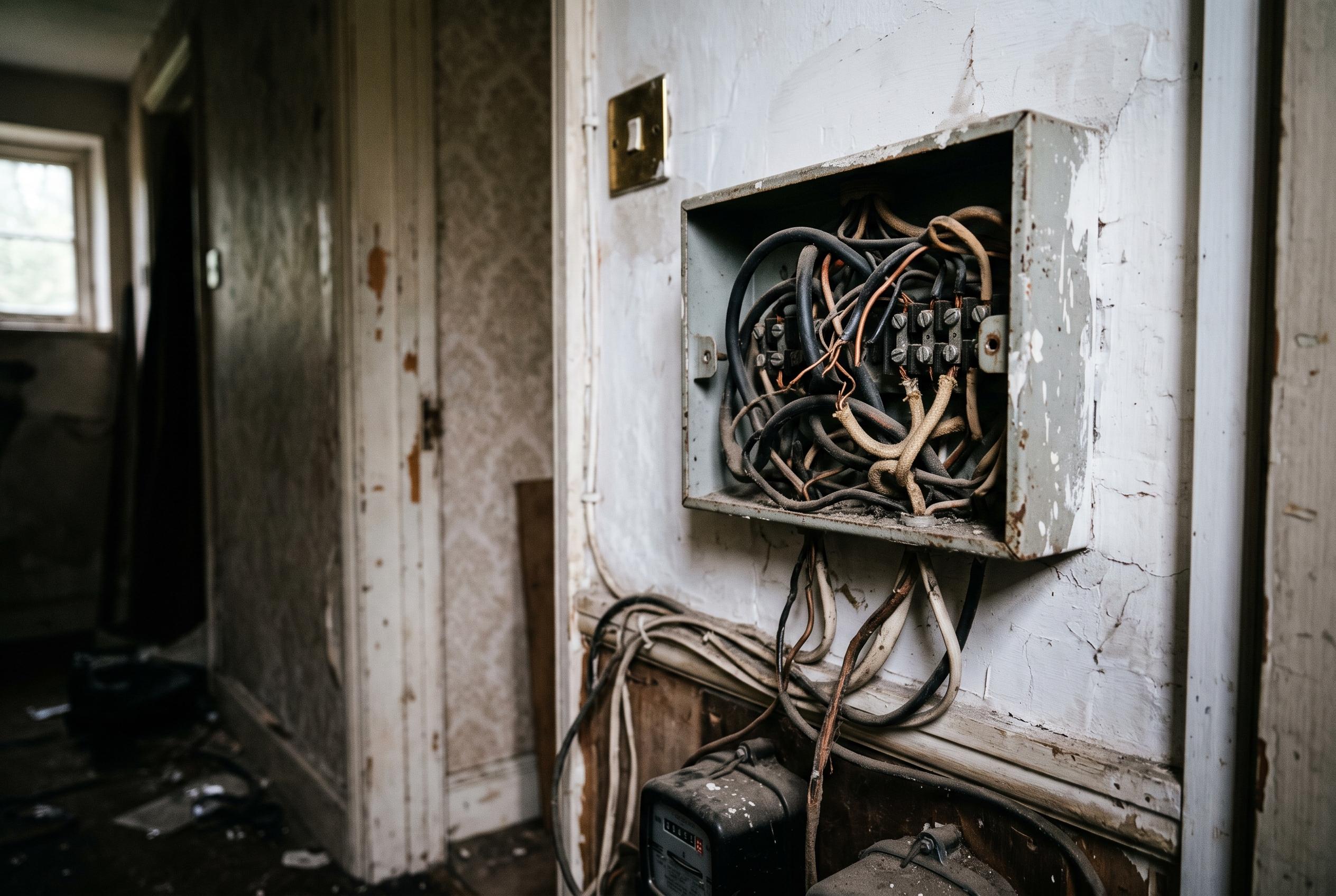

Many homes in England still rely on outdated electrical systems that may pose fire and shock hazards, especially as modern demands reveal the inadequacies of older wiring and consumer units. Experts warn that proactive inspections and upgrades are crucial to ensure safety in ageing housing stock.
A home does not need to go dark before its electrics become a problem. England’s housing stock still includes many properties built around older assumptions about how people use power, and a government housing survey found that, in 2008, about 40 per cent of dwellings had no residual current devices and roughly 30 per cent lacked modern overload protection. The same report noted that some of the earliest domestic wiring used lead or black rubber sheathing, and that degraded rubber insulation can leave the outer covering live. (assets.publishing.service.gov.uk)
That gap between “working” and “safe” is what worries electricians. This Old House quotes electrician Allen Gallant saying: “The circuits in these older homes weren’t designed to power the many gadgets of modern life.” The publication advises buyers, especially of homes more than 50 years old, and owners whose wiring has not been checked in years, to arrange a professional inspection. Gallant says that inspection should look for dried and fraying wire insulation, corrosion in the service panel, and unsafe alterations by previous owners, followed by periodic checks every five years. (thisoldhouse.com)
The pressure shows up most clearly in high-use rooms. Consumer Reports says kitchens need current wiring because so many appliances are plugged in there, and quotes Jim Nanni, its associate director of appliance testing, warning: “Wiring that’s not up to snuff can spark fires when those appliances power up.” The same article says a loose outlet, where a plug will not stay in place, is a warning sign rather than a minor irritation. It also says only 35 per cent of single-family homeowners reported having their wiring inspected in their current home, despite the risks. (consumerreports.org)
Some faults announce themselves before they become serious, but only if householders treat them as warnings rather than quirks. The Electrical Safety Authority’s homeowner handbook says dim, surging or flickering lights can point to a loose connection in a lighting circuit, a fitting or the electrical service itself, creating a shock risk or a fire hazard. The handbook also recommends testing GFCI outlets monthly. These are the sockets with test and reset buttons used in North American guidance; if power stays on after the test button is pressed, the device is defective, and the handbook says faults are more common in older units. (esasafe.com)
The fuse box, now more often called the consumer unit, also tells a story about the age of an installation. The English Housing Survey explains that older systems once used separate switch-and-fuse boxes for each circuit. In the 1960s to 1980s, those were commonly grouped into a smaller number of covered boxes. From the early 1980s, the consumer unit became the standard arrangement for the whole dwelling, designed to house miniature circuit breakers and residual current devices. In practical terms, that means newer units are built to disconnect power far faster when something goes wrong. (assets.publishing.service.gov.uk)
Modern demand no longer stops at the back door. The Royal Horticultural Society lists outdoor lighting, automatic irrigation, electric mowers, hedge trimmers, strimmers, pond pumps, heated propagators and some greenhouse heaters among the equipment now routinely used in gardens. It advises plug-in outdoor equipment to be used with an RCD, warns against operating electrical equipment in the rain or dragging cables across wet grass and hedges, and says very long extensions run from the house can overload and potentially cause fires. The RHS also notes that, since 1 January 2005, electrical installation work in homes in England and Wales falls under Building Regulations Part P, meaning new work must be carried out or certified by a qualified professional. (rhs.org.uk)
NICEIC’s guidance adds the technical detail that improvised outdoor power setups often ignore. It says all outdoor socket-outlets should be protected by an RCD and that most outdoor sockets sold for that purpose are rated IP66, meaning they are dust tight and protected against heavy water jets. Outdoor light fittings, it says, should be rated at least IP44 for protection against splashing water and solid objects. NICEIC also says cabling for exterior sockets must be suitable for outdoor use and buried deeply enough, where necessary, to avoid damage from garden tools such as a lawnmower cutting through a live cable. (niceic.com)
The practical message is that electrical work is easiest to judge before a renovation closes the walls and hardest to fix after problems appear under load. An inspection can show whether a home needs targeted repairs, extra circuits, more socket capacity or a full rewire, and whether the consumer unit still offers the level of protection expected from a modern installation. In an older property, especially one with a heavily used kitchen, ageing outlets or years of unreviewed alterations, waiting for a trip, a hot socket or a flicker is a poor maintenance plan. (thisoldhouse.com)
Disclaimer: This content is intended for informational purposes only. Readers are advised to exercise their own judgement, conduct due diligence, or consult a qualified expert before acting on any information provided.