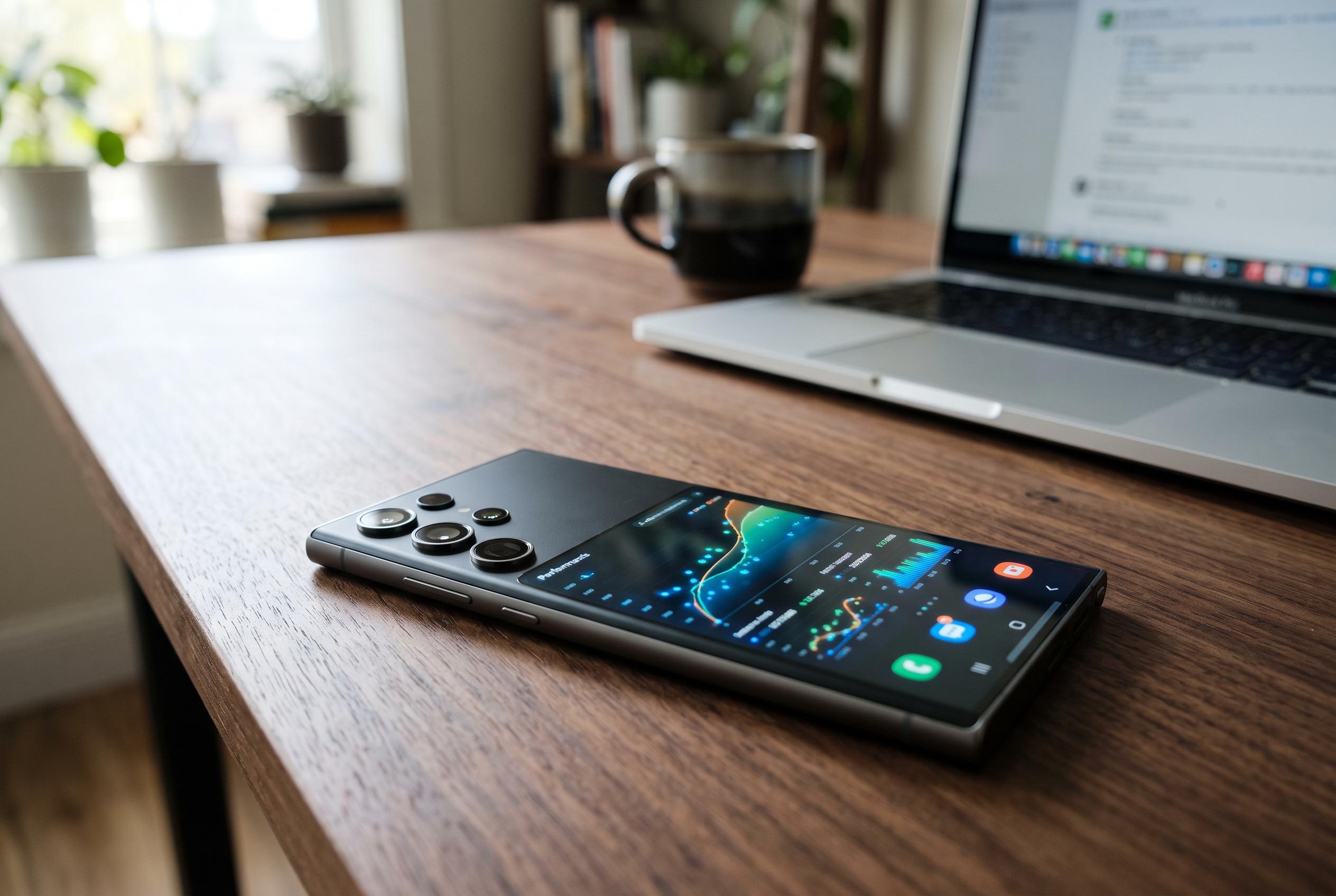

The Galaxy S26 Ultra convincingly beats Google’s Pixel 11 Pro XL in a real-world speed test, challenging Google’s claims of the Tensor G6 chip’s performance gains and reaffirming Samsung’s lead in flagship speed.
Samsung’s Galaxy S26 Ultra has come through the first widely watched real-world speed comparison with Google’s Pixel 11 Pro XL as the quicker and steadier handset, cutting through Google’s launch message that the new Tensor G6 chip would bring a notable jump in day-to-day performance. In PhoneBuff’s automated app-race test, as described by Geeky Gadgets on 8 September, Samsung’s phone pulled ahead not only in browsing and app launches but also in gaming, portrait processing, file work and background app retention.
That matters because Google had framed the Pixel 11 Pro XL as a more capable flagship rather than a routine refresh. In its 12 August launch post, the company said Tensor G6 would deliver 25% faster web browsing and 15% quicker app launches than the previous generation, alongside 50% more TPU compute and on-device AI processing up to 3.5 times faster while using up to 3.5 times less energy. Google also said the Pro XL would start at $1,299 with 256GB of storage, go on sale on 20 August, offer up to 3,600 nits on its Super Actua display, and receive seven years of OS, security and Pixel Drop updates.
Independent testing broadly supports only part of that pitch. Computerworld measured the Pixel 11 Pro XL at 2,736 single-core and 7,399 multi-core in Geekbench 6, up from the Pixel 10 Pro XL’s 2,326 and 6,413, but still well behind the Galaxy S26 Ultra’s 3,683 and 11,243. In 3DMark Wild Life, Computerworld recorded 13,761 for the Pixel against 31,036 for Samsung’s device. Even so, Dave Altavilla wrote in Computerworld that the phone “feels much more capable than the benchmark numbers suggest”, arguing that everyday responsiveness remains strong for business and mainstream users.
A more technical breakdown from Android Authority helps explain why the Pixel can feel quick at short tasks and still lose badly in heavier ones. The publication said Tensor G6 uses one Arm C1-Ultra core clocked at 4.11GHz, four Arm C1-Pro cores at 3.38GHz and two more C1-Pro cores at 2.65GHz. It found gains of roughly 18% in single-core and 21% in multi-core performance over the previous Tensor generation, but said a Galaxy S26 Plus still scored 18% higher in single-core and 51% higher in multi-core tests. Android Authority suggested Google’s deficit may reflect more conservative thermal behaviour or smaller cache sizes, and said GPU gains of only 7% to 10% were not enough to turn the Pixel into a serious gaming phone.
That is consistent with the wider benchmark picture from Tom’s Guide. Its full review put the Pixel 11 Pro XL at 2,713 and 7,453 in Geekbench 6, against 3,785 and 11,563 for the Galaxy S26 Ultra. In the same review, 3DMark Wildlife Extreme Unlimited came in at 3,249 for the Pixel and 6,645 for Samsung. Tom’s Guide also listed a Geekbench AI score of 9,349 for the Pixel 11 Pro XL, versus 83,047 for the Galaxy S26 Ultra. Those numbers do not invalidate Google’s claims about its own on-device AI stack, but they do show that Tensor G6 is not turning the Pixel into a class leader once independent cross-platform tests are applied.
There is, however, a meaningful qualification to the harsher verdict from the speed-test video. TechRadar said the Pixel 11 Pro XL is sold in both 12GB and 16GB memory configurations, and that its review unit was a 512GB model with 16GB of RAM. On that handset, the reviewer wrote that apps opened without delay and that moving between several apps while using picture-in-picture video or music was handled “without issue”. The same reviewer added: “I can’t vouch for what the experience is like on the base model.” That caveat matters because the speed-test criticism of the Pixel’s multitasking is tied closely to memory pressure, and some of the most negative coverage has focused on the lower-RAM version.
Battery and charging results also present a more mixed picture than a simple win-or-lose framing suggests. Google says the Pixel 11 Pro XL can deliver 15 hours of battery life from 15 minutes of wired charging. Tom’s Guide measured the phone at 14 hours and 28 minutes in its custom 5G web-browsing battery test, compared with 16 hours and 10 minutes for the Galaxy S26 Ultra, and found the Pixel reached 54% in 30 minutes while Samsung reached 77%. TechRadar’s testing was more favourable to Google’s charging story when the phone’s Extreme Charging Mode was enabled, taking the handset to 73% in 30 minutes and a full charge in 1 hour and 3 minutes, but without that mode the same review saw only 49% after half an hour.
The current consensus, then, is narrower than Google’s marketing but also less damning than a single speed race implies. The Pixel 11 Pro XL is clearly faster than its predecessor, and several reviewers say it remains smooth in ordinary use. Yet nearly every independent benchmark set, along with PhoneBuff’s real-world app test, points to the same conclusion: Samsung still holds a decisive lead in sustained performance, graphics headroom and aggressive multitasking.
That pattern was visible even before the phone shipped. On 11 August, Tom’s Guide reported an early Geekbench 7 listing for the Pixel 11 Pro XL showing 2,112 single-core and 5,196 multi-core, compared with 2,808 and 10,212 for the Galaxy S26 Ultra, while warning that Geekbench listings can be faked and that version 7 scores are not directly comparable with version 6. The final retail reviews have been less dramatic than that leak, but they have not overturned its basic message. Buyers choosing between the two phones are now looking at a familiar trade-off: the Pixel still sells software, cameras and Google’s AI-first approach, while Samsung continues to set the pace for raw flagship performance.
Disclaimer: This content is intended for informational purposes only. Readers are advised to exercise their own judgement, conduct due diligence, or consult a qualified expert before acting on any information provided.