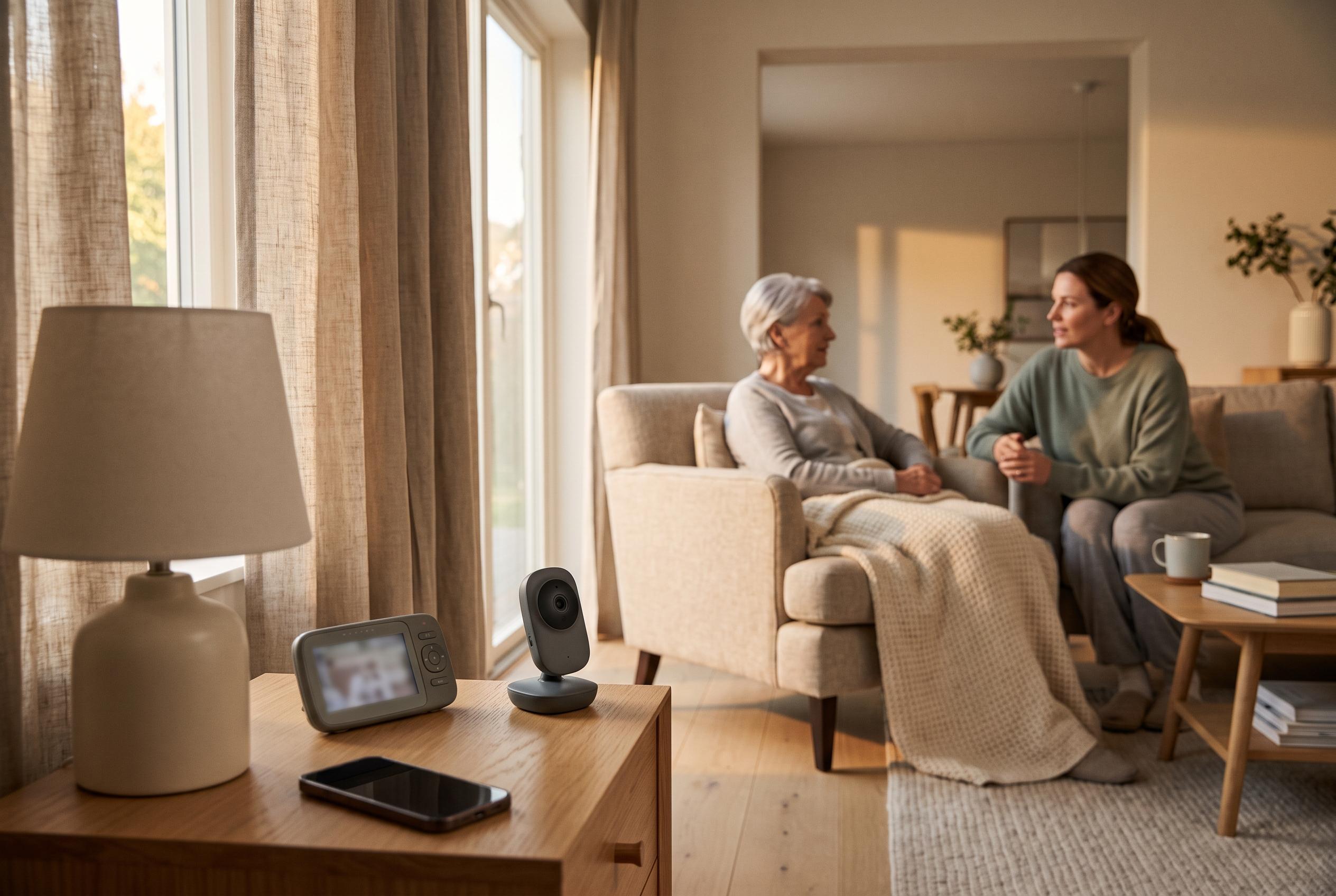

Baby monitors are increasingly being used for senior care, offering families a simple, reliable, and cost-effective way to monitor older relatives at home, with key features emphasising privacy, ease of use, and versatility for different needs.
Baby monitors are becoming an unexpectedly practical option for senior care, particularly for families who want a simple, low-cost way to keep an eye on an older relative at home. In the guide published by Peggy Omara, the strongest case is not for novelty but for reliability: clear two-way audio, a screen that is easy to read, dependable night vision, long wireless range, and a setup that does not depend on apps or monthly charges. Those are the same qualities that matter when the goal is not parenting, but ageing in place.
The article’s top recommendation is the HelloBaby 6-inch no-WiFi video monitor, which it presents as the best balance of usability and privacy. The appeal is straightforward. A larger display helps caregivers who are checking in from across a room, while the closed FHSS connection avoids the internet dependency that can make WiFi cameras less dependable. The guide also highlights long battery life as a major advantage, since a parent unit that lasts through overnight use reduces the risk of missing a problem simply because a device needed charging.
Cost is another theme running through the review. The GoodBaby 5-inch monitor is positioned as the value choice, while a smaller HelloBaby model is pitched as the budget option for families who mainly need basic room monitoring. The article argues that, for many households, these monitors can be more economical than subscription-based alert systems, especially where the need is observation rather than emergency dispatch. That trade-off may suit families already providing hands-on support and looking for a practical layer of oversight rather than a full medical response service.
The piece also distinguishes between ordinary ageing support and more complex dementia care. For that use case, it points to split-screen viewing, sound-level indicators and simple controls as especially useful. It also notes that some families may prefer audio-only monitoring, particularly if a parent is uneasy about cameras. At the other end of the spectrum, the KEENLUK monitor is presented as the best choice for two-way video calls, where face-to-face contact matters more than a closed, no-internet system.
Taken together, the guide’s conclusion is less about a single product than a care strategy. It recommends starting with one room, choosing a monitor with two-way audio and strong range, and prioritising ease of use over technical complexity. The underlying point is clear: for many families, a baby monitor can serve as a discreet, effective tool for checking on an older adult, catching small changes early and providing reassurance without constant intrusion.
Disclaimer: This content is intended for informational purposes only. Readers are advised to exercise their own judgement, conduct due diligence, or consult a qualified expert before acting on any information provided.