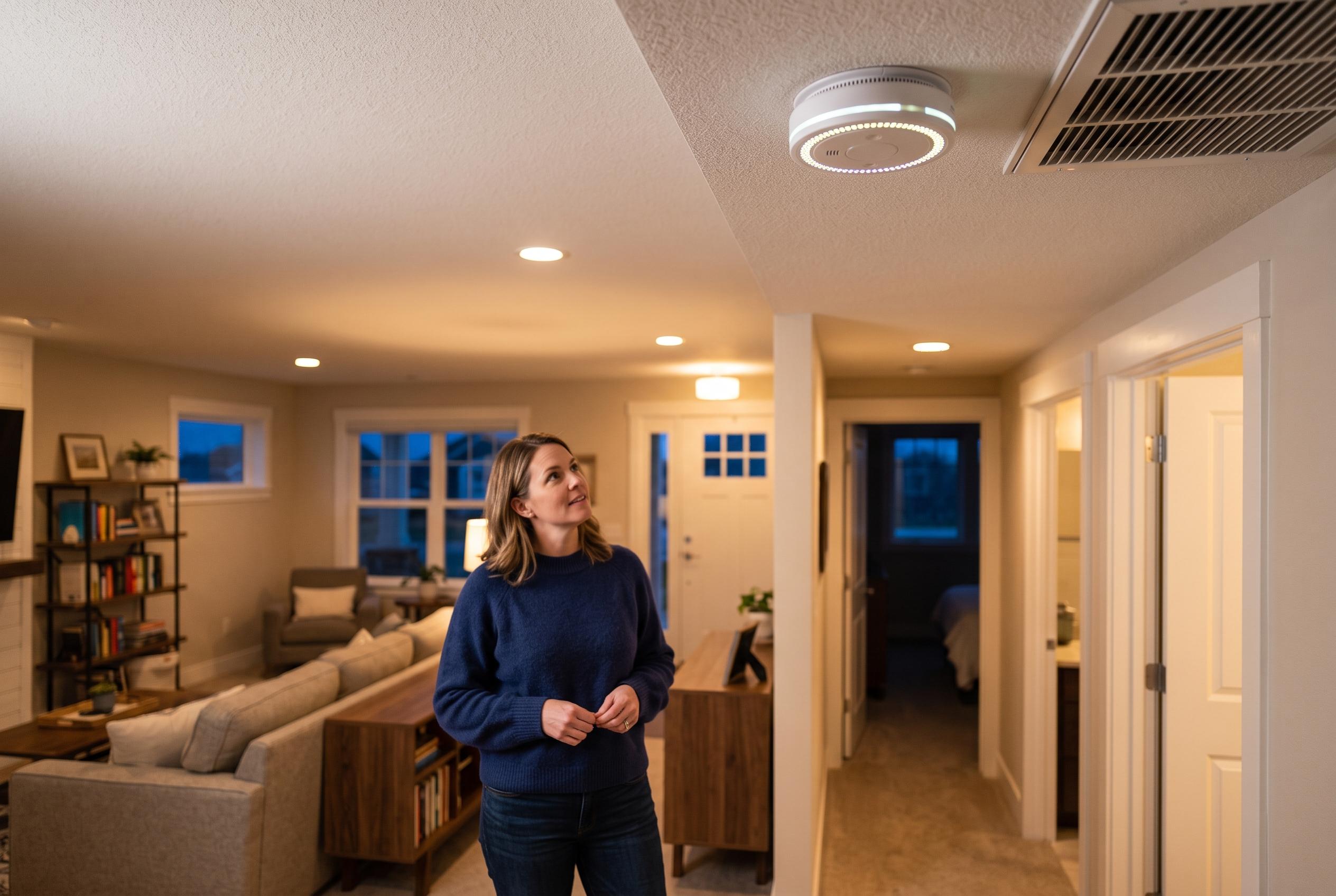

Advanced smart smoke alarms now integrate communication, automation, and safety features, shifting the focus from mere detection to holistic home safety systems tailored to various user needs.
Smart smoke detectors now do more than sound a siren. They can send alerts to a phone, link into wider home-security systems and, in some cases, coordinate with other alarms in the house. That wider functionality is the main reason buyers are comparing app support, ecosystem compatibility and installation method as closely as smoke-sensing performance.
Among current models, the eufy Security Smoke Alarm E10 is notable for its compact form factor and long battery life. Eufy says the unit is 70 mm across, uses UL 217-compliant detection to reduce false alarms, and is designed to run for up to five years on battery power. It also works with a compatible HomeBase hub, with a claimed wireless range of up to 200 metres, although that dependence on HomeBase may limit appeal for households that want a simpler standalone setup.
Kidde takes a more traditional safety-first approach with smart features layered on top. Its Smoke + Carbon Monoxide Alarm with smart features adds Wi-Fi notifications through the Kidde app and combines smoke and carbon monoxide detection in one device. According to Kidde, it is also designed to work with existing hardwired interconnected alarms, so one trigger can set off the rest of the system as well as mobile alerts. That makes it better suited to homes already built around a wired alarm network.
Review coverage from Tom’s Guide suggests the market is still split between fully connected systems and simpler battery-powered options. It named First Alert’s battery-powered SC5 as a top overall pick and highlighted X-Sense’s interconnected battery bundle as strong value, while noting that value-oriented kits can sacrifice smart-home platform integration. That trade-off matters: more connectivity can bring better automation and remote oversight, but it can also add setup steps and platform restrictions.
For buyers, the main decision is not simply which alarm is most advanced, but which one fits the property. Hardwired systems tend to suit permanent homes and larger alarm networks, while battery-powered units are easier to install in flats or rentals. Carbon monoxide detection is worth prioritising where fuel-burning appliances are present. And for smart-home users, compatibility with existing hubs or assistants can be the difference between a useful upgrade and an unnecessary complication.
Disclaimer: This content is intended for informational purposes only. Readers are advised to exercise their own judgement, conduct due diligence, or consult a qualified expert before acting on any information provided.