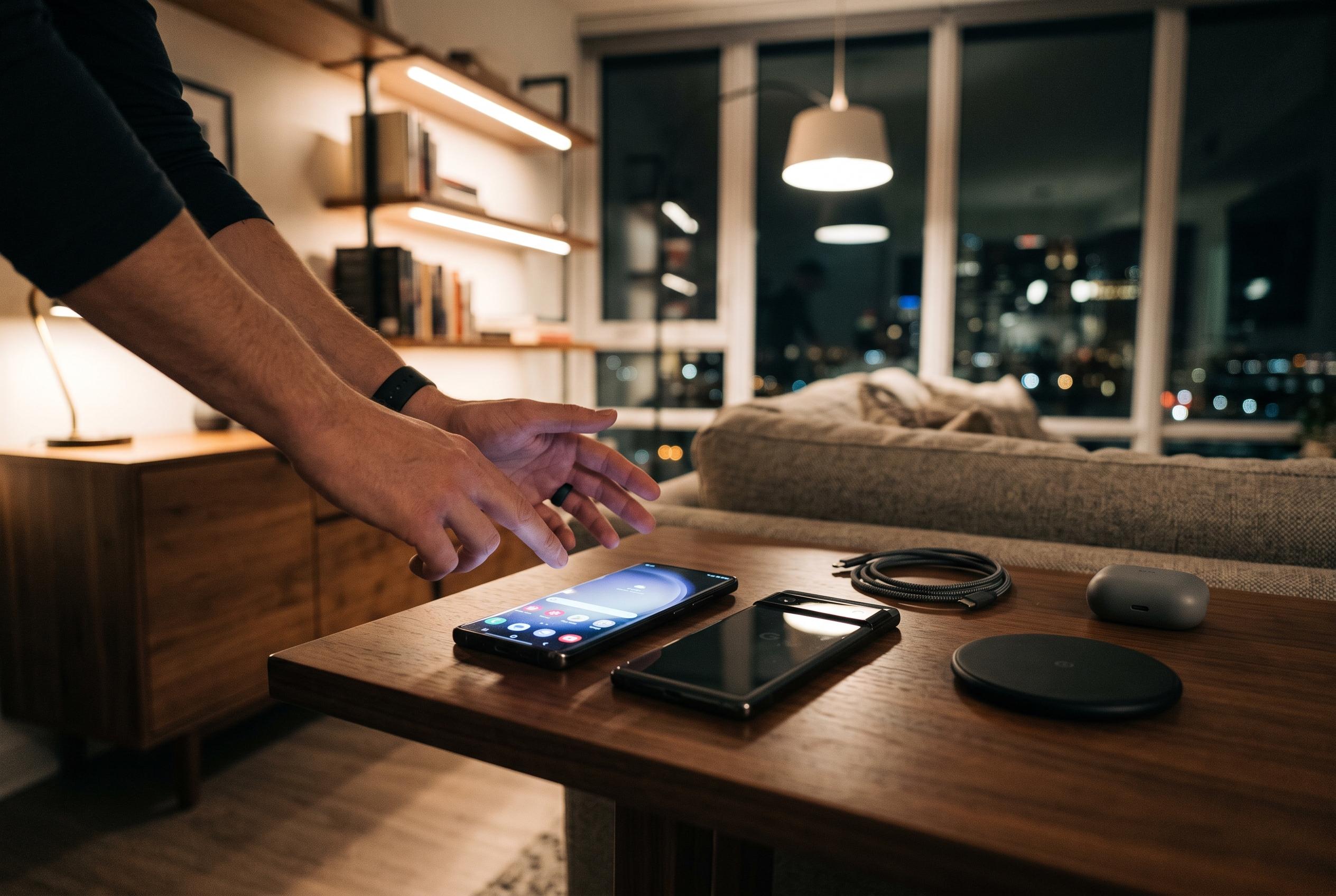

Samsung’s Galaxy S26 series takes the lead in raw performance and display quality, challenging Google’s AI-driven Pixel 11 in the US flagship smartphone market, as both brands appeal to different user priorities.
Google and Samsung are again the leading choices for buyers seeking a top-tier Android phone in the US, but they approach the category from different directions. The Pixel 11 family is built around Google’s AI-first software, stronger battery performance in the smaller models, and imaging tools that lean heavily on computation. Samsung’s Galaxy S26 range, by contrast, is the more conventional flagship line: slimmer, faster, more versatile for power users, and better suited to people who care about raw performance and video work. Several recent comparison pieces also reach that broad conclusion, with Gizmochina and Android Central both describing Samsung as the more complete all-round package, even while crediting Google’s devices for battery and camera strengths.
Price is one of the first points of separation. The Pixel 11 starts at $899, with Google partly offsetting the increase by shipping 256GB as standard. Samsung’s Galaxy S26 begins at $799.99 for the 128GB model, and at launch it avoided some of the component-cost pressure that hit rivals later on. Both ranges climb sharply as storage increases, but Samsung has also tended to benefit from quicker discounting, which improves its value proposition over time. That price gap is consistent across the lineup, with the Pixel 11 Pro and Pro XL sitting above their Samsung counterparts in most configuration tiers.
Design follows two different philosophies. Google keeps the Pixel’s familiar camera bar across the back, while Samsung uses a vertical triple-camera arrangement that is more restrained. The Pixel phones are also the larger and heavier devices overall, whereas the Galaxy S26 is the smaller and lighter option for people who want a compact flagship. All of the phones in both families are IP68-rated, and both companies use premium glass, but Samsung reserves its tougher Gorilla Glass Armor 2 for the display itself.
Display quality is close, yet Samsung has the edge in practical use. The Pixel 11 lineup uses OLED panels with higher peak brightness on the larger models, while Samsung’s Dynamic AMOLED 2X screens are paired with anti-reflective glass that improves visibility outdoors. The Galaxy S26 Ultra also adds a privacy display mode, which is useful when working in public. Both brands offer 120Hz adaptive refresh rates, but Samsung’s panels can fall as low as 1Hz on all models, helping to conserve battery.
Performance is where Samsung pulls away most clearly. The Pixel 11 uses Google’s Tensor G6, a chip tuned for on-device AI and camera processing rather than benchmark dominance. Samsung’s Galaxy S26 Ultra runs Qualcomm’s Snapdragon 8 Elite Gen 5 for Galaxy, which delivers much stronger scores in CPU and graphics testing. In practical terms, that means smoother gaming, better video editing, and more headroom for demanding tasks. The same pattern holds across the rest of the range, with the Galaxy S26 and S26+ outperforming the standard Pixel 11 in both general compute and graphics workloads. Android Central and 91Mobiles likewise note that the Samsung phones have the advantage for raw speed.
Cameras remain the Pixel’s most persuasive argument, although Samsung has narrowed the gap. Google’s phones produce more natural-looking images, and the Pixel 11 Pro models lean heavily on software for zoom and advanced processing. Samsung’s camera output is more saturated, but its latest night mode processing has improved enough to challenge Google’s long-standing advantage in low light. For video, however, Samsung is ahead. The Galaxy S26 Ultra can record 8K locally at 30fps, while the Pixel 11 Pro relies on Google’s cloud-based Video Boost workflow to upscale footage after capture. That dependence on an internet connection makes Google’s approach less convenient for serious video users.
Battery life is the one area where the Pixel series can look better on paper and in testing, particularly in the base model. Google gives the Pixel 11 a larger cell than Samsung’s standard Galaxy S26, plus support for Qi2 magnetic accessories through Pixel Snap. Samsung counters with faster charging on the larger S26+ and Ultra models, and its ecosystem is more flexible for productivity thanks to DeX. Both companies now promise seven years of operating system and security updates, which removes one of the old differentiators between them. In the end, the choice comes down to priorities: Pixel for AI, still photography, and longer endurance in smaller models; Galaxy for speed, display polish, and more capable video and productivity features.
Disclaimer: This content is intended for informational purposes only. Readers are advised to exercise their own judgement, conduct due diligence, or consult a qualified expert before acting on any information provided.