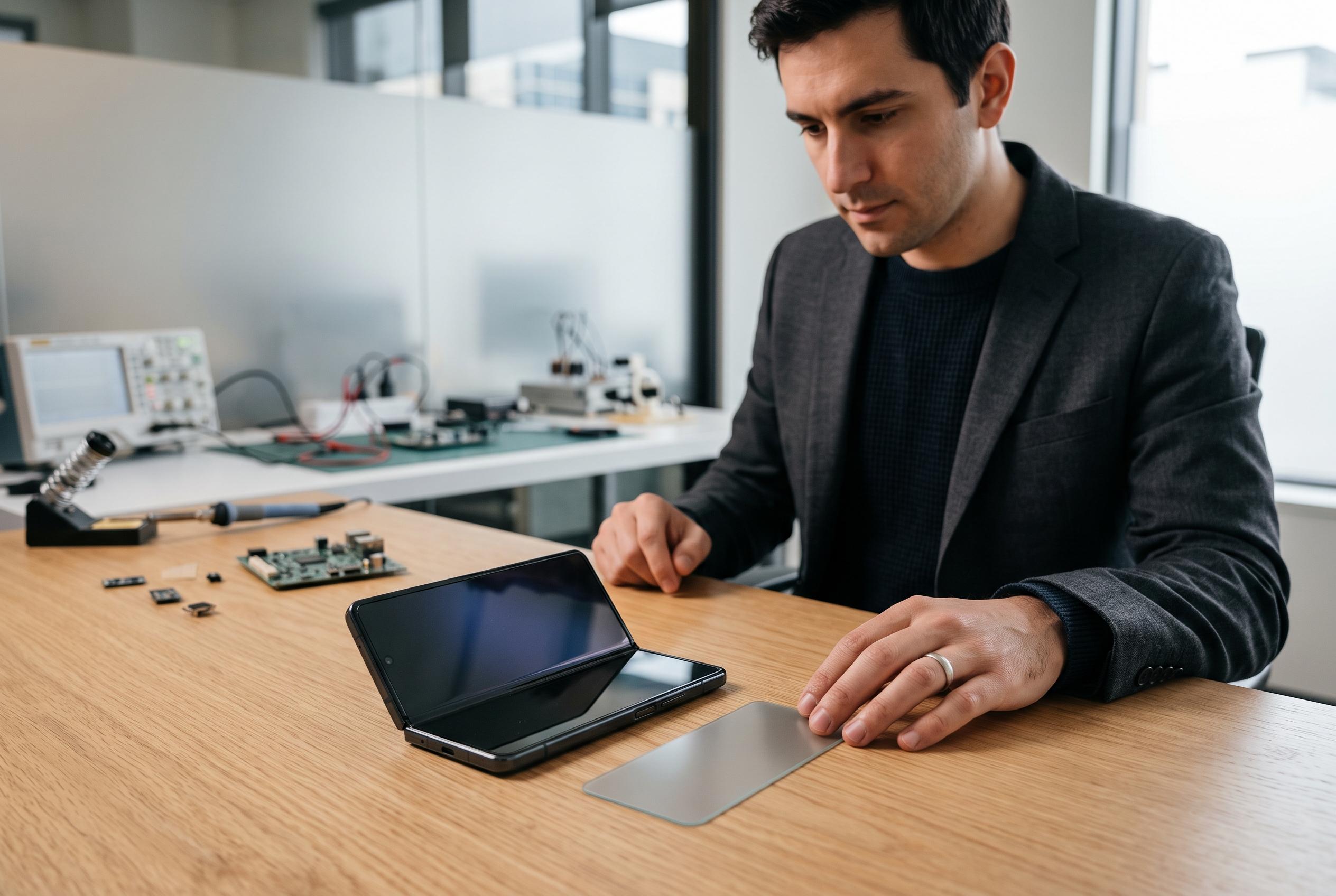

Huawei has launched its second tri-fold device, the Mate XT 2, highlighting its breakthrough in domestic chip design and new privacy features, amidst ongoing US trade restrictions and a controversial marketing saga.
Huawei has used the launch of its second tri-fold handset, the Mate XT 2, to push a wider message about its hardware ambitions under US sanctions. At a presentation in Guangzhou on 7 September, the company said the device is powered by the Kirin 9050 Pro, a chip it described as being built with domestic technology, and it set China-only sales from 12 September at 19,999 yuan, or about $2,980. Reuters reported the launch, the pricing and Huawei’s claim that the processor uses its LogicFolding architecture, but it did not independently verify the full manufacturing chain behind the chip.
The handset itself is an incremental but notable refinement of Huawei’s tri-fold concept. It uses an inward-folding G-shaped hinge, unlike earlier outward-folding designs, so the main screen is better protected when closed. Huawei says the phone opens to a 10.2-inch tablet-sized display and folds down to a 6.5-inch external screen. Industry reports also describe a 120Hz outer panel, a 90Hz inner panel, a 299g body and a thickness of around 4.0mm when unfolded. The device is also said to carry IP58 and IP59 ratings, which would make it unusually resistant for this class of foldable.
Huawei has added several features aimed at premium buyers. Among them is a hardware privacy display that narrows viewing angles so people nearby cannot easily read the screen, something T3 said is a first for a foldable phone. Other reported specifications include HarmonyOS 7, a 5,600mAh battery, up to 16GB of RAM and as much as 2TB of storage, depending on the variant. Gizmochina also reported a revised camera system with a 50-megapixel main sensor, an ultra-wide lens and a periscope telephoto unit.
The more strategically important development is the chip. Huawei says the Kirin 9050 Pro is based on a two-layer vertical stacking approach that increases transistor density without relying on conventional process-node scaling. Technode reported that Huawei claimed a 42% overall performance gain over the previous Mate XTs, including 24% in single-core tests and 52% in multi-core tests. Those figures remain company claims, and independent benchmarks have not yet confirmed them. The launch matters because it marks Huawei’s first new Kirin flagship chip in six years, according to Technode, and because it signals how far the company has pushed domestic chip design after years of US export controls.
The launch also arrived alongside a separate controversy over marketing. Tech creators including GregsGadgets, Marques Brownlee and JerryRigEverything said they received similar outreach offering paid cooperation while instructing them not to label the work as sponsored. GregsGadgets posted the brief and said the approach would breach disclosure rules, while Brownlee called the email “fully insane”. Huawei later said on X that it had not issued or authorised the campaign and was investigating the source of the brief, while stressing that it supports transparent disclosure. The episode has added an awkward note to a product introduction that was meant to showcase both engineering progress and commercial momentum.
Disclaimer: This content is intended for informational purposes only. Readers are advised to exercise their own judgement, conduct due diligence, or consult a qualified expert before acting on any information provided.