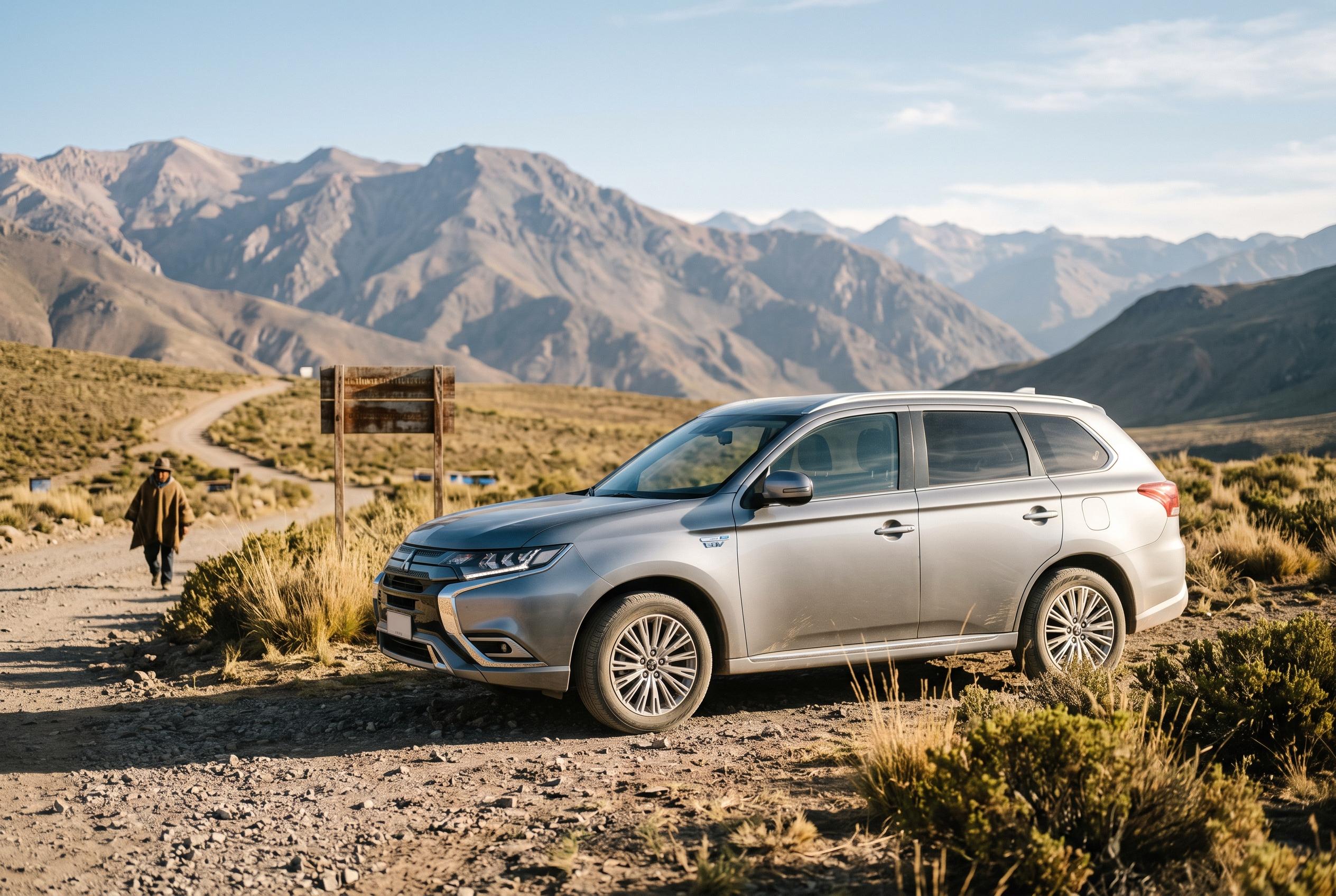

As Chile’s plug-in hybrid sales surge, experts emphasise that careful charging and temperature management are key to extending battery life and maintaining vehicle performance in a rising market.
Chile’s plug-in hybrid market is expanding quickly, and with it comes a more practical question for owners: how can the battery be kept healthy for longer? According to the National Automotive Association of Chile, sales of zero- and low-emission new vehicles reached 34,818 units between January and July 2026, while plug-in hybrid electric vehicles rose by 219.6% year on year to 4,429 units. The figure reflects strong interest in a technology that blends short daily electric driving with the security of a combustion engine for longer trips.
The central point, specialists say, is that battery life depends far more on use patterns than on chance. A Geotab study covering more than 22,700 electric vehicles found average capacity loss of about 2.3% a year and suggested that charging behaviour matters more than age alone. That aligns with the basic design of a plug-in hybrid: unlike a full battery electric vehicle, it usually relies on a smaller battery that is cycled more fully in ordinary use, making charging discipline especially important.
The most widely repeated advice is also the simplest. Owners are generally better off keeping the battery between 20% and 80% for everyday use, rather than leaving it at the top of its range for long periods. José Luis Díaz, product manager at Lynk & Co Chile, told the outlet that vehicle battery management systems continuously monitor temperature, voltage and state of charge to protect the pack. Technical guidance from manufacturers and insurers similarly points to avoiding long periods plugged in at 100% as a sensible precaution, while reserving a full charge for journeys that genuinely need the extra range.
Temperature control is the other major factor. Research published on ScienceDirect found that hot conditions, especially without cooling, can sharply shorten the life of plug-in hybrid batteries, while air cooling can substantially extend durability. That supports a broader recommendation from industry specialists: avoid repeated fast charging when it is not necessary, do not leave the car exposed to intense sun for long periods, and try to use the battery regularly rather than letting the system sit idle for extended stretches. Smooth driving also helps, because hard acceleration and heavy braking increase stress on the battery and reduce electric range.
There is also a practical reason to charge a plug-in hybrid often. Car and Driver has noted that a PHEV can still run without being plugged in, but doing so reduces electric-only range and pushes the car to rely more heavily on its petrol engine. The US Department of Energy’s Alternative Fuels Data Center explains that plug-in hybrids are designed to use both grid electricity and regenerative braking to cut fuel use and operating costs. In Chile, where many brands offer battery warranties of around eight years or 160,000 kilometres, usually with a minimum capacity guarantee of roughly 70%, the long-term condition of the pack depends largely on how carefully owners manage charging, heat and daily use.
Disclaimer: This content is intended for informational purposes only. Readers are advised to exercise their own judgement, conduct due diligence, or consult a qualified expert before acting on any information provided.