
Innovative smart socks for infant monitoring are evolving, offering parents a choice between comprehensive vital-sign tracking and simple movement detection, reflecting differing family priorities amid safety concerns.
Smart baby monitoring socks have become a distinct category in infant care, promising parents a clearer picture of sleep and breathing during the most anxious weeks after birth. In Peggy O’Mara’s 2026 guide, the central distinction is between devices that measure pulse and oxygen directly and those that watch for movement instead. That difference matters. One approach offers richer data and tighter alerts; the other aims for simplicity, portability and fewer distractions.
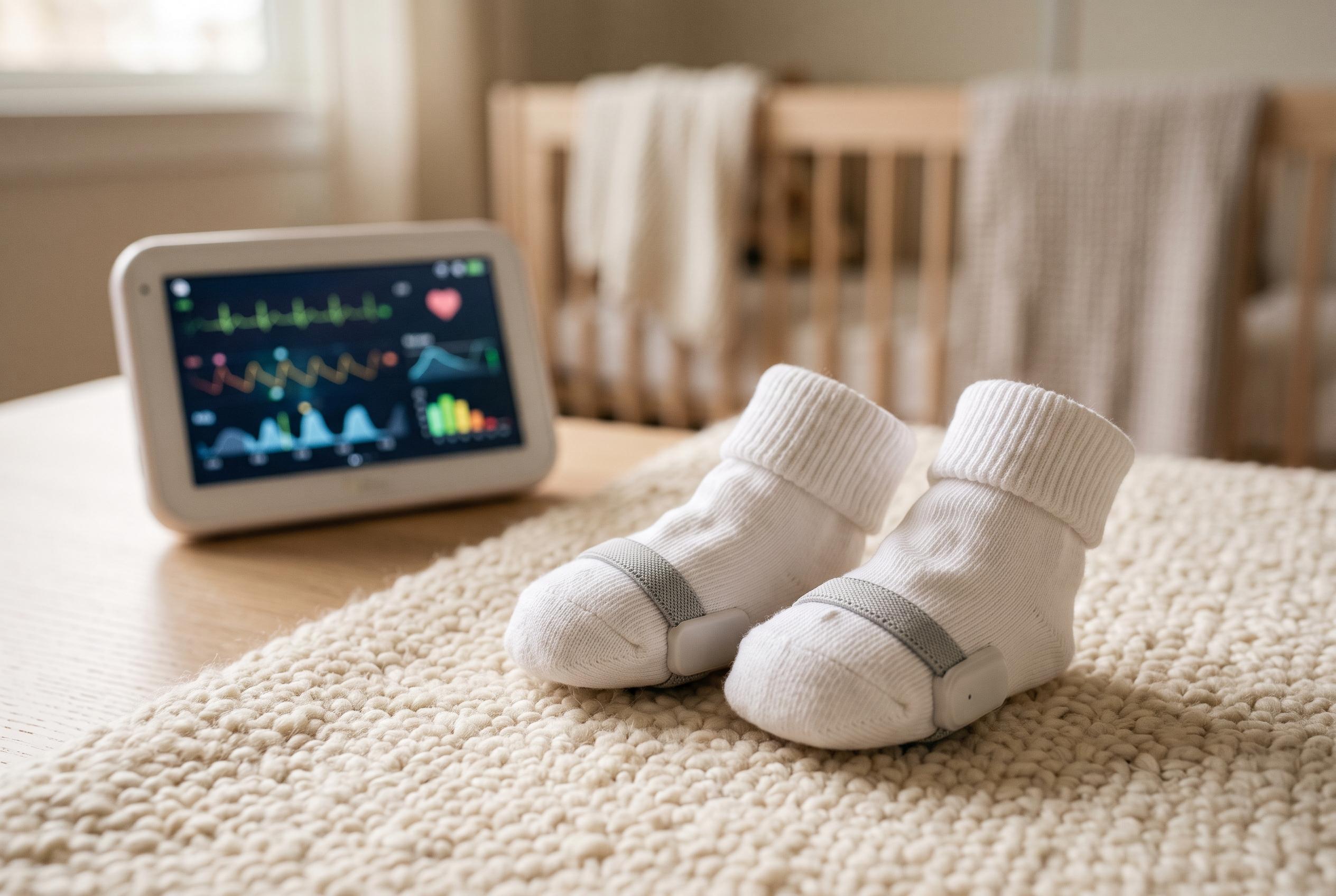
Among the devices reviewed, the Owlet Dream Sock remains the clearest example of a vital-sign monitor built for mainstream use. According to Owlet’s support material, the Dream Sock replaced the earlier Smart Sock 3 in the US and Canadian markets and was launched as a wellness device that shows live pulse rate and oxygen saturation trends. The guide also notes that Owlet’s newer systems have added FDA-cleared tracking, which has become a major selling point for parents who want regulatory review alongside app-based monitoring.
The strongest alternative for families that want to avoid WiFi dependence is the Snuza Hero SE. Snuza describes it as a lightweight clip-on aid that detects movement while a baby sleeps, vibrating after 15 seconds without movement and sounding an alert five seconds later if stillness continues. The company also says the device uses a replaceable battery with a typical life of up to six months and is made without BPA, phthalates, lead or latex. The guide treats that simplicity as the Hero SE’s main appeal, particularly for travel and for parents who prefer a device that does not rely on an app.
O’Mara’s review also places the emphasis on how these products fit into different family routines rather than on features alone. Owlet’s own materials describe the Dream Sock as a peace-of-mind product, and the guide echoes that view while warning that even FDA-cleared or sensor-based monitors do not replace safe sleep practice. The device can provide useful trend data and alerts, but it can also produce nuisance alarms and depends on stable connectivity and nightly charging. By contrast, movement-based monitors trade detail for a lower-friction experience.
That is why the guide’s ranking is ultimately practical rather than purely technical. The Owlet Dream Sock is presented as the best overall option for parents who want the most complete monitoring package, especially when paired with camera systems in the brand’s broader lineup. The Snuza Hero SE is positioned as the value choice for families who want a more stripped-back tool with no wireless setup. The wider lesson is simple: the right monitor depends less on brand prestige than on whether a family wants vital-sign data, movement-only reassurance or a blend of both.
Disclaimer: This content is intended for informational purposes only. Readers are advised to exercise their own judgement, conduct due diligence, or consult a qualified expert before acting on any information provided.