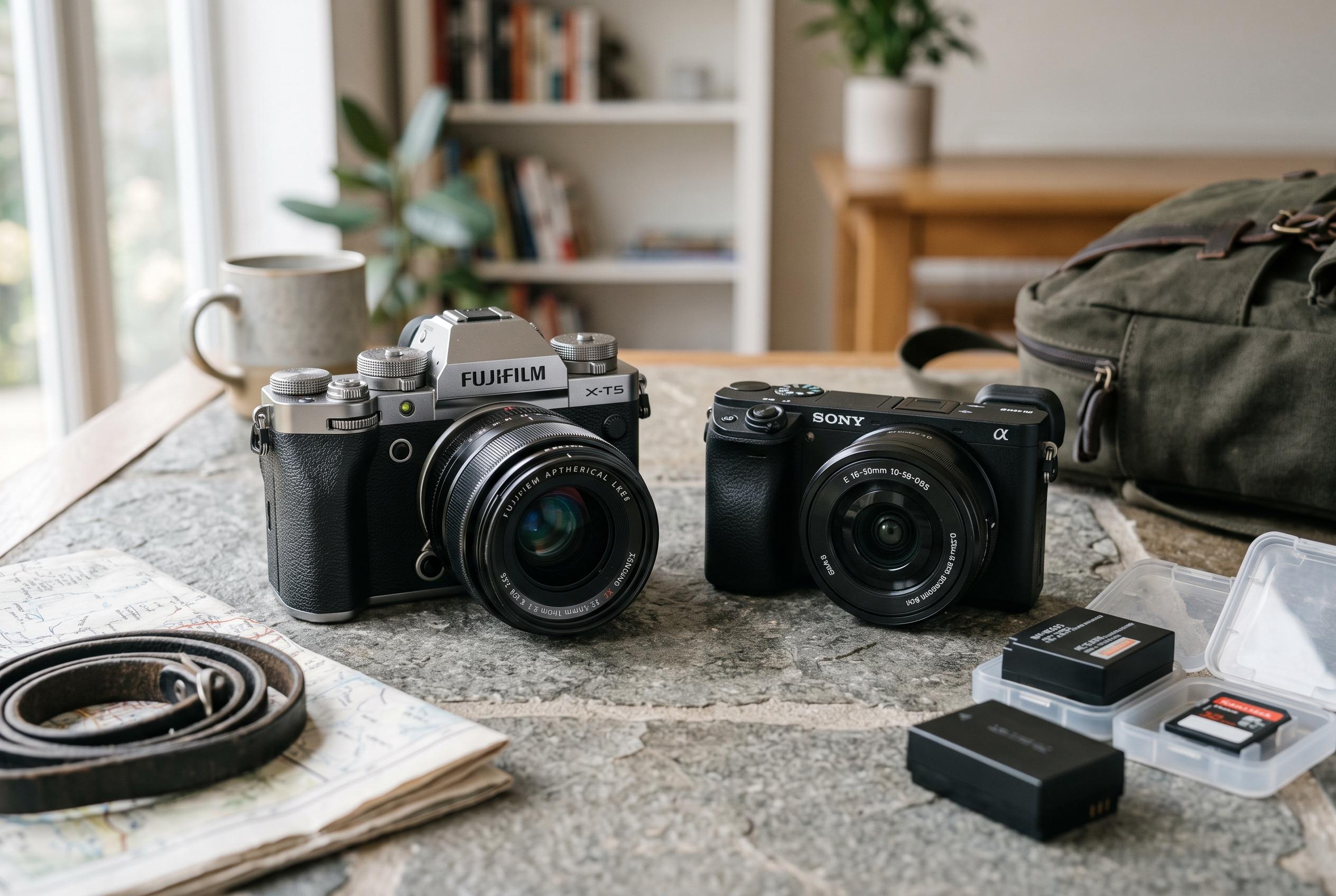

Fujifilm’s new X-E5 and X-M5 cameras highlight differing user needs, with the X-E5 targeting enthusiasts with higher resolution and robust build, while the X-M5 offers affordability and portability for casual and travel photography.
Fujifilm’s X-M5 and X-E5 sit close together on the shelf, but they are aimed at very different buyers. The gap is not just one of price, which can be roughly $1,000; it is also a split in priorities. According to Fstoppers, one camera is designed to keep costs down and travel light, while the other asks a premium for a more substantial body and a higher-resolution sensor.
That divide starts with handling. The X-M5 is the smaller and lighter body, and RTINGS says it is especially well suited to travel, vlogging and general everyday use, although it lacks an electronic viewfinder and in-body image stabilisation. The X-E5, by contrast, has a more traditional Fujifilm layout, a firmer grip and a more solid feel, with Digital Camera World noting that its larger body is partly explained by IBIS. DPReview also points to the X-E5’s added control points and more confident handling, while Tom’s Guide describes the camera as compact, retro in style and appealing to photographers who value form as much as function.
The screens reinforce that split. The X-M5 uses a fully articulated display, which makes it the more obvious choice for self-shooting and video framing. The X-E5 has a tilt screen instead, a setup still preferred by many stills photographers because it keeps the rear of the camera cleaner and less bulky. DPReview notes that the X-E5’s screen can tilt up and down, while its small OLED viewfinder gives it a more conventional stills-camera character. In practice, that means the X-M5 is easier to use for casual video work, while the X-E5 is more clearly optimised for photographing from eye level.
Image quality is where the more expensive body pulls ahead. Tom’s Guide and Cameralabs both identify the X-E5’s 40.2-megapixel APS-C sensor as the key reason for its higher asking price, and that extra resolution gives photographers more room to crop or print. The X-M5’s 26-megapixel sensor is still capable and, for social media or everyday use, the difference is often subtle. But once files are pushed harder, the X-E5 has the edge. The trade-off is that the X-M5 gives buyers a much lower entry point, which matters because lenses often cost as much as the body itself.
That practical reality is central to the decision. As Fstoppers argues, spending close to the X-E5’s asking price can leave less money for glass, while the X-M5 makes it easier to build a system without straining the budget. Tom’s Guide says the X-E5 is a strong option for committed Fujifilm fans, but less convincing on value, especially when compared with other models in the same rough price band. The X-M5, meanwhile, remains Fujifilm’s most affordable mirrorless body and, despite its omissions, gives buyers access to the brand’s film simulations, compact size and flexible video tools. For photographers who want the best body they can justify, the X-E5 is the more refined machine. For those who want to spend sensibly and save for lenses, the X-M5 is the more balanced choice.
Disclaimer: This content is intended for informational purposes only. Readers are advised to exercise their own judgement, conduct due diligence, or consult a qualified expert before acting on any information provided.