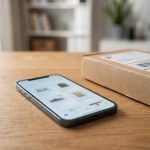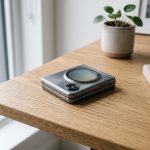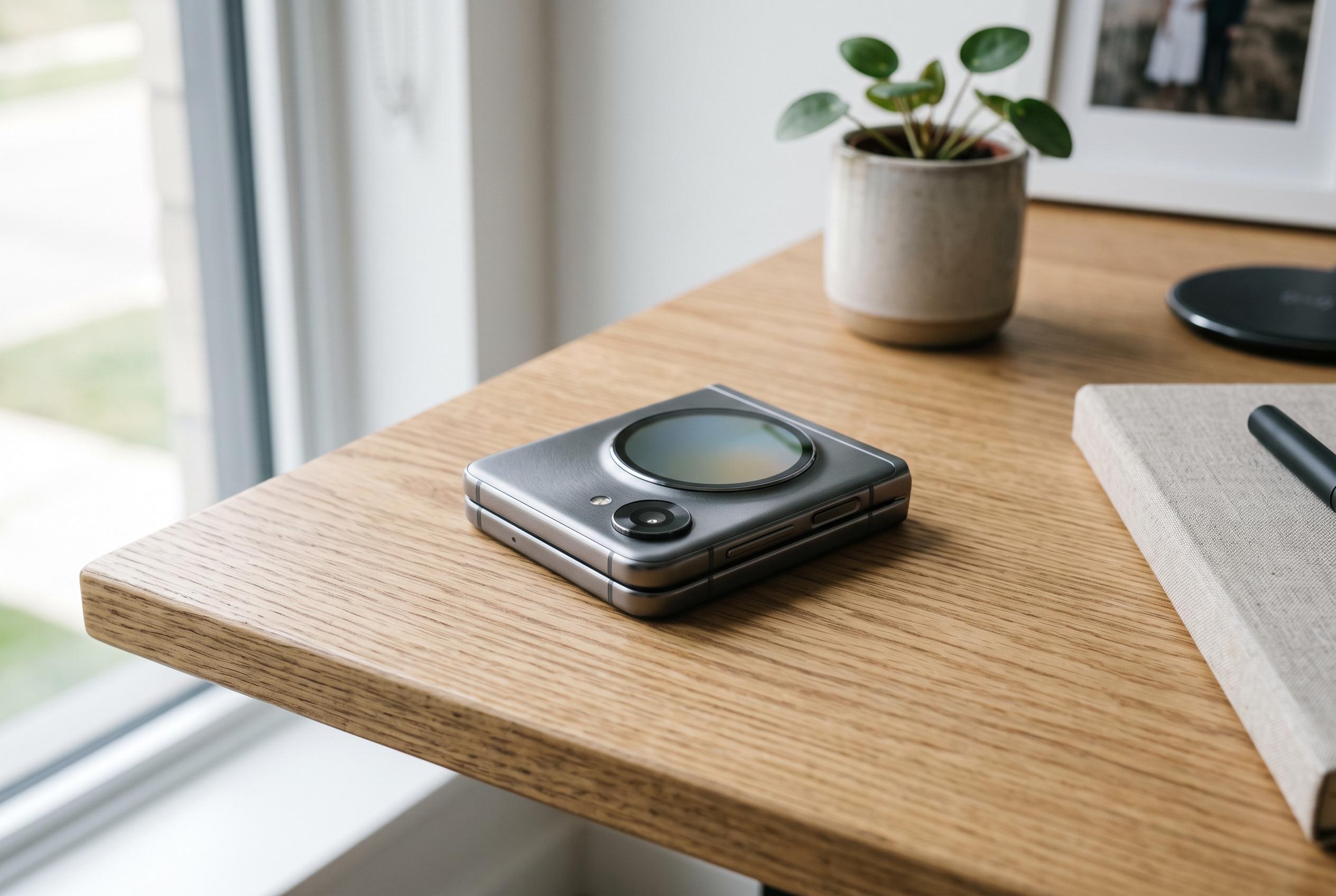

The Nubia Flip2, launched in January 2025, challenges the premium perception of foldable devices by offering a compact, functional, and budget-friendly clamshell foldable, despite certain compromises in hardware and software.
nubia Flip2 arrives as a useful reminder that a foldable does not have to sit at the top end of the market to be interesting. According to the review, it was launched in January 2025 and still looks current enough to matter, especially because the clamshell segment has become unusually static. What makes it stand out is not raw specification, but the fact that it offers the foldable form for roughly mid-range money rather than for a premium usually associated with the category.
That price point inevitably brings compromises, and the hardware reflects them. The phone uses a MediaTek Dimensity 7300X platform, a single main camera and a relatively small 3-inch outer display, but the overall package is still more coherent than the specification sheet might suggest. In the same comparison table, it sits alongside far more expensive rivals such as the Samsung Galaxy Z Flip8, Motorola Razr 70 Ultra and Xiaomi MIX Flip, which helps underline how unusual nubia’s positioning is: it is trying to make foldables feel attainable rather than aspirational.
Physically, the device is compact and well-proportioned. The review notes that it is close in size to premium clamshell rivals when unfolded, at 7.2 mm thick, yet it avoids the kind of large camera bump that can upset the design balance on thinner phones. The outer screen is modest, but it remains genuinely useful for checking notifications, time, weather and selected apps without opening the handset. The 6.9-inch internal OLED panel has a 21:9 aspect ratio, 120Hz refresh rate and a sharp 2790 × 1188 resolution, making it one of the stronger parts of the device.
There are limits, though. The crease is visible, even if it is not especially intrusive, and the hinge is rated well below the more ambitious figures claimed by many competitors. The review also stresses that the phone lacks a formal dust and water resistance rating, so it is best treated as a careful-use device rather than a rugged one. Materials are respectable for the class, with an aluminium frame and textured glass back, but the overall finish is restrained rather than luxurious.
Software is a mixed picture. The review says the phone runs Android 16 with nubia’s MyOS 16 interface, adapted for folding use, although parts of the software still appear awkwardly translated. The outer display can handle a surprising range of tasks, including calls, messaging, camera control and some social apps, while the inner screen supports split-style layouts in the half-open position for activities such as photography and video calls. That flexibility is welcome, even if the implementation is not as polished as Samsung’s best foldable software.
Performance is broadly in line with the price. The Dimensity 7300X is a mid-tier chip built specifically for dual-screen devices, and the review found that it was sufficient for everyday use and moderate gaming, but not for flagship-level workloads. Memory configurations run from 6GB to 12GB of RAM, with storage options up to 512GB, though there is no memory card slot. Battery life is less convincing: the 4,325mAh cell is adequate rather than strong, and the device lasted 13 hours and 20 minutes in a standard video loop test. Charging is rated at 33W, but no charger is included in the box.
Camera performance is similarly pragmatic. The main 50-megapixel sensor is capable of decent daylight shots, but the review describes the results as merely average, with limited dynamic range and too much sharpening. Low light is more forgiving, although autofocus can struggle. There is also a 32-megapixel front camera, plus the practical advantage of using the rear camera for selfies with the outer display as a viewfinder. Nubia adds a number of creative filters, portrait effects and stylised modes, which give the camera app more personality than many rivals, even if they do not change the underlying quality of the imaging system.
Taken as a whole, nubia Flip2 is not trying to win the spec race. It is trying to prove that a foldable can be compact, distinctive and relatively affordable without being stripped of all ambition. According to the review, it succeeds often enough to feel like a credible alternative in a market where many clamshell phones chase headline features first and usability second. Its flaws are real: the cameras are limited, the software is imperfect, the battery is only average and support may not last long. But the broader idea works, and that is what makes the phone worth noticing.
Disclaimer: This content is intended for informational purposes only. Readers are advised to exercise their own judgement, conduct due diligence, or consult a qualified expert before acting on any information provided.