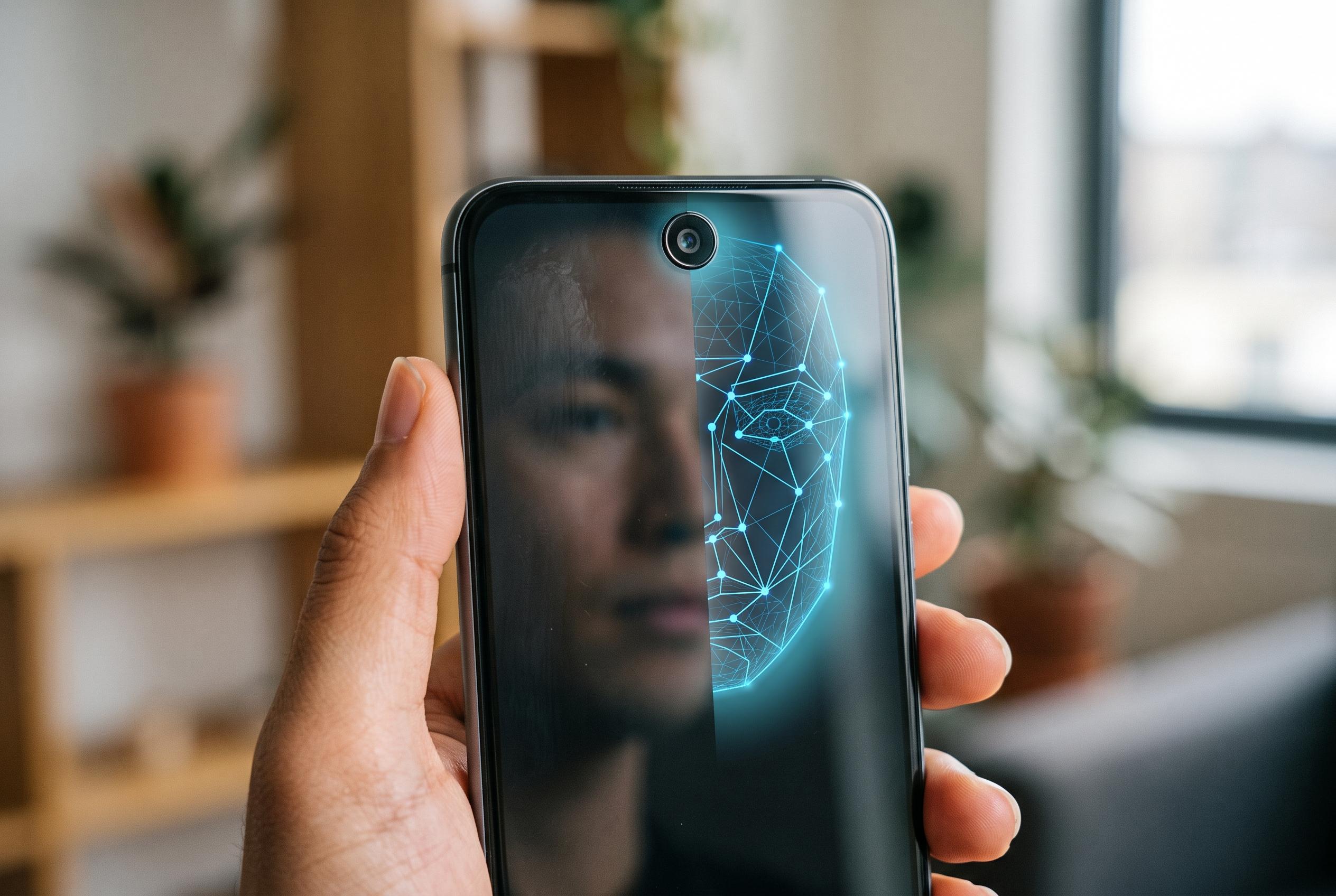

Many Android facial unlocks fail due to simple factors like lighting and dirt, while Apple’s Face ID offers a more robust but complex alternative. Experts advise cleaning lenses, checking lighting, and re-enrolling faces for improved recognition.
On Android phones, facial unlock failures are often down to something basic rather than a deeper fault in the handset. In many models, the system relies chiefly on the front camera, so poor lighting, dirt on the lens or a change in your appearance can be enough to interrupt recognition. By contrast, Apple’s Face ID uses the TrueDepth camera system to build a 3D map of the face, which makes it more robust but also more complex when it fails.
The first step is to clean the front camera and check the lighting around you. Strong backlighting, complete darkness, spectacles, a mask or any other partial obstruction can confuse camera-based facial unlock. If the problem continues, it is worth restarting the device, then deleting the stored face data and registering it again through the security or biometrics menu, depending on the brand.
Android has also gained options in recent versions that can improve recognition in specific situations, including when wearing glasses. That matters because many manufacturers still use simpler front-camera systems rather than dedicated depth sensors, so the quality of the scan depends heavily on the angle, distance and environment at the moment of registration.
On an iPhone with Face ID, the issue is not usually the selfie camera alone. Apple says the TrueDepth system projects and analyses thousands of invisible dots to form a secure facial model, and the data stays on the device rather than being backed up to iCloud. If Face ID becomes unreliable, Apple recommends re-enrolling the face, while third-party guidance has found that adding an “Alternate Appearance” can help when a user’s look changes because of makeup, hairstyles or similar differences.
Disclaimer: This content is intended for informational purposes only. Readers are advised to exercise their own judgement, conduct due diligence, or consult a qualified expert before acting on any information provided.