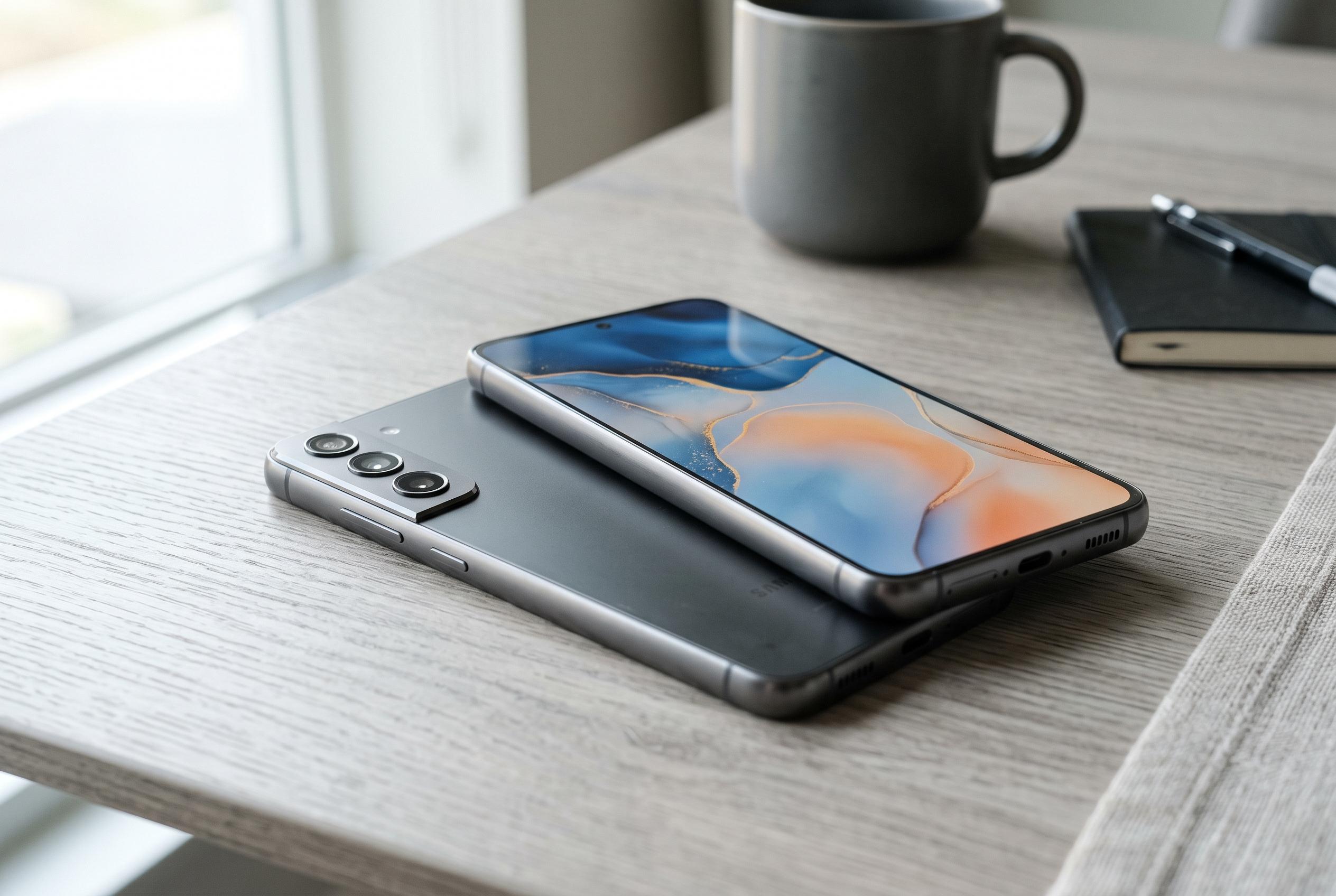

The Galaxy S26 FE balances premium design and software updates with practical hardware, positioning itself as a reliable daily driver rather than a flagship revolution.
Samsung’s Galaxy S26 FE is an easy phone to respect, even if it is not especially exciting. It sits squarely in the middle of the company’s range with a 6.7-inch FHD+ Dynamic AMOLED 2X display, an Exynos 2500 chip, 8GB of RAM and a 4,900mAh battery. Notebookcheck and Tom’s Guide both describe it as a polished but cautious update, with premium materials, a bright screen and familiar hardware rather than a bold redesign.
That balance is the point, and also the limitation. The phone uses an aluminium frame, Gorilla Glass Victus+ and IP68 protection, and weighs 193g with a 7.4mm profile, according to Gizmochina and PhoneArena. It launched on 4 September in the US, starting at $699 for 128GB and rising to $799 for 256GB, with Blueberry, Graphite and Pistachio finishes available. Those figures place it firmly in premium mid-range territory, even though much of the hardware arrangement is close to what Samsung has shipped before.
Samsung’s software pitch is stronger. The S26 FE ships with Android 17 and One UI 9, and Samsung says it will receive seven years of OS and security updates. SamMobile reports that the phone also debuts updated Galaxy AI features, including Now Brief, Now Nudge and expanded Circle to Search tools, while newer camera additions such as My FanCam and Super Steady with Horizontal Lock are meant to make the device feel more modern than its specification sheet suggests.
On camera hardware, the S26 FE is practical rather than flashy. The rear array combines a 50MP main camera with OIS, a 12MP ultra-wide and an 8MP telephoto lens with 3x optical zoom, while the front camera is 12MP. Review coverage from MakeUseOf says daytime photos are crisp and colourful, night shots remain usable, and stabilisation is a particular strength for handheld video. That makes it a credible all-rounder for everyday shooting, even if it does not quite reach the level of the best camera phones.
Performance is where the compromises show most clearly. MakeUseOf’s testing found the Exynos 2500 capable in day-to-day use, but prone to heat and throttling under sustained load, while Notebookcheck also flags limited gaming performance as a weakness. The 4,900mAh battery and 45W wired charging should provide comfortable all-day use, and wireless charging is supported at 15W, but the device feels more appealing as a dependable daily driver than as a phone for heavy gaming or prolonged graphics work. In that sense, Samsung has made a sensible handset rather than a standout one.
Disclaimer: This content is intended for informational purposes only. Readers are advised to exercise their own judgement, conduct due diligence, or consult a qualified expert before acting on any information provided.