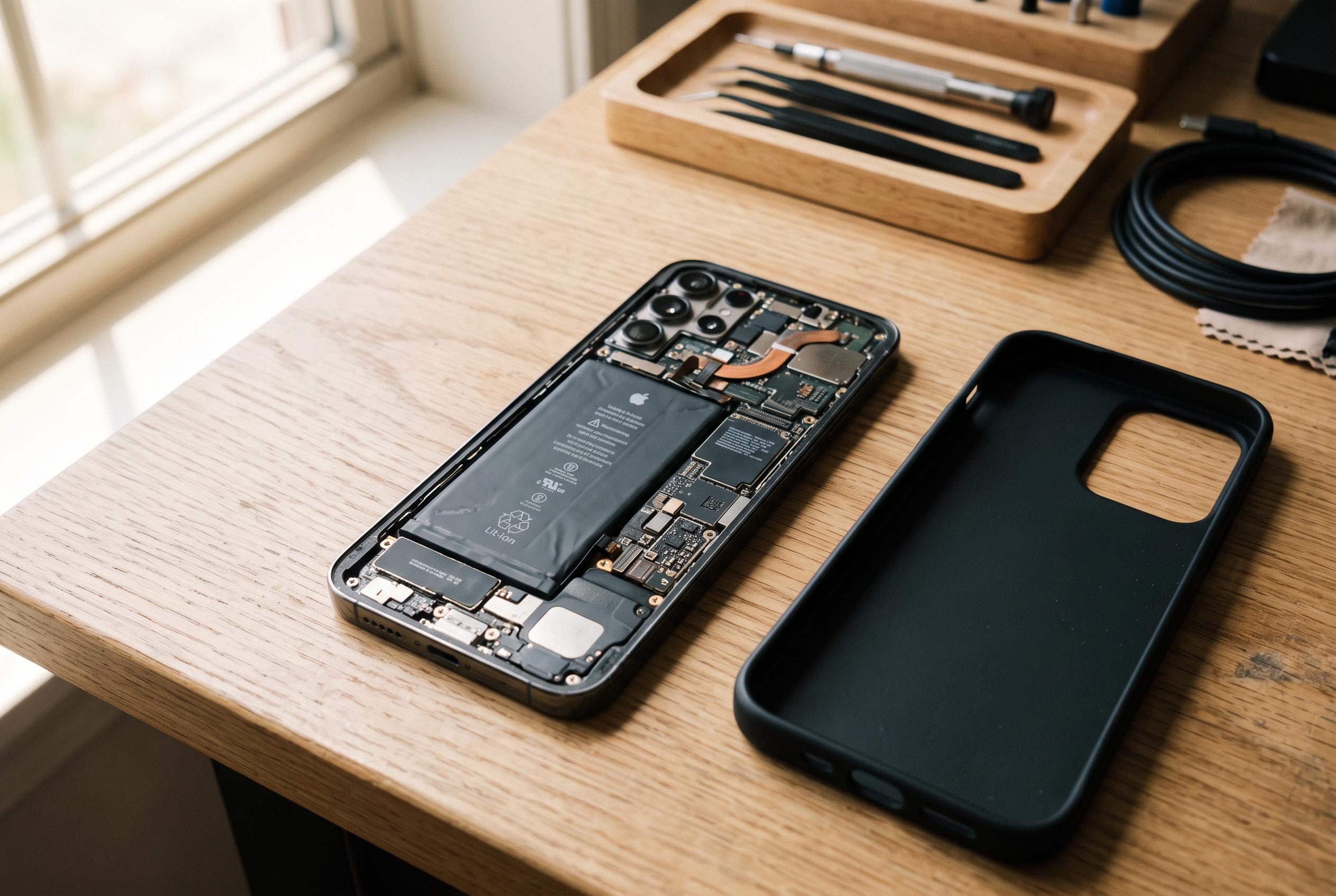

Experts emphasise the importance of removing phone cases during charging to prevent heat build-up, which accelerates battery degradation, especially during fast or wireless charging sessions.
Keeping a phone case on during charging is not, by itself, a fault. The issue is heat. A case can act as an insulating layer, holding warmth around the handset while the battery is under load. That matters most with lithium-ion cells, which age faster when they are regularly charged at higher temperatures. According to PhoneArena, removing the case can help the phone shed heat more effectively during charging, especially in demanding sessions.
The risk rises with fast charging. Higher wattage naturally increases temperature, and phones will throttle charging or warn the user if the battery moves outside a safe range. A thin silicone or TPU case is usually less problematic than a thick protective shell, a rigid leather cover or a case with an integrated battery. La Crème du Gaming notes that the combination of rapid charging, a warm room and a bulky case is the clearest route to heat build-up.
Wireless charging is more sensitive still. Tom’s Guide explains that induction charging is inherently less efficient than cable charging, so more energy is lost as heat. In practice, that means case material and thickness matter more. Metal, magnetic or especially thick cases can interfere with the process or cause excessive warmth, which is why removing the case before placing the phone on a Qi pad is sensible.
Charging habits matter as much as accessories. Tom’s Guide and TechRadar both note that modern phones have protection systems that stop true overcharging, so overnight charging is usually safe. Even so, routinely leaving a phone charging hot, covered or in direct sun will increase battery wear over time. The most practical approach is simple: use a certified charger, keep the device uncovered when charging quickly or wirelessly, and avoid trapping it under cushions, bedding or other heat-retaining surfaces.
Disclaimer: This content is intended for informational purposes only. Readers are advised to exercise their own judgement, conduct due diligence, or consult a qualified expert before acting on any information provided.