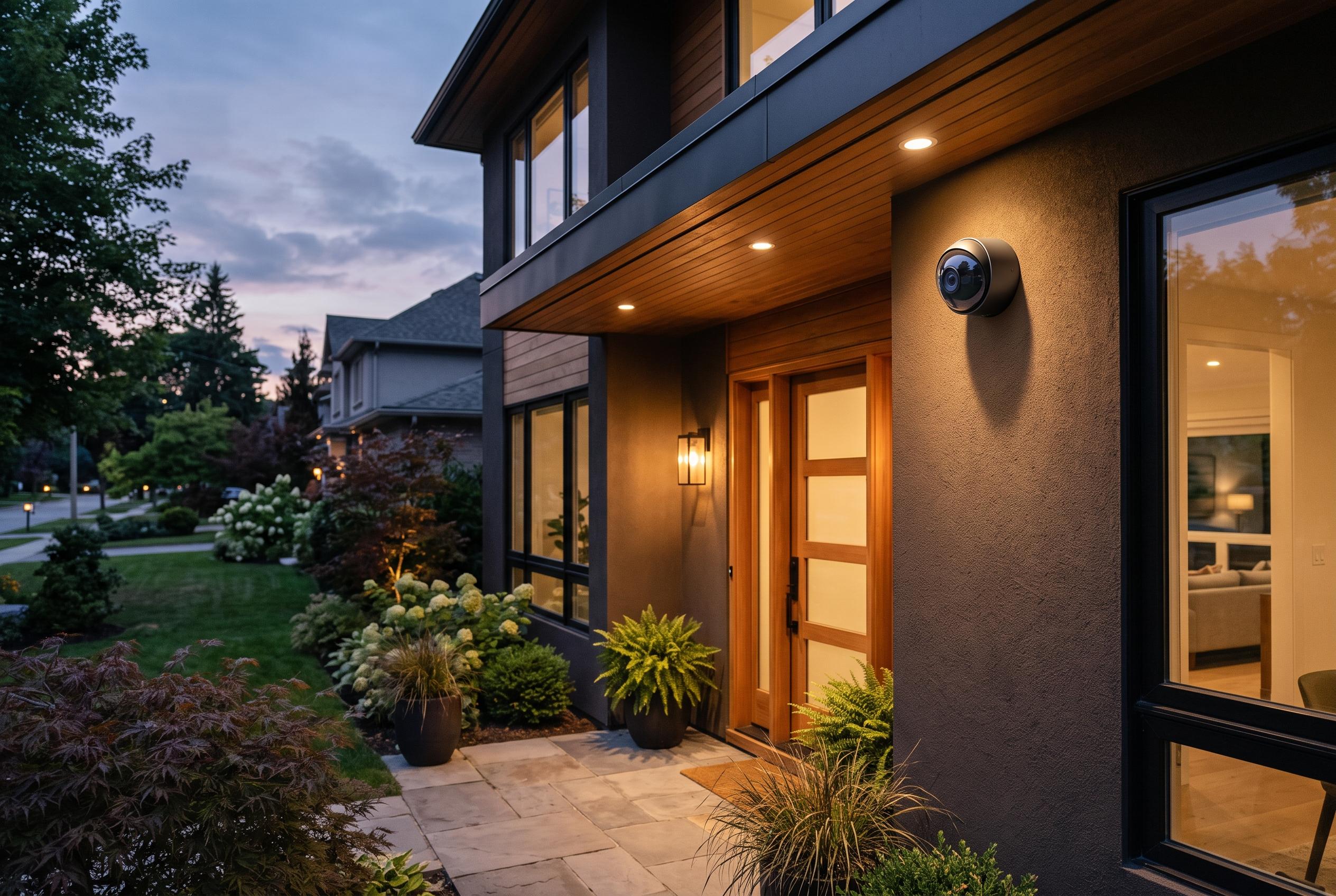

Homeowners are increasingly adopting CCTV as a fundamental security measure, focusing on strategic placement, camera technology, and system resilience to deter intruders before incidents occur.
Home CCTV is increasingly being treated as a basic security measure rather than a luxury. For homeowners in estates, duplexes and shared compounds, the aim is no longer just to record incidents after they happen, but to reduce the likelihood of intrusion in the first place. Security.org says visible cameras near access points can help discourage opportunistic offenders, while home systems now commonly combine local recording with mobile access for live viewing and alerts.
The first task is planning. Security.org and CCTV Security Pros both advise identifying the most exposed parts of a property before any equipment is fitted. That usually means gates, front and rear doors, driveways, side entrances and ground-floor windows. Proper positioning matters because cameras only work well when they cover actual approach routes and are mounted where they cannot be easily reached or tampered with.
Camera type also affects the installation approach. Tribune Online notes that homeowners can choose between traditional analogue kits and IP systems. Analogue cameras typically connect by coaxial cable to a DVR and are usually cheaper, while IP cameras use Ethernet or Wi‑Fi and connect to an NVR. Security benchmark site SafeWise says IP systems tend to offer better image quality, cleaner cable layouts and easier remote access through a smartphone app.
Mounting height and angle are just as important as the model chosen. Security.org recommends placing outdoor cameras around 8 to 10 feet from the ground, high enough to resist interference but low enough to capture faces and vehicle plates clearly. Both Security.org and Tribune Online warn against pointing lenses straight into the sun or other bright light sources, because glare can wash out footage and reduce useful detail. A slight downward tilt is usually more effective.
Wiring and power should be treated as part of the security design, not an afterthought. CCTV Security Pros says cables are best run along interior corners, ceilings or enclosed conduit outdoors, where they are less exposed to weather damage or accidental cutting. Tribune Online also stresses the need for backup power, typically through a UPS or solar inverter, so that the recorder and router stay online during outages. Without that protection, a system may fail precisely when it is needed most.
Setup should be completed only after the system has been tested end to end. CCTV Security Pros recommends assembling the recorder, monitor and at least one camera in a single location first, then confirming that live video, recording and playback all work before permanent mounting begins. Once the cameras are online, users should set strong passwords and enable mobile viewing through the manufacturer’s app. Tribune Online and Security.org both note that cameras should be aimed only at the owner’s own property, to avoid privacy disputes and regulatory problems.
Disclaimer: This content is intended for informational purposes only. Readers are advised to exercise their own judgement, conduct due diligence, or consult a qualified expert before acting on any information provided.