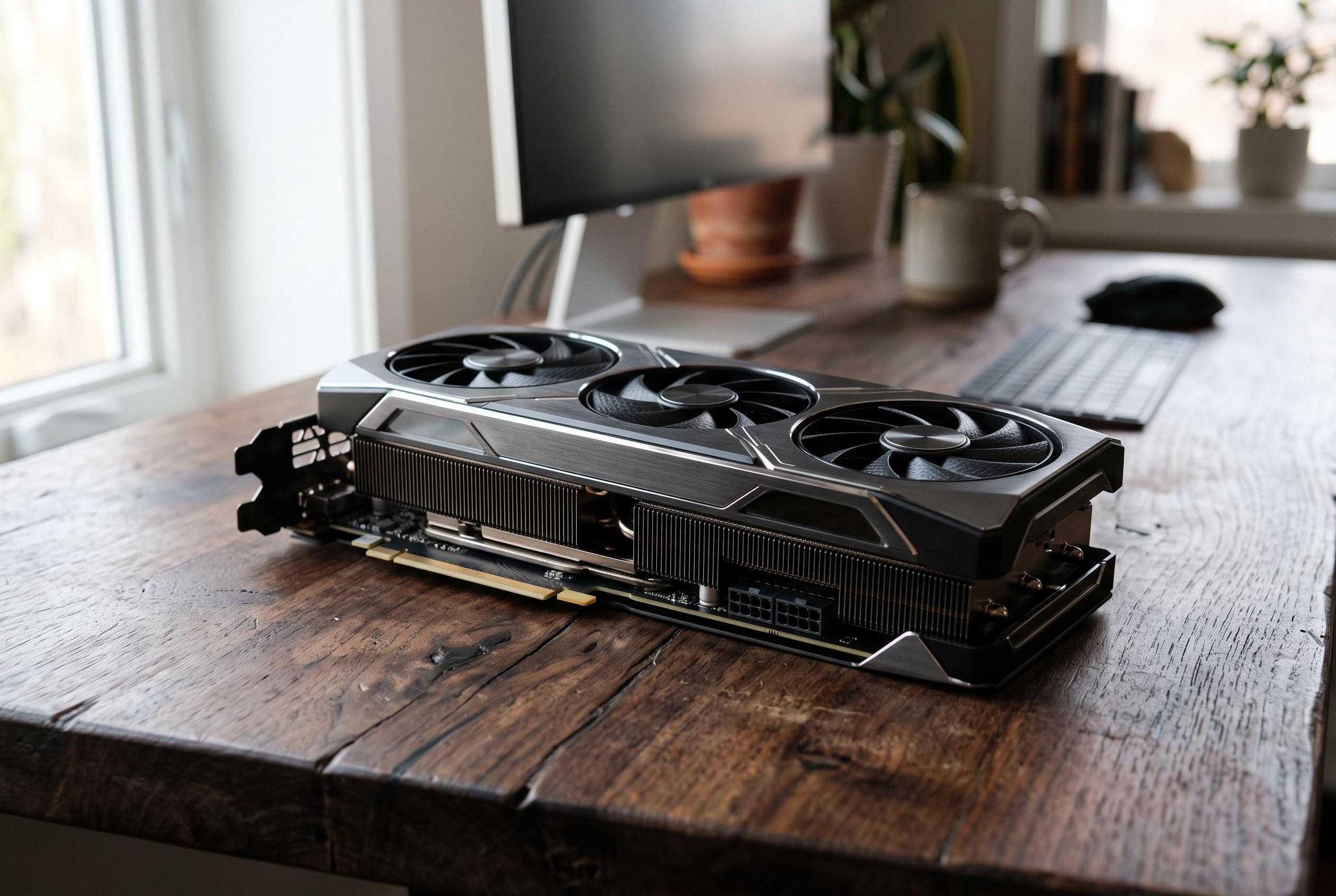

As the high-end GPU market evolves in 2026, reviewers highlight the importance of balanced performance, efficient cooling, and practical fit over raw speed, offering buyers nuanced advice for their creative and gaming workloads.
For buyers looking at the high end of the graphics-card market in 2026, the message across major hardware guides is consistent: the fastest cards remain expensive, and the real decision is rarely about raw speed alone. The ASUS ROG Strix NVIDIA GeForce RTX 5070 Ti is repeatedly singled out as the leading all-round option, praised for strong gaming and rendering performance, while the GIGABYTE Radeon RX 9070 XT is positioned as a serious alternative for those who want high performance with different architectural strengths. TechRadar, Tom’s Hardware, Tom’s Guide, PC Gamer and TechSpot all frame the choice as a balance between frame rates, creative workload performance, cooling design, power draw and price.
That balance matters because premium GPUs often differ as much in implementation as in chip class. Reviewers note that cooling solutions, board design and acoustics can be decisive in day-to-day use, especially for buyers running sustained gaming or content-creation loads. Larger models can also create practical problems: some cards extend beyond 2.9 slots, which makes case clearance and airflow planning essential. The result is that the best card on paper is not always the best card for a particular build.
The wider 2026 buying picture also reflects how architecture affects real-world use. NVIDIA’s Blackwell-based options and AMD’s RDNA 4 cards are both presented as strong choices, but their strengths differ depending on the workload. Guides aimed at gamers and creators alike suggest that synthetic benchmarks tell only part of the story, and that software acceleration, ray tracing, VRAM capacity and efficiency can matter more than headline specifications. For 4K gaming and heavier creative work, several reviewers stress that memory headroom remains important, with 12GB or more often cited as a sensible floor for demanding tasks.
Value remains the main dividing line beneath the flagship tier. The ASUS TUF Gaming GeForce RTX 5070 is described as a more affordable route into high-end performance, while the ASUS GeForce RTX 5070 is presented as a capable option for buyers who want strong results without paying top-tier prices. At the expensive end, the GIGABYTE GeForce RTX 5080 Gaming OC is framed as a premium pick for users who want maximum headroom and longer-term relevance. Across the roundup, the common advice is to buy for the workload you actually have, not the one that sounds best on a spec sheet.
For most readers, that means prioritising fit, power delivery and thermal design as much as benchmark rankings. A faster GPU can dramatically improve frame rates, but only if the rest of the system can support it; a weak processor, undersized power supply or cramped case can limit the benefit. The buying guides also note that supply and pricing remain practical concerns in a market where demand for top-end cards can still outpace stock. In that context, the safest approach is to compare models by performance, efficiency and physical compatibility, then choose the one that matches the build and budget most closely.
Disclaimer: This content is intended for informational purposes only. Readers are advised to exercise their own judgement, conduct due diligence, or consult a qualified expert before acting on any information provided.