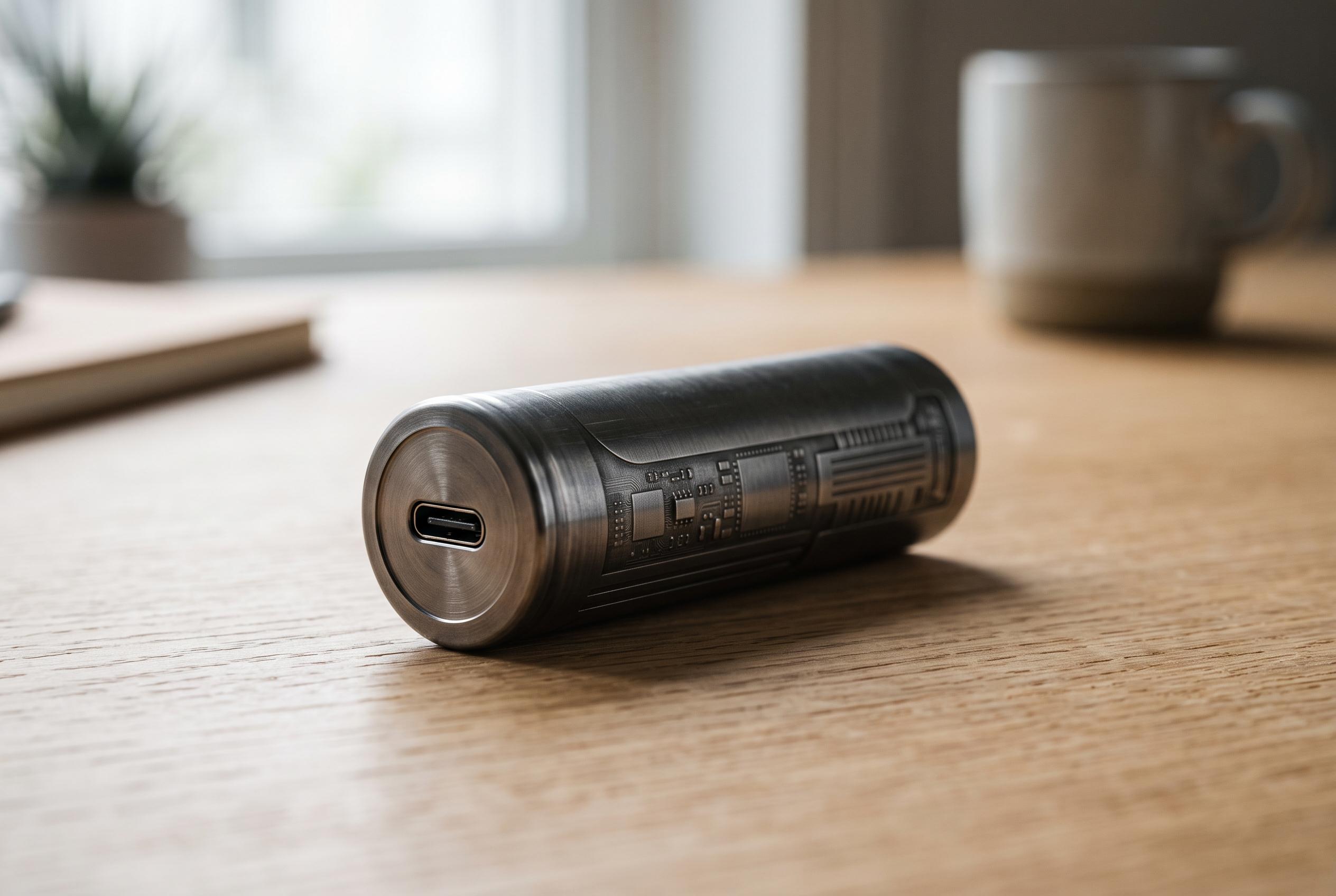

The once simple cylindrical 21700 lithium-ion cells now feature protection circuits and USB-C ports, blurring the line between batteries and portable power banks, signalling a significant shift in consumer electronics.
The 21700 battery format, a cylindrical lithium-ion cell measuring about 21mm across and 70mm long, has evolved well beyond its original role as a simple replaceable cell. According to ASCII.jp, newer variants now include extra protection circuitry and, in some cases, their own charging electronics, which blurs the line between battery and compact power source.
That shift is illustrated by Keeppower’s P2160TC, a 6000mAh cell the writer describes as an impulsive purchase. The battery carries a built-in protection circuit and a USB Type-C port, so it can be charged directly without a dedicated charger and can also supply power to mobile devices. ASCII.jp said the unit arrived with a clear case, cable and instructions, and that the domestic version carried a PSE mark and the name of Japanese distributor Yutaka. The company’s stated dimensions, at 21.8mm by 76.8mm, make it noticeably longer than a standard 21700 cell.
That extra length reflects a wider market trend. B&H Photo Video, BatteryJunction and Elevated Climbing all list USB-C equipped 21700 batteries from Nitecore, Nextorch and Fenix, typically in the 4,800mAh to 5,000mAh range. Those products are marketed not only for torch users but also for direct charging convenience, with several vendors saying they can act as small power banks for phones and other low-power devices. In practice, this means the cell itself is increasingly expected to do work that once required an external charger or battery case.
ASCII.jp also usefully notes a point often missed by consumers: a battery’s quoted cell capacity is not the same as the usable capacity delivered to a phone or other USB device. Voltage conversion from the cell’s 3.6V to USB output levels, plus losses in circuitry and cables, reduces what can actually be drawn at the output. That distinction matters for anyone comparing a self-charging 21700 cell with a conventional power bank or with a battery housed in a separate charging case.
Disclaimer: This content is intended for informational purposes only. Readers are advised to exercise their own judgement, conduct due diligence, or consult a qualified expert before acting on any information provided.