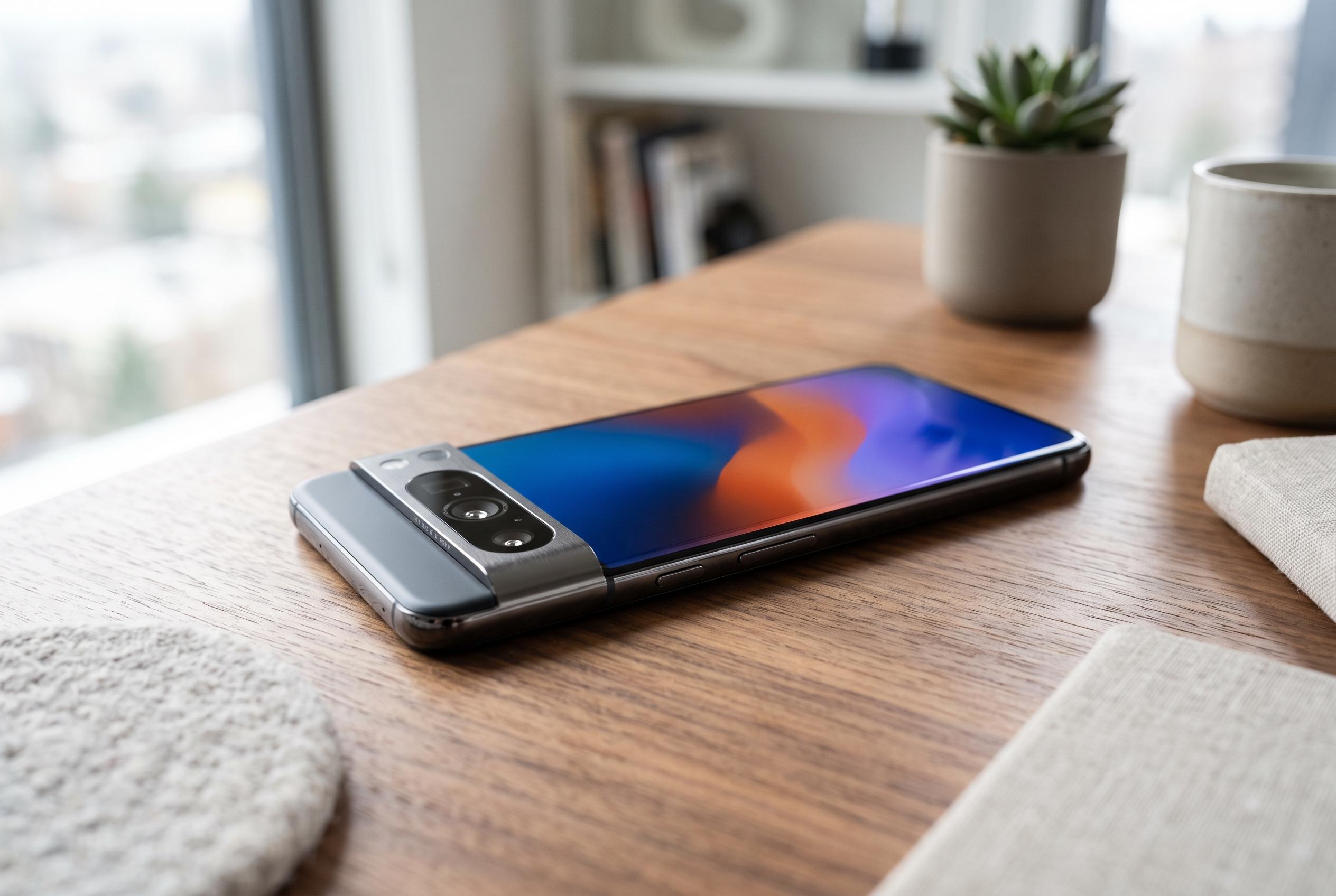

Google’s Pixel 11 Pro introduces notable improvements in display and photography, but faces criticism over value, availability, and processing power, as early reviews highlight mixed reactions to its refined but familiar flagship design.
Google’s Pixel 11 Pro arrives as a familiar kind of flagship: polished, capable and technically ambitious, but not always persuasive on value. Early reactions have been mixed, largely because the phone refines rather than rethinks the formula, while the most visible complaints remain the same as before: Tensor still trails rival chipsets in raw power, charging is not especially quick, and several headline AI tools remain unavailable in Europe and Romania.
In day-to-day use, though, the picture is more favourable. Notebookcheck and 91Mobiles both describe a phone that feels strong in everyday performance, even if it does not lead benchmark charts. The Guardian likewise praises the camera system and customisable software, while noting that gaming remains a weaker area. That matches the broader view here: for normal use, Pixel 11 Pro feels fast enough, responsive and distinctly premium, even if it is not the most powerful handset on paper. Google’s seven years of Android updates also give it an unusually long support horizon.
The display is one of the clearest upgrades. The Pixel 11 Pro uses a 6.3-inch LTPO OLED panel with a peak brightness of 3,600 nits, and that extra headroom makes a real difference outdoors. The screen is easy to read in direct sunlight, and the higher brightness appears to be sustained for longer than before. Qi2.2 wireless charging, a magnetic PixelSnap system and a revised NFC antenna placement also improve practical usability. According to Notebookcheck’s launch coverage, the series debuts with Tensor G6, updated camera hardware and 25W wireless charging.
The biggest weakness is still availability. Google’s expanding AI stack is one of the Pixel’s main selling points, but many of the most interesting features are either absent or restricted in the EU market. That includes reworked photo-editing tools, Ask Photos integration and Google’s newer agentic AI functions. By contrast, what is available can be genuinely useful: Circle to Search has become more capable, Call Recording remains a strong practical feature, and the device’s on-device transcription and dictation tools are notably advanced for Romanian users. The standout is the Rambler dictation mode, which handles Romanian speech impressively well and cleans up hesitations and false starts with striking accuracy.
Photography remains the Pixel’s strongest case for purchase. Reviewers including The Guardian and Notebookcheck both highlight the camera system as a major strength, and that remains true here. The main, ultrawide and telephoto cameras produce consistent results, with excellent colour balance, strong HDR and very good low-light performance. The 5x telephoto unit is a particular improvement, offering better clarity and more usable zoom shots than before. Video is better too, though still not class-leading. Overall, the Pixel 11 Pro is an excellent phone that is easy to admire and harder to recommend outright at launch price, especially when last year’s model offers much of the same experience for considerably less.
Disclaimer: This content is intended for informational purposes only. Readers are advised to exercise their own judgement, conduct due diligence, or consult a qualified expert before acting on any information provided.