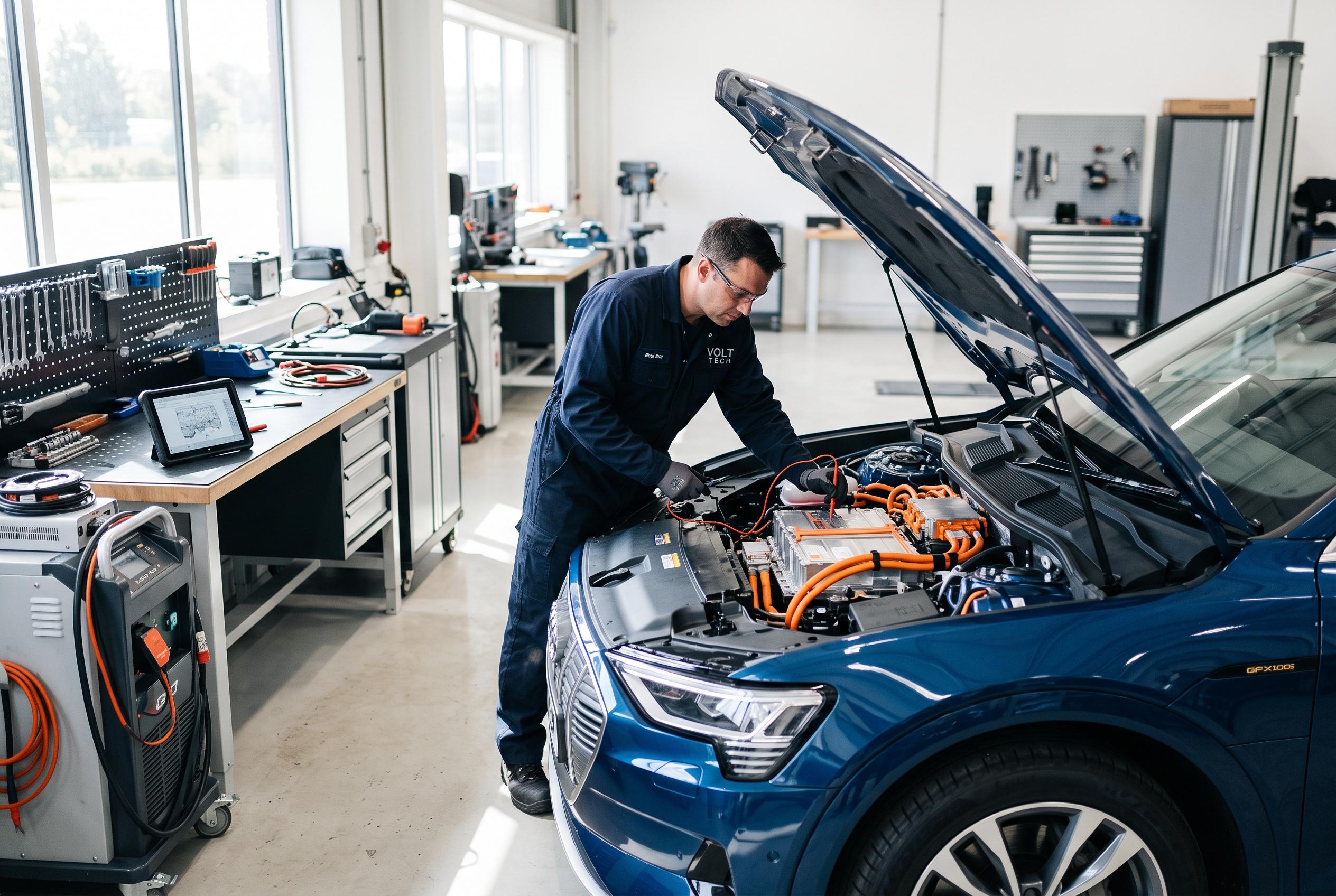

While EVs demand less routine servicing than petrol or diesel cars, they require specialised attention to batteries, thermal management, tyres, and high-voltage systems to ensure long-term efficiency and resale value, according to industry guidance.
Electric cars may need less routine servicing than petrol or diesel vehicles, but they are not maintenance-free. The core difference is that an EV shifts attention away from oil changes and exhaust systems towards components that are more sensitive to heat, charging habits and electrical stress. In practice, the battery pack, cooling circuit, tyres, regenerative braking hardware and power electronics determine how long the vehicle remains efficient and how well it holds its value. According to Polestar and Cadillac, daily use is generally kinder to the battery when charge is kept away from the extremes and repeated full depletion or full charging is avoided.
The traction battery remains the most valuable and delicate part of the vehicle. Manufacturer guidance from Polestar and Cadillac recommends keeping everyday charging broadly between 20% and 80%, with full charges reserved for longer journeys rather than routine use. They also warn that frequent DC fast charging can create heat that gradually affects battery chemistry. That matters because heat is one of the main drivers of long-term degradation. The battery’s state of health is therefore influenced less by mileage alone than by how it is charged, how often it is left at high charge for long periods, and how much thermal stress it experiences.
Temperature control is just as important as charging discipline. EV cooling systems circulate specialist coolant through the battery pack, inverter and motor to keep all three within a safe operating range, as explained by EV Owner Help, EV Seekers and Gates. These systems use non-conductive coolant in many designs, because any leakage near high-voltage parts raises serious safety concerns. Regular checks of coolant level and flow are essential, since blockages or low fluid can lead to overheating, reduced range and slower charging. MOTOR magazine notes that modern battery-electric vehicles commonly carry 400 to 800 volts DC in the high-voltage pack, which makes correct servicing procedures and specialist training vital.
Tyres and brakes also need EV-specific care. Because electric cars are heavier than comparable internal-combustion models and deliver torque instantly, tyre wear can be higher, especially if inflation is not kept to the maker’s specification. Under-inflation increases rolling resistance, which can shorten range and accelerate wear. Regenerative braking reduces strain on the friction brakes, but it can also leave calipers and discs exposed to corrosion if they are not cleaned and exercised periodically. Power electronics, including the inverter, are equally sensitive. They convert DC from the battery into AC for the motor and back again during regenerative braking, so they must be protected from moisture, contamination and poor handling around orange high-voltage cabling, according to MOTOR and manufacturer guidance.
For owners, the practical lesson is simple: EV upkeep is narrower, but more technical. The highest priorities are battery care, thermal management, correct tyre pressure and the safe condition of high-voltage systems. Those who treat the vehicle as a precision electrical machine rather than a simplified car are more likely to preserve range, reliability and resale value over time.
Disclaimer: This content is intended for informational purposes only. Readers are advised to exercise their own judgement, conduct due diligence, or consult a qualified expert before acting on any information provided.