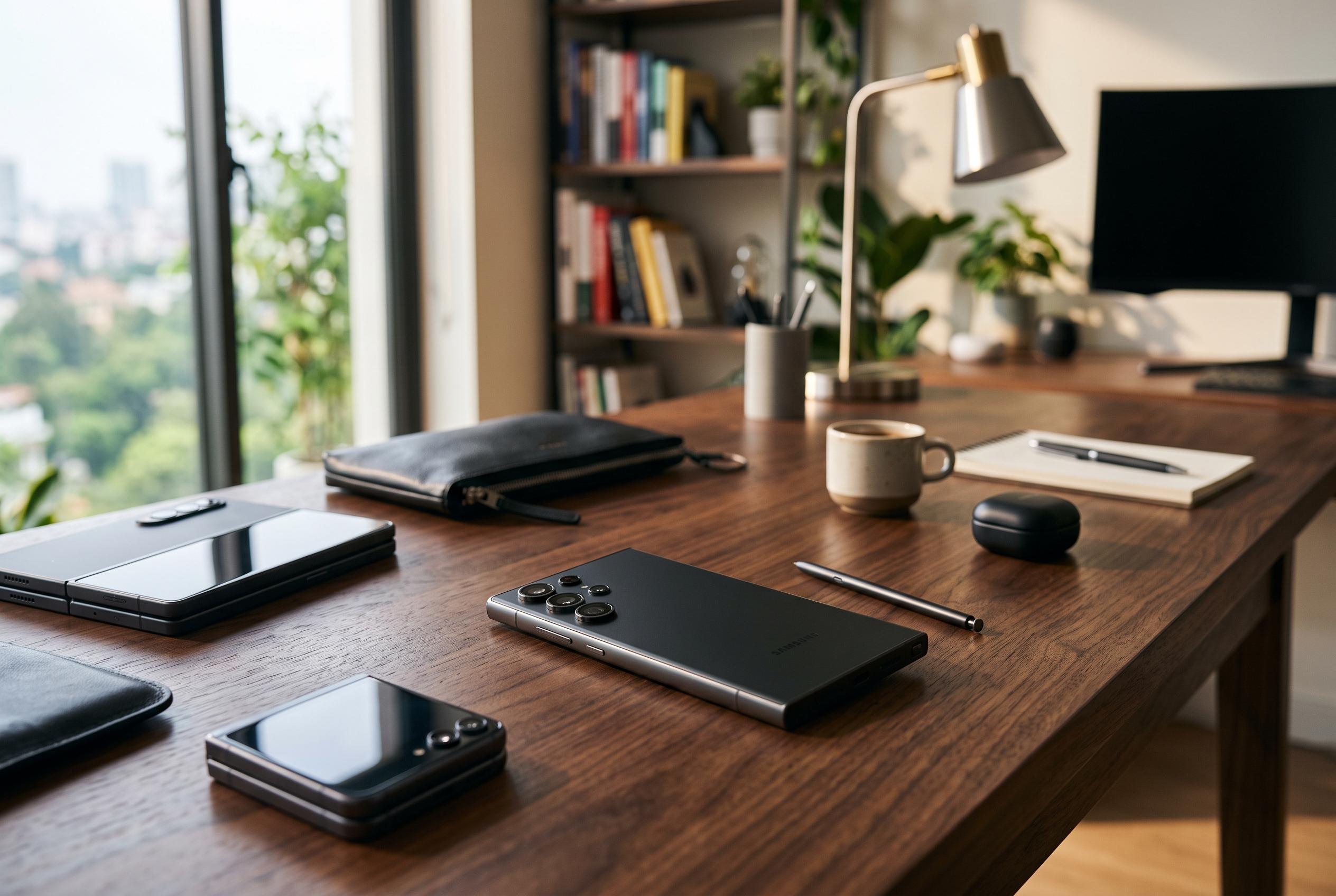

Samsung’s latest 2026 phone range offers a broad spectrum of devices tailored to diverse user needs, with the Galaxy S26 Ultra and standard model standing out for different reasons amid foldable and lower-cost options.
Samsung’s 2026 phone range is broad enough that the “best” model depends less on brand loyalty than on how the device will be used. For buyers who want the most complete all-round package, the Galaxy S26 Ultra remains the standout. For most people, though, the standard Galaxy S26 is the more sensible choice because it preserves flagship performance and cameras while avoiding a large price jump.
That breadth matters because Samsung now sells conventional slabs, foldables and lower-cost models across several tiers. The company’s own specifications, along with independent reviews, show meaningful differences in size, battery capacity, camera hardware and long-term software support. In other words, the newest Galaxy name is not enough on its own to determine value.
The Galaxy S26 Ultra sits at the top for users who want the widest feature set in one device. Samsung pairs its 6.9-inch QHD+ AMOLED panel with an integrated S Pen, a 200-megapixel main camera and two telephoto lenses, giving it the strongest zoom flexibility in the range. Its 5,000mAh battery, 60W wired charging and seven years of software support reinforce the case for heavy users, although the $1,299.99 launch price and sheer size mean it is not the obvious buy for everyone.
By contrast, the regular Galaxy S26 is the better fit for most buyers because it keeps the core flagship experience in a much smaller body. Expert Reviews found it capable of sustained high-end gaming performance, while its 50-megapixel main camera, 12-megapixel ultra-wide and 10-megapixel 3x telephoto cover the focal lengths most people actually use. At $899.99, it undercuts the Ultra by $400, which makes the extra spend on the larger model difficult to justify unless the 5x zoom, S Pen and bigger screen will be used regularly.
The Galaxy S26+ exists for a narrower audience. It offers a 6.7-inch QHD+ display and a 4,900mAh battery, which makes it attractive for people who watch a lot of video or want longer endurance without moving to a foldable. Yet its camera hardware is essentially the same as the smaller S26, so the extra cost mostly buys size and battery rather than a better imaging system. If discounts narrow the gap to the Ultra, the larger model becomes a harder sell.
Samsung’s foldables serve different priorities altogether. The Galaxy Z Fold8 Ultra is the company’s productivity-first device, with an 8-inch inner display that makes split-screen work, reading and content editing more practical than on a standard phone. The Galaxy Z Flip8, meanwhile, is about portability and convenience, folding into a far smaller shape while keeping familiar smartphone behaviour when opened. Both are premium purchases, and both carry compromises in price, durability and camera balance compared with the S-series flagships.
Below the premium tier, the Galaxy S26 FE and Galaxy A57 5G give Samsung buyers lower-cost alternatives. The FE is the better bridge into the flagship ecosystem when discounted, while the A57 is the value option for those who want Samsung’s software, a large 120Hz display and six years of support without paying for features such as telephoto zoom. Recent Samsung pricing shows why live checkout cost matters: component pressure across the wider smartphone market can shift the value equation quickly, making a sale price more important than the headline launch figure.
Disclaimer: This content is intended for informational purposes only. Readers are advised to exercise their own judgement, conduct due diligence, or consult a qualified expert before acting on any information provided.