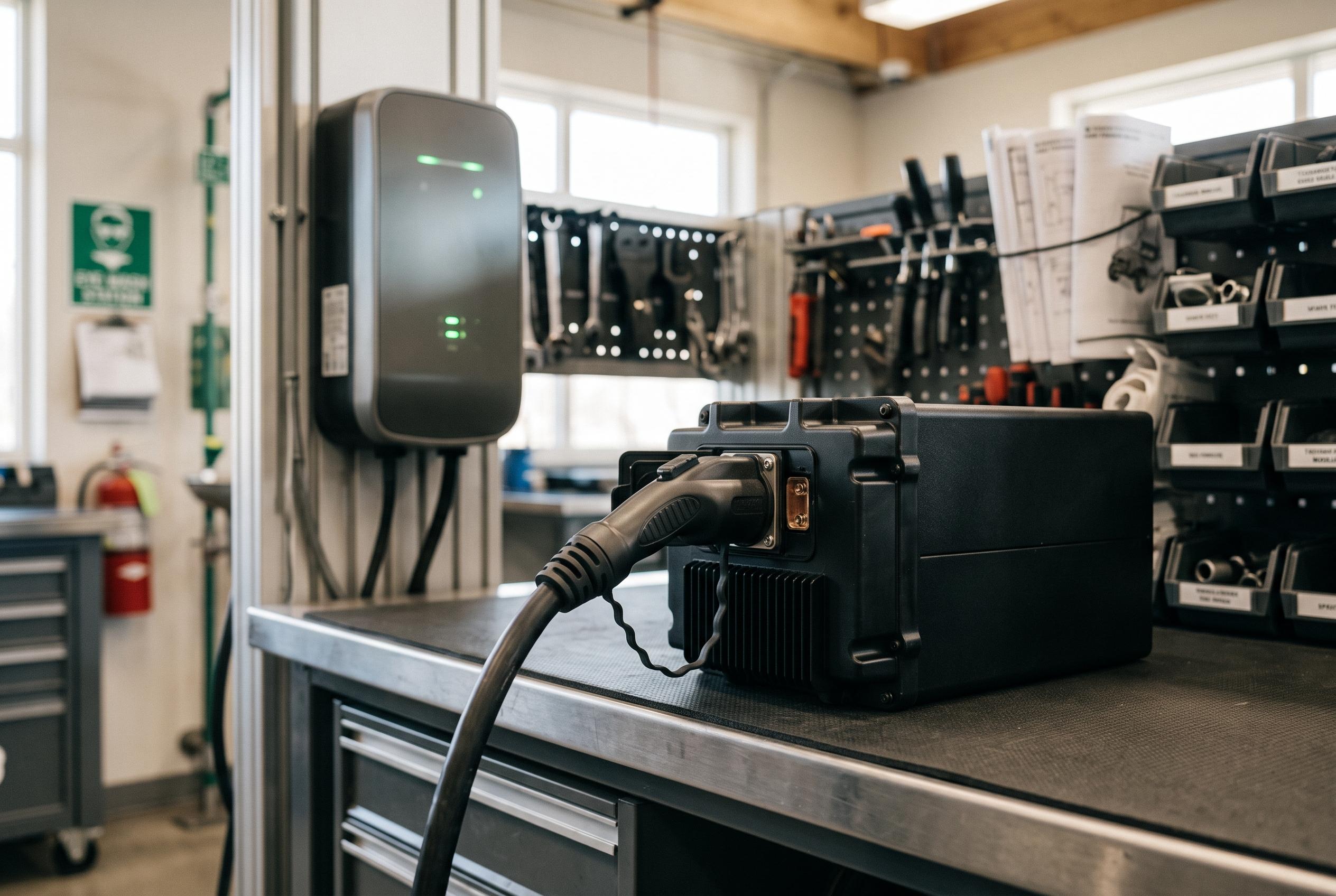

Achieving optimal performance and safety in golf cart lithium batteries depends on matching chemistry, voltage, and charger profile, with recent focus on correct programming and temperature considerations.
Compatibility between a golf cart lithium battery and its charger comes down to three things: chemistry, pack voltage and the battery management system. If any one of those is wrong, the result can be a charger that refuses to work, stops too soon or, in the worst case, harms the pack. As Golfcartstuff notes, the safest approach is to confirm the battery type and voltage first, then use either the charger supplied by the battery maker or a smart charger that has been correctly programmed for the pack.
The chemistry match is the first gate. Industry guides from Golfcartstuff, EPC Charger and Battery Tender all stress that lead-acid and lithium batteries need different charging profiles, so a charger designed for flooded, AGM or gel batteries is not interchangeable with one intended for lithium. That matters because lithium packs, usually LiFePO4 in golf carts, do not need the same staged charging pattern as lead-acid systems. BSL Sys and Golf Cart IQ also note the broader appeal of lithium in carts: lower weight, faster charging, higher usable capacity and longer service life than lead-acid batteries, which is why correct charging is central to preserving those gains.
Voltage is the second critical check. Golf cart systems commonly run at 36V, 48V or 72V, and the charger must match the pack exactly. Battery Tender explains that modern lithium golf cart batteries are often single self-contained packs built to replace an entire lead-acid bank, which makes voltage matching straightforward in principle but unforgiving in practice. A 48V charger used on a 36V pack can overcharge the battery and damage both the cells and the BMS. The charger’s current output also matters, because exceeding the pack’s charging limit or the cable rating can create heat and repeated protection trips.
The connector and the charging profile are the final checks. Golfcartstuff says charger fitment problems often come down to a mismatched plug, while its 2026 charger guide says brand-specific lithium chargers are usually the safest option because they are set up for the battery’s control system from the outset. Multi-profile smart chargers can work, but only if the right algorithm is selected or flashed by someone with the proper tools. That is why generic universal chargers are a poor choice unless they explicitly list a lithium profile and BMS compatibility.
Temperature limits also deserve attention. Golfcartstuff warns that LiFePO4 batteries should not normally be charged below freezing, and many manufacturers place the low-temperature cutoff near 32°F. A careful first charge is a useful test: if the charger cycles on and off, finishes far too quickly or triggers the BMS, the profile is wrong and charging should stop until the setup is checked again. In practical terms, the charging system should be treated as part of the battery, not as a separate accessory.
Disclaimer: This content is intended for informational purposes only. Readers are advised to exercise their own judgement, conduct due diligence, or consult a qualified expert before acting on any information provided.