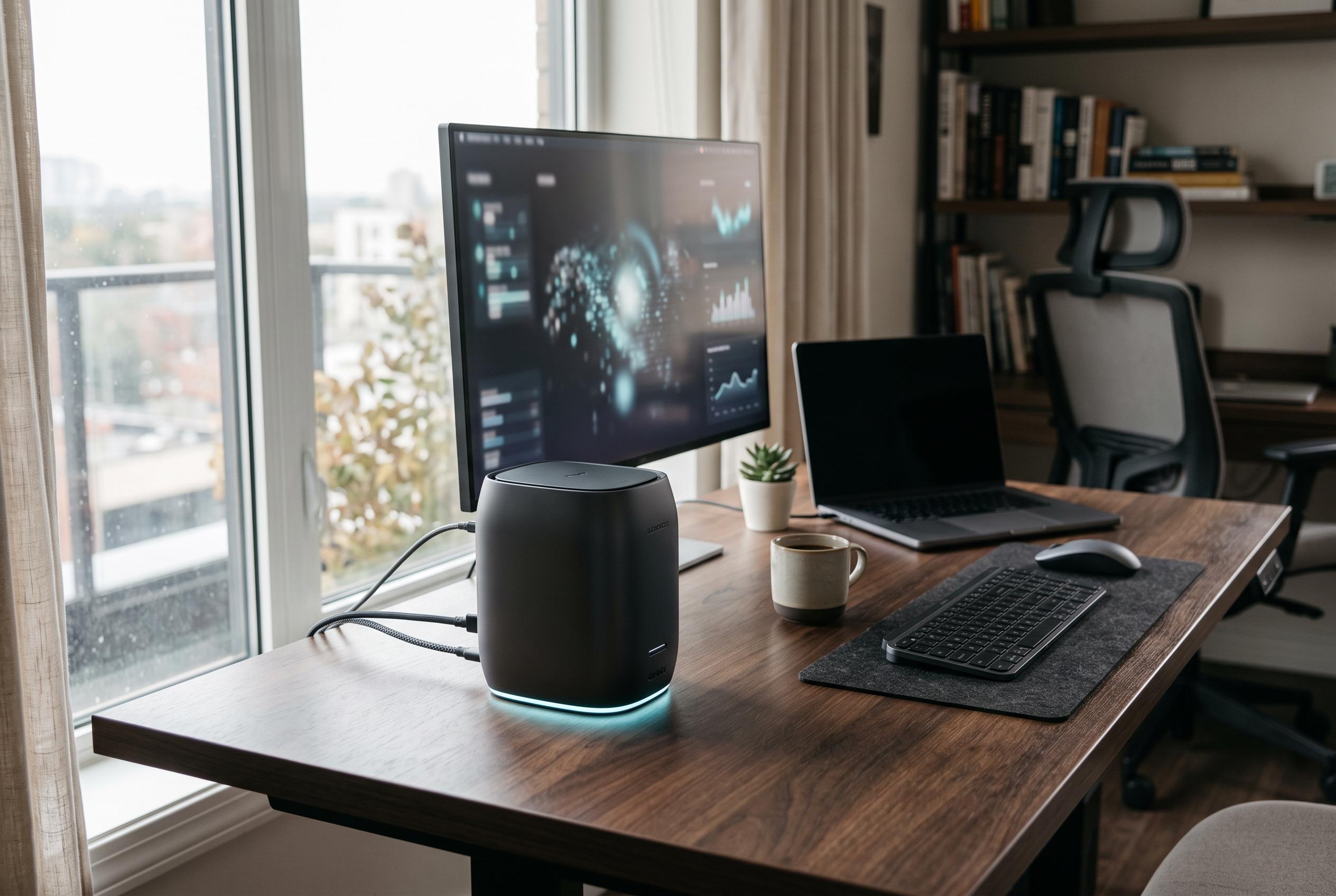

NordVPN, a leading consumer VPN provider with over 15 million users, is now positioning itself as an all-in-one cybersecurity platform in 2026, focusing on enhanced security features and independent audits amid a history of privacy improvements.
NordVPN remains one of the most recognisable names in consumer VPNs, but in 2026 it is also trying to be something broader: a general-purpose cybersecurity app. The Frandroid review notes that the company now pitches itself as an all-in-one security platform rather than a pure VPN provider, a shift that reflects both its scale and its ambitions. With more than 15 million users worldwide, it is still one of the biggest players in the market.
That position did not come out of nowhere. According to Frandroid’s account, NordVPN began in 2012 as a small project built by childhood friends Tomas Okmanas and Eimantas Sabaliauskas, then expanded quickly with a mobile app in 2013 and 24/7 support the following year. By 2022, it had become a unicorn through its parent company, Nord Security. The service’s rise was helped by heavy advertising across YouTube and other platforms, but it also faced a serious setback in 2019 after disclosure that a server in Finland had been compromised the previous year.
The company has since tried to rebuild trust with a more security-focused architecture. Tom’s Guide reported in February 2026 that NordVPN completed its sixth independent no-logs assessment, carried out by Deloitte Lithuania, which again found no evidence that the service stores sensitive user data such as IP addresses, session details or bandwidth usage. NordVPN and the associated press release said the review involved checking live configurations and staff interviews, reinforcing the firm’s claim that its systems are designed not to retain traceable metadata.
Frandroid says that the privacy story is supported by a RAM-only infrastructure, regular external audits and a bug bounty programme. The company is also registered in Panama, while its operational base is in Vilnius, a structure NordVPN presents as part of its privacy posture. The review still stresses a necessary caveat: a VPN can reduce exposure, but it does not make a user anonymous, and it does not stop phishing or social engineering on its own.
The application itself is described as straightforward but busy, especially on desktop, where NordVPN now places several of its products alongside the VPN controls. On macOS and Android, the test found the core tools easy enough to reach, including the interactive world map, server list and settings for features such as the kill switch, custom DNS and post-quantum encryption. The service also supports up to 10 simultaneous devices and is available across a wide range of operating systems, including Windows, macOS, Linux, Android, iOS, tvOS, visionOS and browser extensions.
Its feature set is unusually broad for a VPN. Frandroid highlights tools such as Double VPN, Onion over VPN, split tunnelling, Smart DNS, dedicated IP support, dark web monitoring and the newer antivirus layer, which the company says can block malware, phishing and fraudulent sites. NordVPN also offers its own NordLynx protocol, built on WireGuard principles, plus NordWhisper for obfuscation and OpenVPN for more restrictive networks. In testing, Frandroid recorded very strong speeds on nearby servers and competitive results even on long-distance connections, with mobile performance described as especially consistent. Pricing remains a drawback, however, because NordVPN is positioned above many rivals and becomes substantially cheaper only on longer plans.
Disclaimer: This content is intended for informational purposes only. Readers are advised to exercise their own judgement, conduct due diligence, or consult a qualified expert before acting on any information provided.