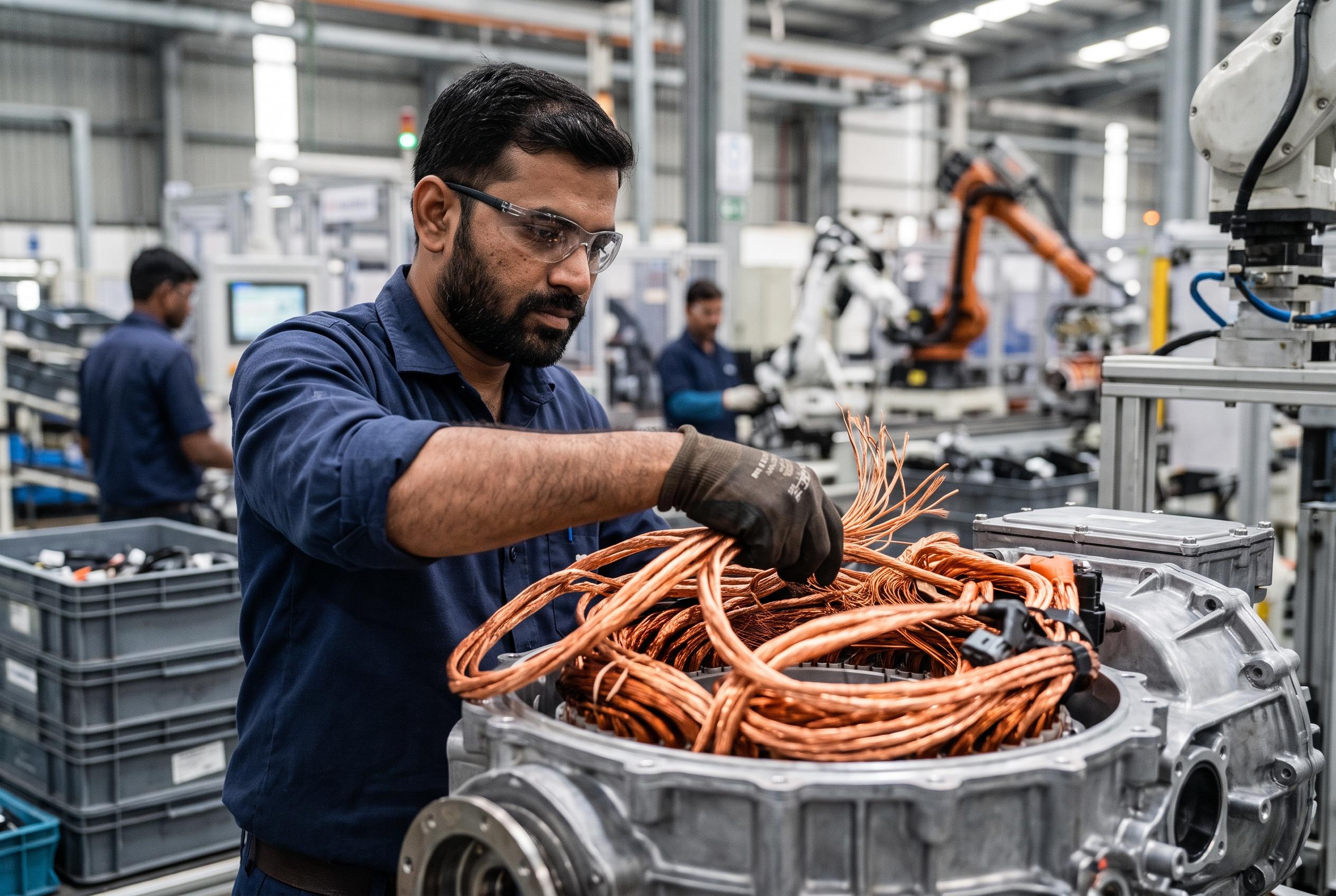

As copper prices hit record highs, Indian manufacturers face rising costs in electric vehicles, appliances, and electronics, prompting shifts in sourcing and pricing strategies amid ongoing global demand for the metal.
Copper’s sharp climb is beginning to feed through to Indian industry, with electric vehicles, appliances and parts of the electronics supply chain among the first to feel the strain. The metal briefly touched a record $14,858 a tonne before easing to $14,240 at the weekend, after market fears over possible US tariffs pushed prices higher and then moderated when Washington was said to be reconsidering its plans. Reuters has also reported that copper has been buoyed by tighter supply and rising demand from electrification, power grids and data-centre build-outs tied to artificial intelligence.
For manufacturers, the immediate problem is not only the higher input bill but also the uncertainty over how much of it can be absorbed. Industry estimates cited by businessline suggest Maruti Suzuki faces about ₹204 crore of incremental monthly exposure, Tata Motors about ₹171 crore and Mahindra & Mahindra about ₹110 crore, based on a benchmark of $9,500 a tonne. The same calculations imply an extra copper cost of roughly ₹10,000-13,000 for an internal combustion car, more than ₹40,000 for some electric cars and up to ₹1.52 lakh for an electric bus.
The pressure is more pronounced in EVs because they use substantially more copper than petrol or diesel vehicles. An ICE passenger car typically contains 20-25 kg of copper, while some electric cars use 80-85 kg; in two-wheelers, the gap is about 2.5-3 kg versus 8-10 kg. BGauss founder and managing director Hemant Kabra said copper cannot simply be removed from EV design, making supplier negotiations, design efficiency and localisation more important when prices rise. Uday Narang, chairman and founder of Omega Seiki Mobility, said every rupee matters in commercial EVs because buyers focus on total cost of ownership.
White goods makers are also preparing for price increases. Businessline reported that the copper-related cost increase could be ₹3,300-4,300 for a 1.5-tonne split air conditioner and ₹1,300-1,800 for a double-door refrigerator. Avneesh Singh Marwah, chief executive of SPPL, said copper and other critical inputs had surged sharply and that the company was raising prices by 7 per cent this month, with another increase possible next quarter. Haier Appliances India managing director N S Satish said the company had already taken a 10-12 per cent increase in recent months and may add about 2 per cent in October in mid and premium segments.
The impact is widening beyond consumer products. Solar module makers and data centres are shifting some components from copper to aluminium, while electronics and telecom suppliers say printed circuit boards, power supplies, transformers, connectors and cabling are under cost pressure. In construction, the direct hit is still manageable, but higher prices for copper-intensive equipment such as transformers, DG sets, chillers, lifts and motors are raising budgets indirectly. In agriculture, copper sulphate has risen more than sixfold in some markets, which could lift costs for fruit disease control and crops such as arecanut.
For now, most companies are relying on shorter procurement cycles, alternative materials, fixed-price contracts and bulk buying to blunt the shock. That may buy time, but it does not remove the structural problem: copper sits at the centre of electrification, and demand from vehicles, grids and data infrastructure remains strong. Unless prices ease, producers are likely to keep passing part of the burden through the supply chain, leaving consumers to absorb at least some of the increase.
Disclaimer: This content is intended for informational purposes only. Readers are advised to exercise their own judgement, conduct due diligence, or consult a qualified expert before acting on any information provided.