
Drivers increasingly blend wired and wireless CarPlay to balance reliability, charging, and convenience, with a hybrid approach gaining popularity for everyday use.
For many drivers, the choice between wired and wireless CarPlay comes down to a simple trade-off: convenience versus consistency. The wired setup remains the safer bet for anyone who wants steady performance, faster charging and fewer surprises, while wireless CarPlay is better suited to short trips, quick starts and a tidier cabin, according to comparisons from Beatsonic, CarPlayMMB and AppleInsider.
The difference is most obvious in battery use and heat. A cable keeps the iPhone topped up while it is handing over data, whereas a wireless connection asks the phone to maintain Wi-Fi, Bluetooth and GPS at the same time. Several guides note that this can drain power more quickly and raise temperatures during longer journeys, which is why wireless CarPlay is often less appealing on motorway runs or routes that depend heavily on navigation.
Reliability is the other decisive factor. Wired CarPlay is generally described as more stable, with lower latency and fewer connection drops, while wireless systems can be slower to launch and more prone to occasional glitches after software updates. Car and Driver Tech and AppleInsider both note that wireless CarPlay usually feels seamless in normal daily use, but the cable still has the edge when audio, maps and calls need to work without interruption.
That makes the practical use case fairly clear. Wireless CarPlay suits school runs, commutes and repeated short hops, especially when several people share one car and do not want to plug in each time. Wired CarPlay is better for long-distance driving, heavy map use and anyone who wants the phone to charge quickly on the move. Eonon and Beatsonic both frame the decision around driving habits rather than abstract technical superiority, which is the right way to think about it.
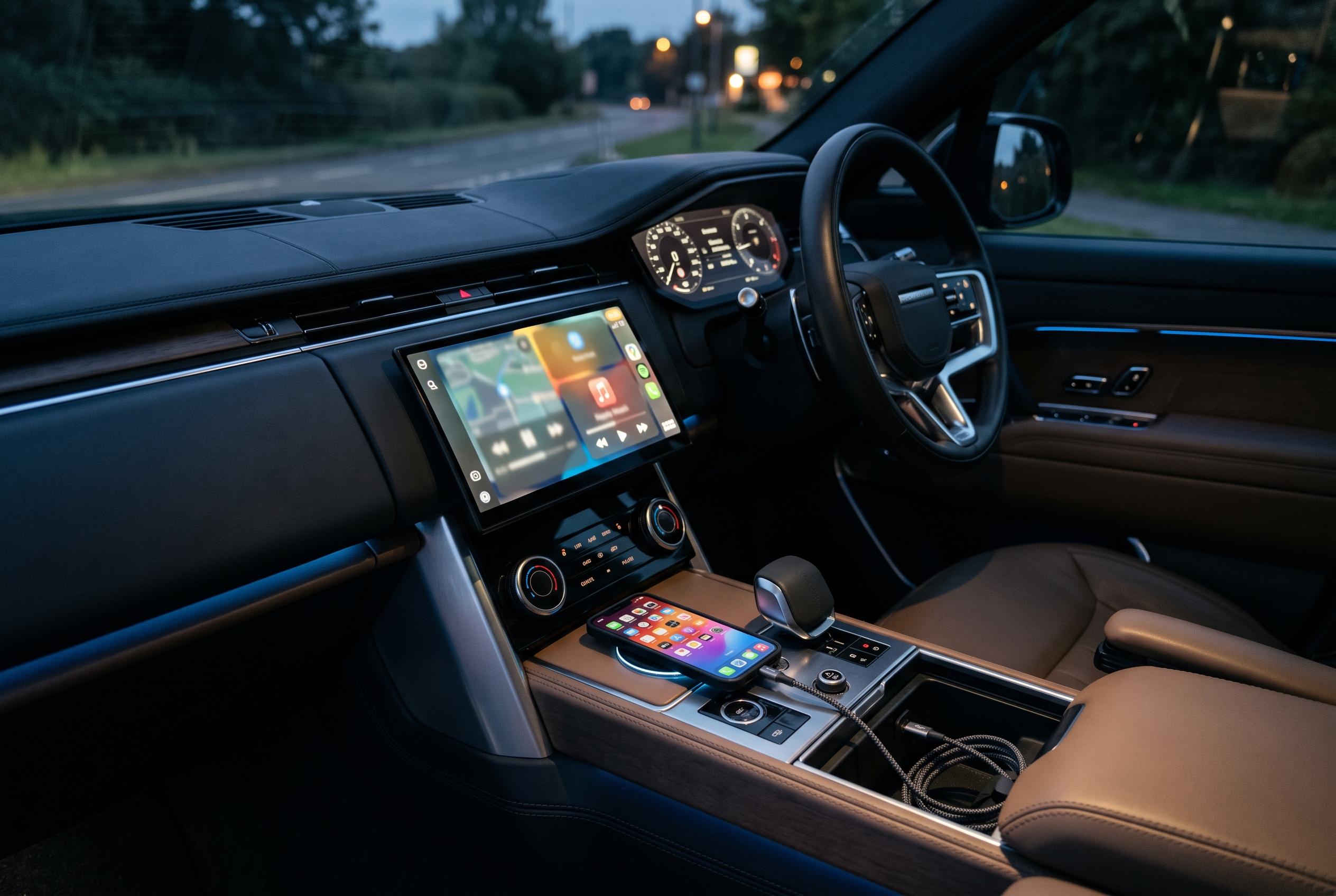
A hybrid approach can soften the compromise. Some drivers use a wireless adapter with a charging mount, keeping the cabin free of loose cables while avoiding the battery drain that comes with an untethered phone. That is not a perfect substitute for a direct cable, but it does combine the convenience of wireless CarPlay with the reassurance of ongoing charging, which is why it is increasingly the most balanced option for everyday use.
Disclaimer: This content is intended for informational purposes only. Readers are advised to exercise their own judgement, conduct due diligence, or consult a qualified expert before acting on any information provided.