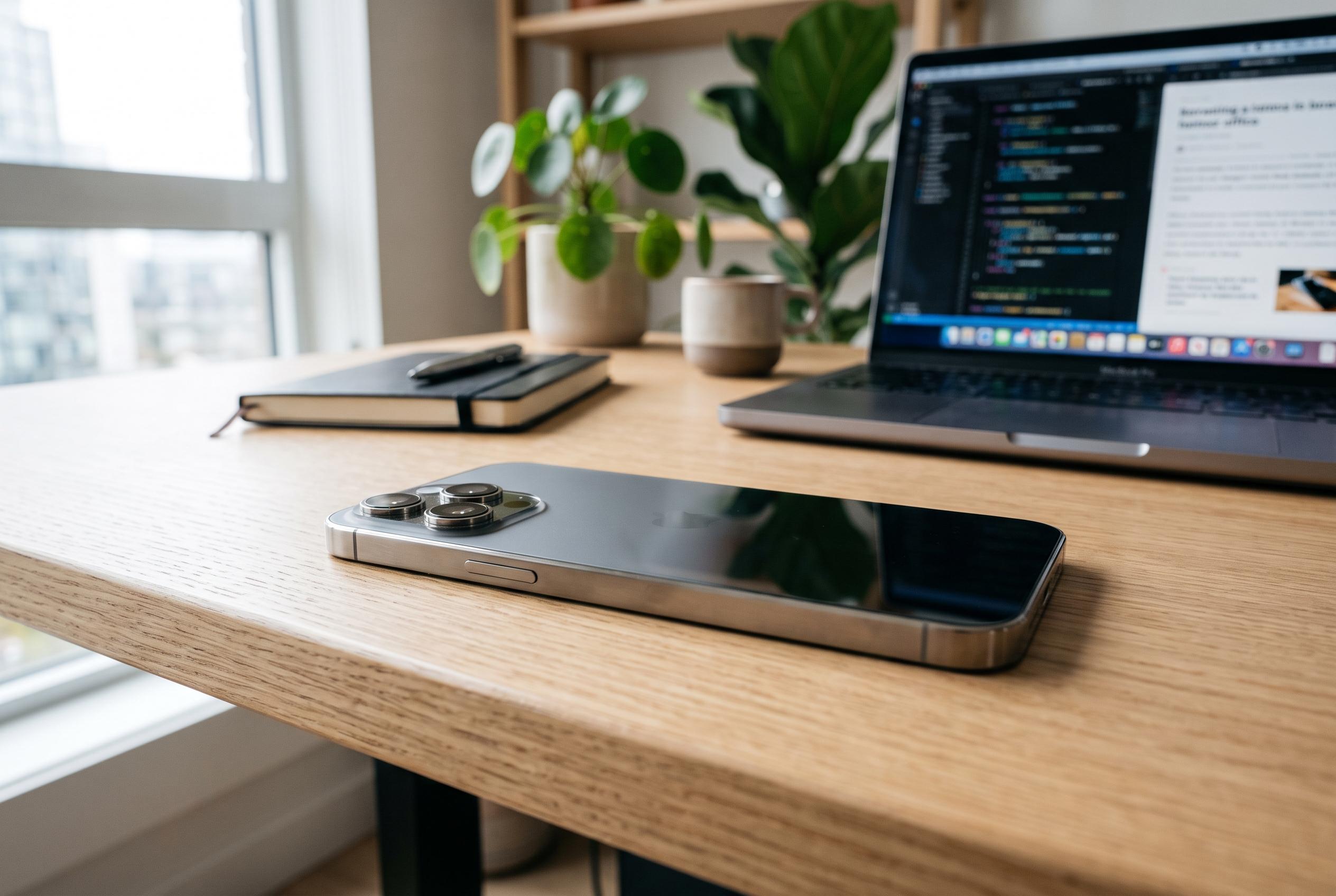

The Apple iPhone 17 Pro and Google Pixel 11 Pro, originating from contrasting design and software approaches, now find themselves aligning closer in price, highlighting a shift in the premium smartphone market and challenging their distinct positioning on performance and innovation.
Google’s Pixel 11 Pro and Apple’s iPhone 17 Pro arrive from very different design philosophies, yet they now sit closer in price than their launch positions suggested. Frandroid notes that the Pixel debuted €100 above its predecessor and still felt only modestly updated, while the iPhone 17 Pro was introduced at €1,329 and has since drifted into the same broad price band. That makes this a comparison not just of hardware, but of value: one phone leans on artificial intelligence and software polish, the other on raw performance and a more mature ecosystem.
On design, the contrast is clear. The Pixel keeps a compact, restrained form with a matte finish and IP68 protection, while adding its new Pixel HiLight notification ring around the camera module. By comparison, the iPhone adopts a more substantial aluminium body, with a prominent rear camera plateau designed partly to improve thermal management. PhoneArena and Nanoreview both describe the Pixel as the more compact hand-set, but the iPhone as the sturdier-feeling device, helped by rounded edges and extra hardware controls such as the Action button and camera shortcut.
The display race is tighter. Both use 6.3-inch OLED panels, yet the Pixel pushes higher pixel density and peak brightness, whereas the iPhone responds with better colour accuracy and stronger anti-reflective treatment. Frandroid says the iPhone’s panel is the more balanced option overall, with more neutral white point handling and better visibility in bright conditions, while the Pixel can look more saturated in HDR. TechRepublic also places the display discussion in the wider context of each phone’s target audience: Google aims for spectacle and AI integration, Apple for consistency and professional-grade refinement.
Software is where the two brands diverge most sharply. The Pixel runs Android 17 with Gemini Intelligence woven through the interface, offering notification summaries, contextual shortcuts and live translation for media. Frandroid says Google is relying heavily on the Tensor G6’s neural engine for on-device Gemini features, while promising seven years of updates. Apple’s iOS 26 takes a more visual route with its Liquid Glass design, and the company’s own AI push remains more cautious. According to the comparison by Manypress, the iPhone’s advantage lies less in headline AI features than in its broader ecosystem integration and smoother day-to-day continuity across Apple devices.
Performance, however, clearly favours Apple. Frandroid says the Pixel 11 Pro makes little progress on last year’s chip performance, and its Tensor G6 prioritises AI workloads over brute-force graphics power. The iPhone 17 Pro’s A19 Pro is described as significantly faster, and the gap is felt in sustained workloads, gaming and general responsiveness. Camera output is more evenly matched. Google’s 50MP main sensor, improved ultra-wide and aggressive AI zoom give it the edge in computational photography, especially at long range, while Apple’s 48MP trio and 8x telephoto deliver cleaner, more dependable results for video and portraits. Battery life and charging also tilt the verdict towards Apple: Frandroid says the iPhone lasts longer and charges faster, despite a smaller battery, while the Pixel still struggles to reach a full day for heavy users. Taken together, the iPhone 17 Pro looks like the more complete premium phone today, whereas the Pixel 11 Pro is the more experimental one, strongest when its AI features matter most and weaker where hardware progress should have been more obvious.
Disclaimer: This content is intended for informational purposes only. Readers are advised to exercise their own judgement, conduct due diligence, or consult a qualified expert before acting on any information provided.