
As smart home devices become more widespread, homeowners are increasingly concerned about personal data exposure. Experts offer practical tips to minimise risks while maintaining automation benefits, including camera covers, local storage, and privacy controls.
Smart home devices make life easier, but they also expand the amount of personal data that can leave the home. Cameras, speakers, thermostats, televisions and connected appliances can all reveal routines, preferences and occupancy patterns if their settings are left at defaults. CNET recently set out a practical checklist for reducing that exposure without giving up the main benefits of automation.
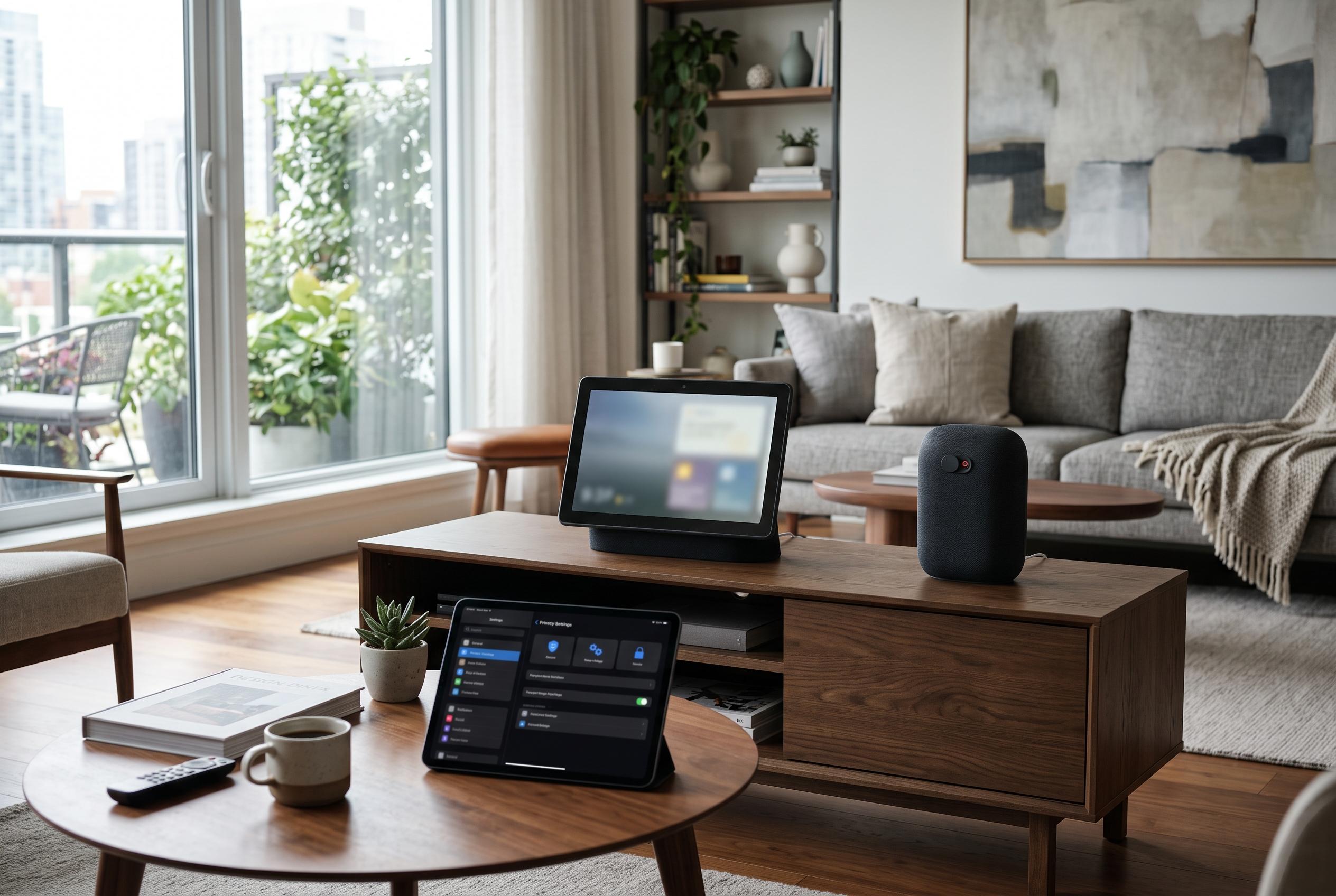
One of the most effective steps is also the simplest: cover or disable cameras when they are not needed. Devices with physical shutters or hardware mute switches offer a clearer privacy boundary than software controls alone, because a closed lens cannot be observed remotely. That matters because smart displays and security cameras are among the most sensitive devices in the home, especially when they sit in private spaces.
The next priority is data minimisation. Consumer Reports advises users to review app permissions and turn off features such as voice history, activity logs and unnecessary sharing options. Research from the National Institute of Standards and Technology also points out that many people keep using smart home devices because they are convenient, even when they remain uneasy about privacy. That combination makes default settings particularly important: if a feature is not genuinely needed, it should usually be disabled.
Storage choices matter as well. For cameras, local recording on a microSD card or a home network device can reduce reliance on a vendor’s cloud service, which gives the owner more direct control over footage. This does not eliminate every risk, but it does reduce the number of external systems that can access the data. Academic work on smart home privacy has repeatedly shown that many devices collect far more information than their core function requires, and that cloud transmission is often difficult for users to monitor.
Privacy is not limited to what devices record. It also includes what they reveal through outside channels. Old property listings can expose interior layouts, entrances and other details that were once posted for sale or rent, so it is worth checking whether past adverts are still available on sites such as ingatlan.com or Jófogás. Google Maps also allows residents to request blurring of their homes in Street View, and Apple’s mapping service offers a similar route in some cases. These measures do not make a home invisible, but they can remove easy sources of information.
For more advanced users, alternative platforms may provide tighter control than manufacturer apps. CNET pointed to open-source Home Assistant and the third-party Homey system as examples of tools that can reduce dependence on a single vendor’s cloud ecosystem. The trade-off is complexity: set-up and maintenance usually require more technical skill. A router-based VPN is another layer of protection, and TechRadar says it can help encrypt traffic from devices across the home network, although it cannot fix insecure firmware or stop a manufacturer collecting data through its own app.
The wider industry context suggests these concerns are not marginal. A Copeland survey found that ownership of smart home products is rising, but so is concern about privacy. That fits with recent disputes over connected televisions: Tom’s Hardware reported that LG strongly denied claims that its smart TVs were spying on users, saying voice processing occurs only when the assistant is activated or the wake word is detected. The company also said its automatic content recognition feature is opt-in. Even with that denial, the episode shows how quickly trust can become an issue when homes are full of internet-connected hardware.
The practical message is straightforward. Smart home privacy does not require throwing out connected devices. It usually means reducing unnecessary data collection, choosing local storage where possible, limiting cloud dependence and tightening the visibility of the home itself. In most cases, the biggest gains come from a handful of settings changes rather than expensive new equipment.
Disclaimer: This content is intended for informational purposes only. Readers are advised to exercise their own judgement, conduct due diligence, or consult a qualified expert before acting on any information provided.