
Routine inspection and basic maintenance of roofing power tools, such as replacing worn carbon brushes, cleaning vents, and inspecting cables, can prevent costly breakdowns and safety hazards, according to industry guidance.
On roofing sites, intermittent power loss is often blamed on a failing tool, but the fault is frequently simpler and cheaper to fix. The most common causes are worn carbon brushes, blocked cooling vents, damaged mains leads, tired batteries on cordless models, or a trigger switch that has become unreliable through dust, heat and heavy use. OSHA’s construction guidance stresses regular inspection of cords, plugs and other tool components to reduce electrical incidents, while industry materials on carbon brush wear and tool overheating point to the same basic lesson: maintenance matters more than guesswork.
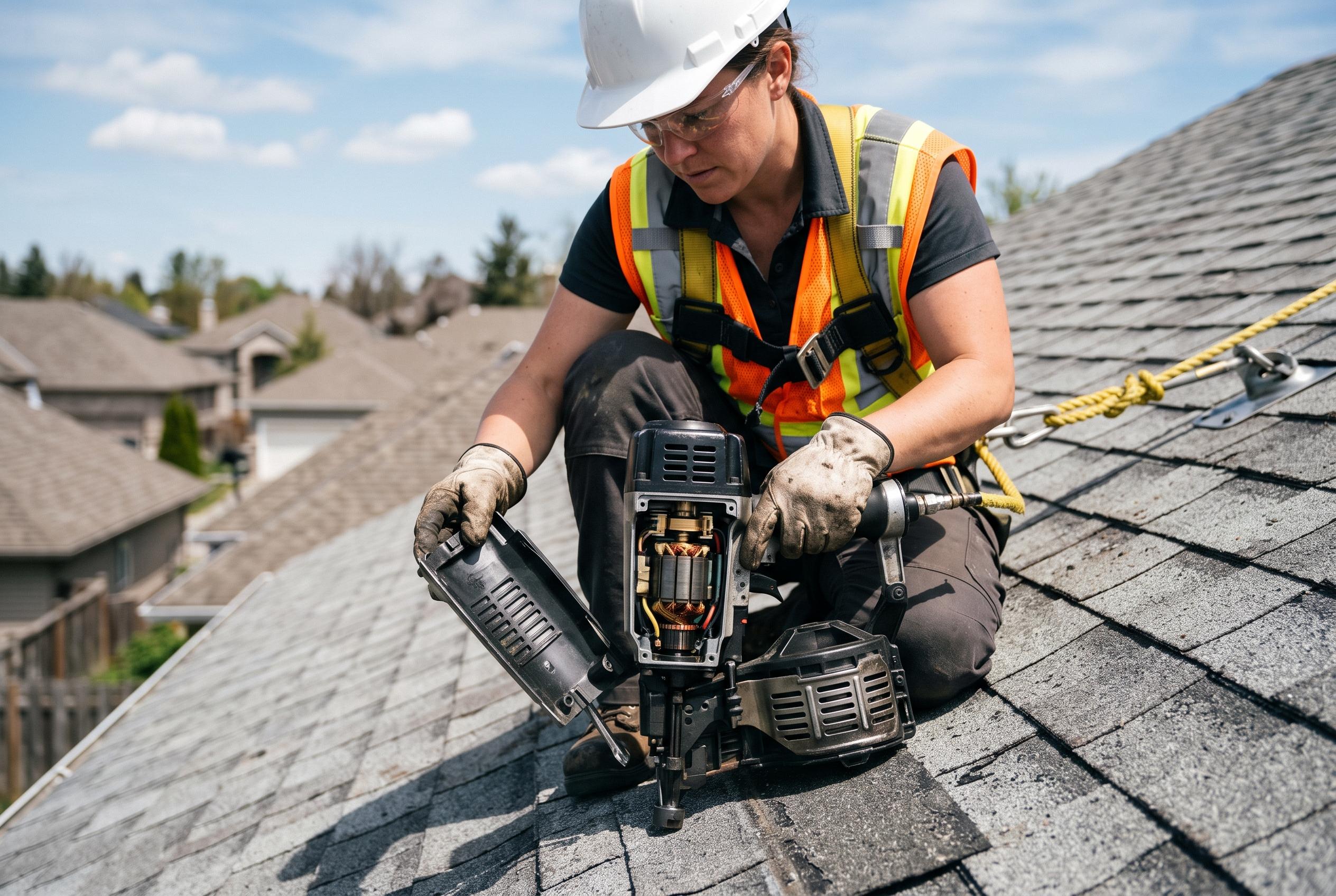
On brushed corded tools, carbon brushes are usually the first part to check. They carry current to the rotating armature, and they are designed to wear. In dusty roofing work, especially with grinders and chasers, that wear can accelerate as fine debris enters the motor housing. Typical warning signs include heavier sparking, loss of power under load, a hot, acrid smell and a tool that comes back to life when tapped. Replacement brushes are inexpensive, but they need to match the exact model and should be fitted as a pair. Industry guidance on brush function and wear says delayed replacement can lead to overheating, greater sparking and eventual motor damage.
Overheating is the next frequent cause. Fine dust from slate, tile and fibre-cement can clog the vents that are meant to cool the motor, trapping heat inside the housing until the tool shuts itself down. SATER and CivilDigital both note that blocked airflow is a major reason power tools stop after sustained use, particularly in dusty environments. If the casing feels unusually hot, or the tool cuts out only after a prolonged run, cleaning the vents with compressed air and allowing the machine to cool fully is a sensible first step. That routine is simple, but on roofing jobs it should be treated as part of daily care, not an occasional tidy-up.
A damaged mains lead can produce the same symptom without any fault in the tool itself. A crushed section, nicked sheath or internal break can interrupt the circuit as the cable is moved, bent or pulled tight. OSHA advises close inspection of cords and plugs before use, precisely because electrical incidents often begin with worn or damaged accessories rather than the motor body. If power returns when the lead is repositioned, or if the fault is concentrated near the plug or tool entry point, the safest response is replacement. Taping over exposed conductors is not a credible repair on a roof.
Cordless tools add a different variable: battery health. A pack that has aged may still show charge, yet fail to deliver enough current under load. The result is familiar to crews: the tool starts normally, then fades or cuts out when pushed into a cut or driven hard. If the same machine behaves properly with another battery from the same platform, the pack is the problem. That is usually quicker to establish than stripping the tool down. Switches can fail too, especially when dust, heat and repeated mechanical use wear the contacts or prevent a clean connection. North Penn Now’s report on switch failure notes that heavy use, debris infiltration and heat build-up all shorten switch life.
For roofers, the practical point is that intermittent stoppages should be approached in a set order: brushes first on brushed tools, then vents, cable or battery, and finally the trigger switch. That method saves time and avoids unnecessary replacement of the whole machine. It also reflects what the safety guidance and repair notes agree on: most faults are caused by wear, dust or connection problems rather than total motor failure. In other words, the cheapest part in the tool is often the one that stops the job.
Disclaimer: This content is intended for informational purposes only. Readers are advised to exercise their own judgement, conduct due diligence, or consult a qualified expert before acting on any information provided.