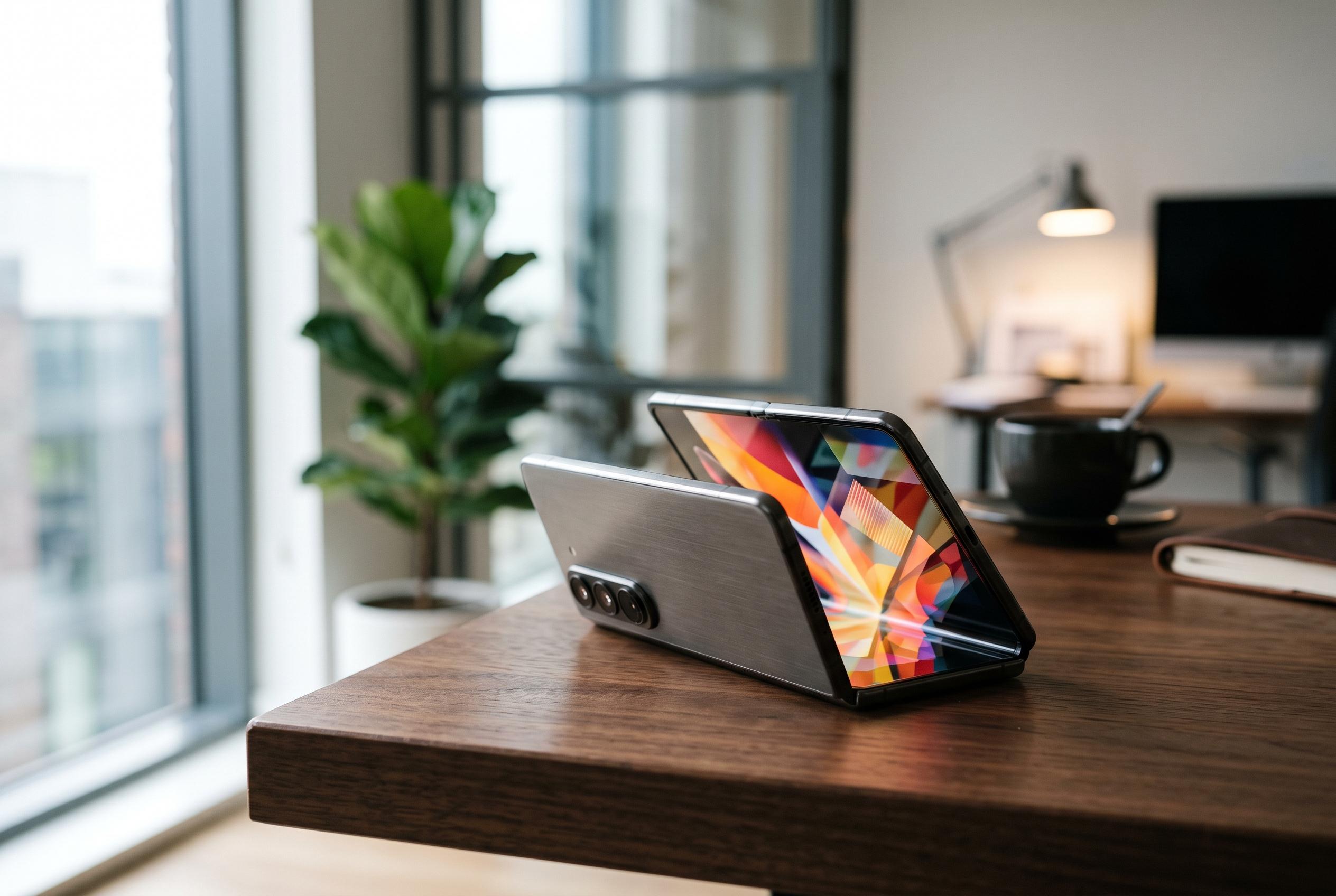

Apple introduces the iPhone Duo as its first foldable device, competing directly with Xiaomi’s 18 Fold through a focus on software integration and ecosystem coherence, despite hardware differences and pricing strategies.
Apple’s entry into foldables has arrived in the form of the iPhone Duo, and its first challenge is not Samsung but Xiaomi. On paper, the Xiaomi 18 Fold looks like the more aggressive hardware play: lighter, brighter, faster to charge and fitted with a more ambitious camera system. Yet Apple is leaning on a different set of strengths, including tighter software integration, longer update support and the sort of ecosystem coherence that still persuades many buyers to pay more.
The two devices are closely matched in size, both opening to roughly a 7.6-inch inner display. Apple’s panel is the sharper of the pair, with higher pixel density and a cleaner bezel layout, while Xiaomi counters with far greater peak brightness, which should help outdoors and in harsh light. Both use adaptive high-refresh displays, so the basic scrolling and animation experience should be smooth either way. What separates them is less the category and more the priorities: Apple is optimising for consistency, Xiaomi for raw visibility.
That divide continues in performance. The iPhone Duo’s A20 Pro, built on a 2nm process, appears to hold a clear lead in single-core speed, which is the type of performance that shapes app launches and many everyday tasks. Xiaomi’s XRing O3, built on 3nm, narrows the gap in multi-core workloads and posts stronger overall synthetic scores, suggesting it may cope better with heavy multitasking on a foldable screen. In practical use, the difference is likely to be smaller than the benchmarks imply, but Apple still looks stronger for bursts of CPU and GPU-heavy work.
The clearest hardware win for Xiaomi is the camera array. The 18 Fold adds a 200MP main sensor and a dedicated telephoto lens, giving it far more flexibility for zoomed shots and reframing. Apple’s Duo is simpler, with dual 48MP cameras and a stronger emphasis on image consistency, computational photography and video features such as 4K at 120fps. TechRadar noted that Apple’s foldable also lacks a telephoto camera and Face ID, though it still impressed on durability and overall polish.
Battery and charging further tilt the hardware argument towards Xiaomi. The 18 Fold carries a larger cell and supports faster wired and wireless charging, while also offering bypass charging for longer gaming or navigation sessions. Apple’s battery life claims are still substantial, with the company targeting up to 24 hours in one account and as much as 44 hours depending on usage in another product summary, but its charging speeds remain conservative by comparison.
Design is another point in Xiaomi’s favour. The 18 Fold is noticeably lighter, which matters on a large folding device, though Apple counters with a titanium frame, Ceramic Shield 2 and IP68 resistance. That gives the Duo the edge in perceived toughness and water protection. The bigger strategic distinction, however, is software. Apple is tying the Duo tightly into iOS 27, with foldable-specific multitasking and broad compatibility across its services, while Xiaomi’s Android-based approach will depend more heavily on app optimisation and update policy. For many buyers, that may matter more than the spec sheet.
Pricing makes the comparison sharper still. Apple has set the Duo at $1,999, while Xiaomi’s 18 Fold lands lower in China and is positioned as the better value on raw hardware. That value case is why enthusiasts have leaned so strongly towards Xiaomi in online comparisons, but it does not settle the broader question. Apple’s foldable is shaping up as the more complete platform, especially for existing iPhone users. Xiaomi’s looks like the better bargain for buyers who want maximum hardware at the lowest reasonable cost.
Disclaimer: This content is intended for informational purposes only. Readers are advised to exercise their own judgement, conduct due diligence, or consult a qualified expert before acting on any information provided.