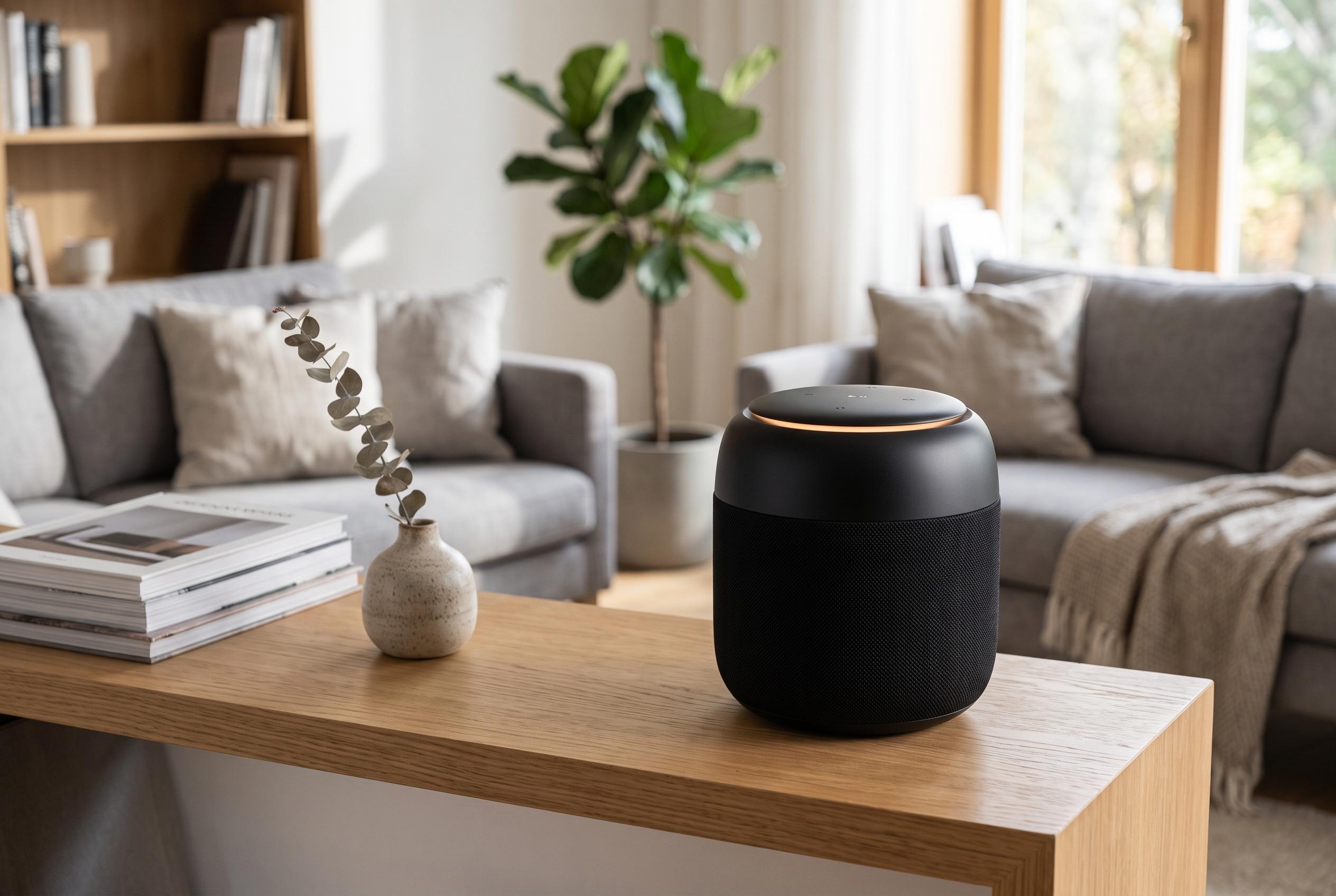

Sber’s latest SberBoom 2.0 not only upgrades sound quality but also introduces custom wake words using on-device speech recognition, redefining the smart speaker landscape with enhanced personalisation and local smart-home controls.
Sber’s SberBoom 2.0 is notable less for being another upgraded smart speaker than for changing one of the category’s longest-standing constraints: the wake word. According to iPhones.ru, users can replace the standard “Salyut” trigger with almost any chosen name after repeating it five times during setup, while the original wake word remains available as a fallback. The site says the feature uses an on-device speech-recognition model built with GigaChat technologies, so the speaker can separate the selected name from background noise without sending every request to the cloud.
That software change sits inside a much more ambitious piece of hardware. Reviews from iPhones.ru and IXBT describe SberBoom 2.0 as a substantial desktop speaker rather than a compact assistant, with a larger enclosure, a monochrome LED display and physical controls on the top panel. The display can show the time, weather, traffic information and simple animations, while the speaker’s muted, fabric-covered design is intended to look more like home audio than a plastic smart gadget. Both outlets also note that the device ships in dark and light grey finishes.
The audio hardware has been upgraded as well. iPhones.ru and CNews report a 50W system built around two 48mm full-range drivers, a 92mm woofer and two passive radiators. The result, according to both reviews, is a fuller low end, cleaner mid-range and much more headroom than the earlier model. iPhones.ru also says the four microphones remain effective even at higher volumes, which matters for a device designed to be heard across a room.
Sber has also leaned further into the smart-home role. The company’s product information says SberBoom 2.0 supports Zigbee and Matter over Wi‑Fi, allowing it to act as a hub without a separate controller. It can run some automation locally and still handle basic voice commands, alarms, timers and stored music when the internet is unavailable. The speaker also includes a motion sensor for simple automations, such as switching on lights or triggering spoken reminders as someone passes by.
GigaChat is presented as the layer that binds those functions together. iPhones.ru says the assistant now retains context more naturally, allows brief follow-on conversation without repeating the wake word and can be interrupted mid-response. The same review says users can choose from four voices and switch between informal and formal address. The speaker is priced at 21,990 rubles, according to both iPhones.ru and Sber’s product page, placing it squarely in premium territory. For buyers who want a serious wireless speaker as much as a home assistant, the appeal is clear: stronger sound, more local intelligence and a level of personalisation that the broader market still lacks.
Disclaimer: This content is intended for informational purposes only. Readers are advised to exercise their own judgement, conduct due diligence, or consult a qualified expert before acting on any information provided.