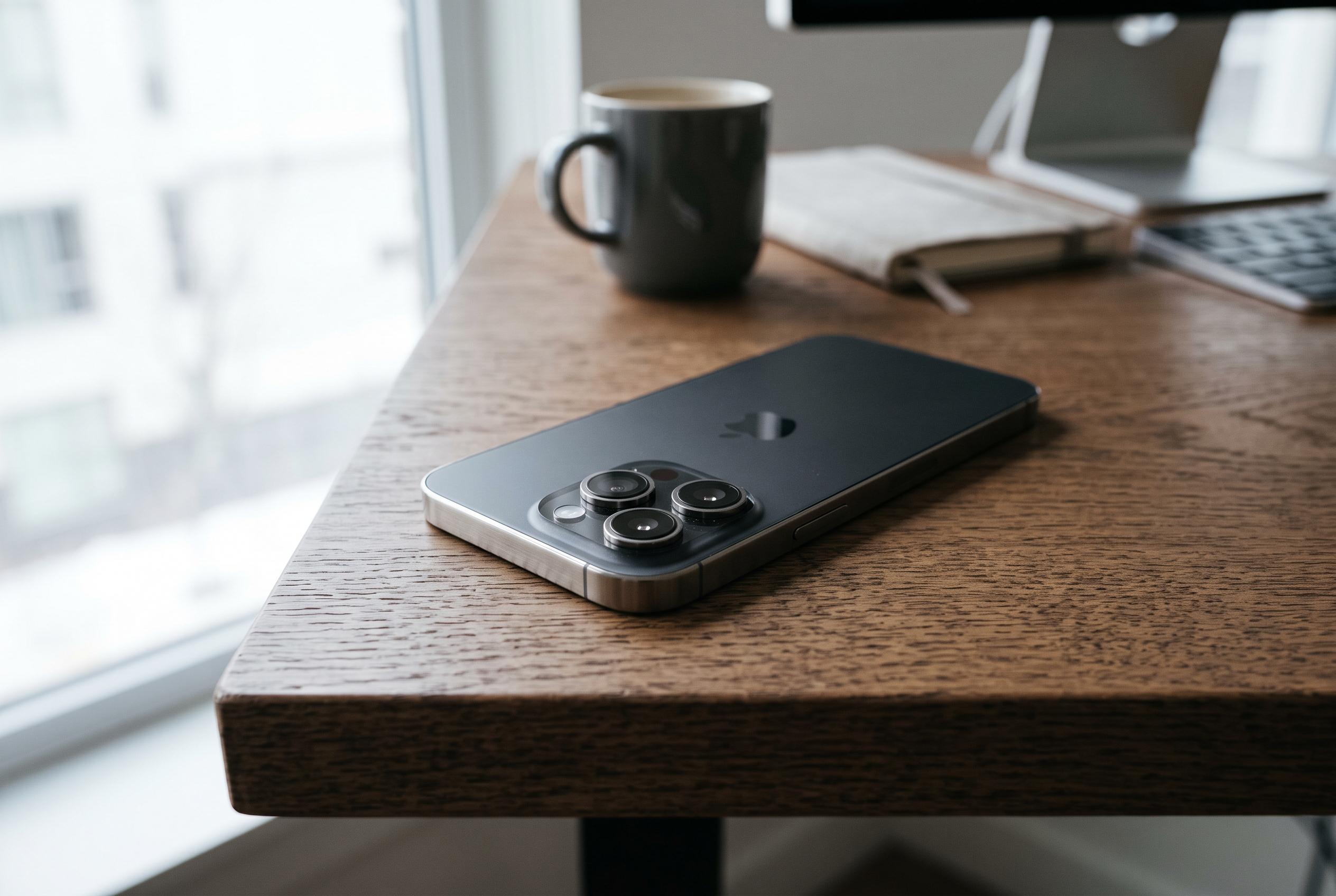

Early reviews of Apple’s latest iPhone 18 Pro highlight notable performance and camera improvements, though questions remain about whether these updates justify the higher price for existing users.
Apple’s latest Pro phones have drawn broadly favourable early verdicts from US reviewers, but the message is consistent: this is an iteration rather than a reinvention. According to Tom’s Guide, Gizmodo, PetaPixel and Engadget, the iPhone 18 Pro and iPhone 18 Pro Max are faster, cooler and more efficient than their predecessors, with the biggest gains coming in sustained performance, battery life and camera control. The stronger question for buyers is whether those improvements justify the higher starting price of €1,489.
At the centre of the upgrade is the A20 Pro, Apple’s first smartphone chip built on a 2nm process. Tom’s Guide reported that the new silicon delivered roughly a 25% uplift in single-core performance and a 28% rise in multi-core results versus the iPhone 17 Pro, while graphics performance also moved forward sharply. Tom’s Hardware separately reported leaked Geekbench figures showing the chip nearing 5GHz clock speeds and turning in scores that place it among the fastest mobile processors yet measured. In practice, reviewers said the new vapour chamber cooling system helps keep temperatures under control during heavy workloads, with Gizmodo noting that the phone remained comfortable even during demanding 4K video recording in hot weather.
Battery life has also edged up, though not by a dramatic margin. Tom’s Guide said the iPhone 18 Pro Max lasted 18 hours and 27 minutes in its standard web-browsing test, while the smaller Pro improved to 16 hours and 17 minutes. Gizmodo’s real-world use suggested stronger endurance still, with the Pro often finishing a long day with around a quarter charge remaining. Apple’s claimed 60W charging support also seems to make a practical difference: Tom’s Guide said the Pro reached 53% in 15 minutes, just ahead of Apple’s own estimate.
The main camera is the feature most likely to matter to enthusiasts. The 48MP Fusion camera now uses a variable aperture system that can switch between f/1.48, f/1.8, f/2.8 and f/4.0. Reviewers welcomed the added flexibility, especially for depth of field and exposure control, but the automation is not perfect. Gizmodo said the handset sometimes chose a wider aperture than expected, while PetaPixel found that the sharpest results were not always at full aperture. The new Pro controls are useful, bringing shutter speed, white balance and histogram tools into the Camera app, although reviewers also pointed out the lack of manual ISO control and the absence of support through the Camera Control button.
Apple has also trimmed the Dynamic Island by about a quarter and enabled support for three live activities at once, a change that sounds useful but may be more noticeable on paper than in daily use. Engadget suggested it rarely altered its workflow, although the reduced cut-out is a neat packaging change. The new C2 modem is another first for Apple, with support for mmWave 5G and lower claimed power use, but the early reviews did not yet provide enough connectivity testing to judge it properly.
There are limits to the upgrade story. The phones are heavier, the frame remains aluminium rather than titanium, and the ultrawide camera has not changed. That makes the iPhone 18 Pro feel, in review terms, like a refined but familiar flagship rather than a breakthrough model. For owners of an iPhone 17 Pro, the new device looks hard to justify unless camera flexibility or sustained performance is a priority. For users coming from an iPhone 14 Pro or older, though, the combined gains in speed, battery, charging and photography make a much stronger case.
Disclaimer: This content is intended for informational purposes only. Readers are advised to exercise their own judgement, conduct due diligence, or consult a qualified expert before acting on any information provided.