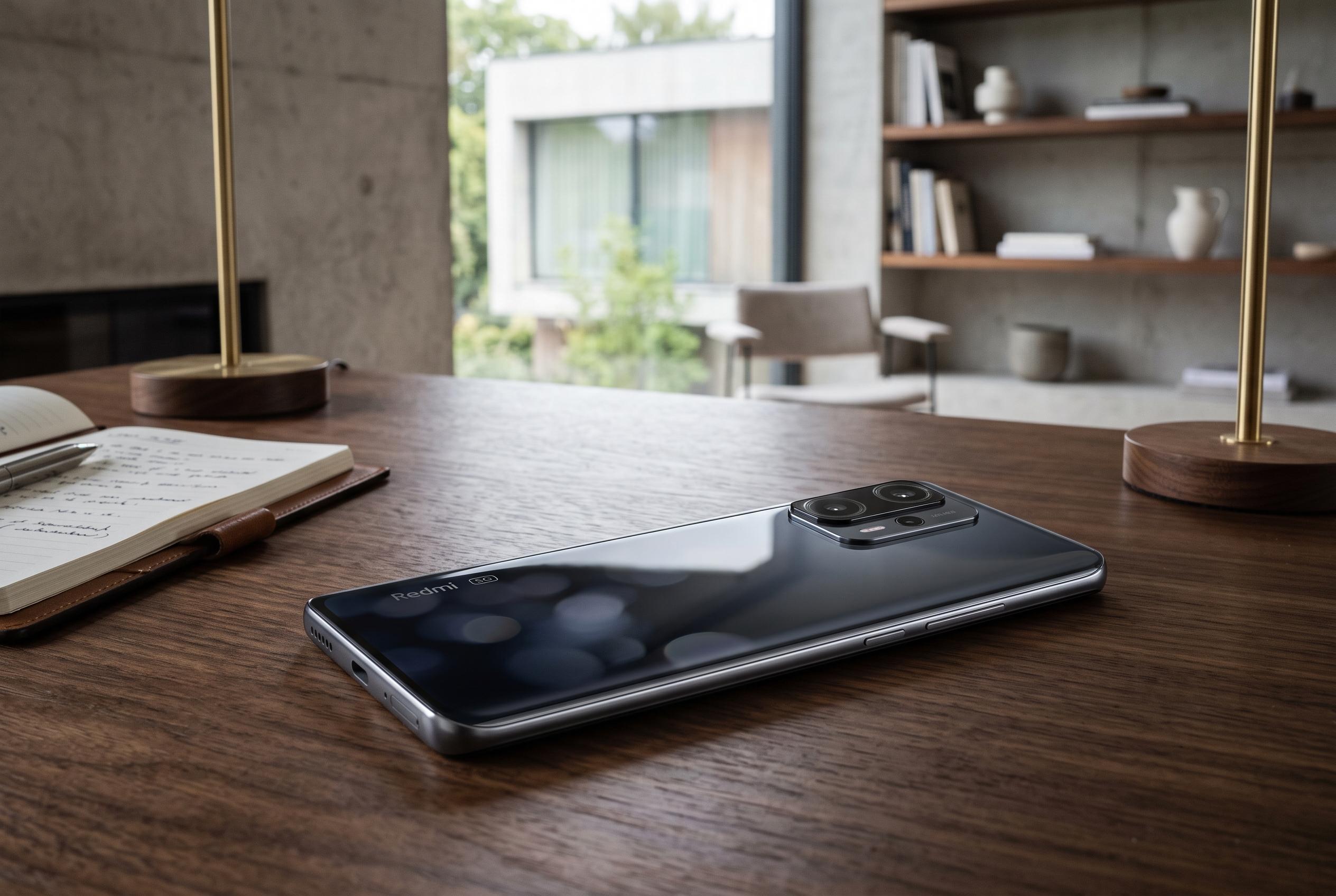

The new Redmi Note 17 5G introduces a larger display and longer battery life but sacrifices key features and faces criticism for its increased price and lowered specifications, signalling a shift in Xiaomi’s value proposition.
Xiaomi’s Redmi Note 17 5G arrives as a more awkward proposition than its predecessor. According to Frandroid, the phone is being launched at a higher price while giving up several features that helped define the Redmi Note line’s value-first appeal. Notebookcheck likewise places the device in the upper-budget bracket at around €380, underlining the shift away from the aggressively specified formula that made earlier models stand out.
The most obvious change is physical. Frandroid says Xiaomi has moved to a flatter, more angular design, paired with a much larger 6.99-inch AMOLED display and a 7,700 mAh battery. That larger cell has a clear cost: the handset is heavier at 225 g and thicker than the previous generation. Notebookcheck independently notes the same 6.99-inch, 120 Hz panel, as well as the Snapdragon 4 Gen 4 platform, 6 GB of LPDDR4x memory and 256 GB of storage.
On the screen itself, the device remains credible. Frandroid found colour accuracy to be strong in the standard profile, with usable brightness outdoors, even if it measured a notable decline versus the prior model’s peak output claims. The trade-off is a drop in colour depth from 12-bit to 8-bit, although that is unlikely to trouble most users outside demanding creative work. Notebookcheck’s assessment also points to smooth day-to-day use, which is consistent with a panel tuned for general consumption rather than premium display work.
Performance, however, is where the compromises become harder to ignore. Frandroid says the move from a Snapdragon 6-series chip to the Snapdragon 4 Gen 4 brings a clear step down, especially in graphics-heavy tasks, and its testing of Genshin Impact showed the phone struggling badly at higher settings. 91Mobiles reaches a similar conclusion, describing the handset as a little laggy in everyday use and better suited to light workloads than sustained heavy activity. The larger chassis appears to help thermals, but it does not make up for the lower-end silicon.
Photography and audio have also been pared back. Frandroid reports that Xiaomi has removed the ultra-wide camera, cut the main sensor from 108 megapixels to 50 megapixels and dropped optical stabilisation, while the front camera also falls to 16 megapixels. The site adds that stereo speakers are gone as well, leaving a single bottom-firing speaker with limited bass. Software is more modern, with HyperOS 3 based on Android 16 and a promise of four years of Android upgrades plus six years of security support, according to both Frandroid and 91Mobiles. Xiaomi is also offering a temporary launch rebate in France, but Frandroid argues that the discount only partly offsets the broader weakening of the spec sheet.
Disclaimer: This content is intended for informational purposes only. Readers are advised to exercise their own judgement, conduct due diligence, or consult a qualified expert before acting on any information provided.