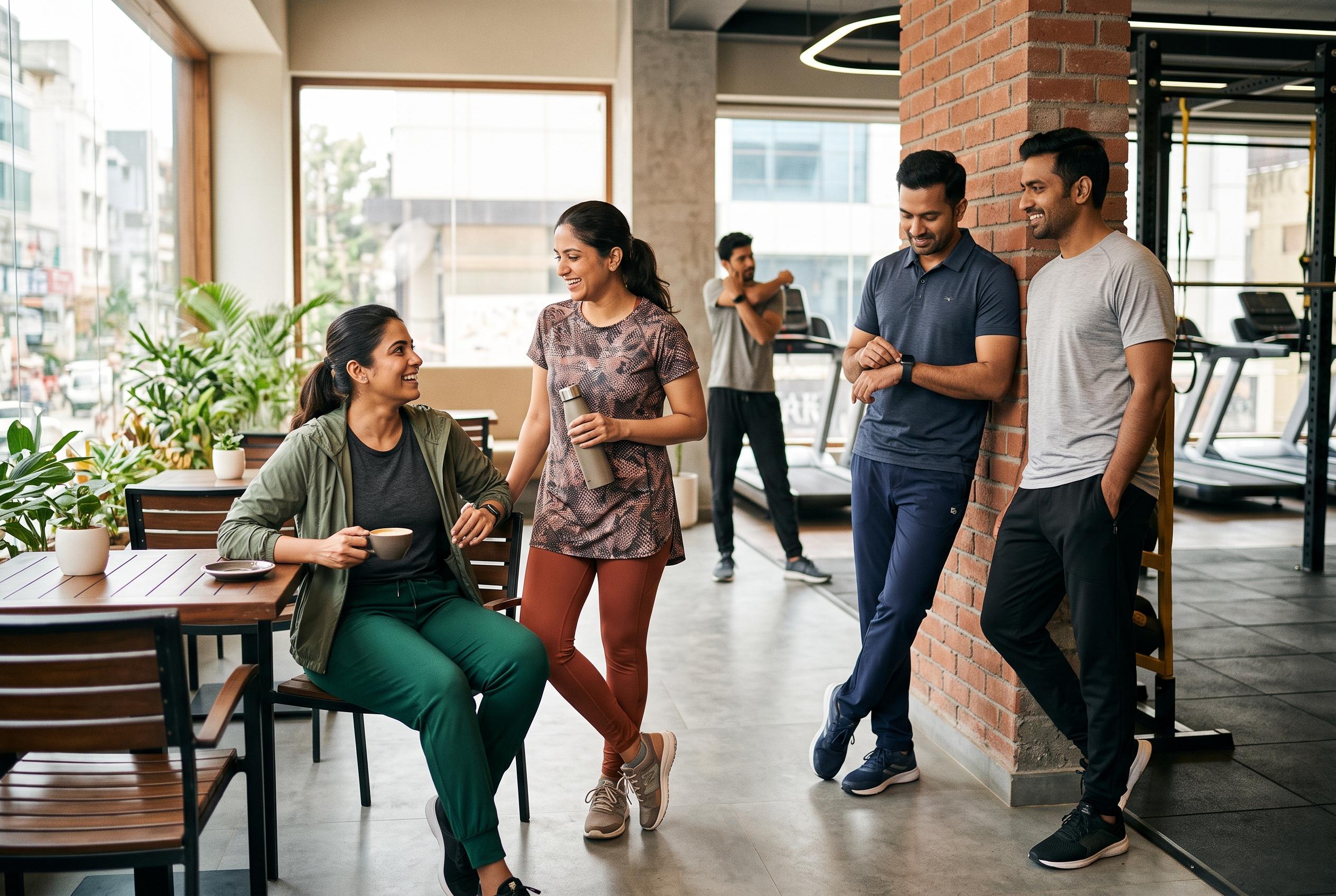

India’s athleisure sector is evolving into a practical and versatile category, blending performance with everyday style, driven by changing consumer habits and local adaptation.
India’s athleisure market is moving into a broader, more practical phase. Clothing once bought for training sessions is now being chosen for commutes, travel, walking, informal sport and everyday wear. The shift reflects a simple change in consumer behaviour: people want garments that can handle movement without looking strictly athletic.
That evolution is visible in market size as well as in product design. Euromonitor estimates India’s sportswear retail sales reached INR 824.1 billion in 2025, while other industry forecasts also point to steady growth over the rest of the decade. IMARC Group places the Indian athleisure market at USD 13,879.7 million in 2025, with expansion projected through 2034, and Grand View Research gives a higher 2025 estimate of USD 18,314.2 million, also forecasting strong growth. The differences reflect methodology, but both suggest sustained momentum.
What matters more for brands is that performance alone no longer defines the category. Consumers are weighing comfort, fit, appearance and versatility at the same time. Fabric choice, breathability, stretch and moisture management remain important, but they are now expected alongside day-long wearability and a cleaner, less obviously gym-focused look.
This is particularly significant for Indian women, where cut, sizing, support, opacity and climate suitability can determine whether a product works in real life. The commercial opportunity is increasingly about local relevance rather than direct imitation of global sportswear. Brands that adapt sizing, materials and silhouettes to Indian bodies and routines are better placed to compete.
New use cases are also widening demand. Walking groups, community fitness and sports such as pickleball and padel are creating occasions beyond the traditional gym. That makes items such as skorts, flare trousers and structured tanks more commercially useful, because they can move between parts of the day rather than serve a single purpose.
The broader market is becoming more competitive. Euromonitor says the sector is moderately concentrated, with Puma, Adidas and Skechers among the leading players, while newer entrants such as lululemon are using partnerships to expand in India. At the same time, domestic labels including BlissClub are pushing inclusive, locally designed activewear. Industry reports also point to growing e-commerce, improving fabric technology and stronger health awareness as lasting drivers of demand.
For Indian athleisure, the boundary between sportswear and fashion is fading. The brands most likely to benefit are those that treat fit, comfort and versatility not as added features, but as the product itself.
Disclaimer: This content is intended for informational purposes only. Readers are advised to exercise their own judgement, conduct due diligence, or consult a qualified expert before acting on any information provided.