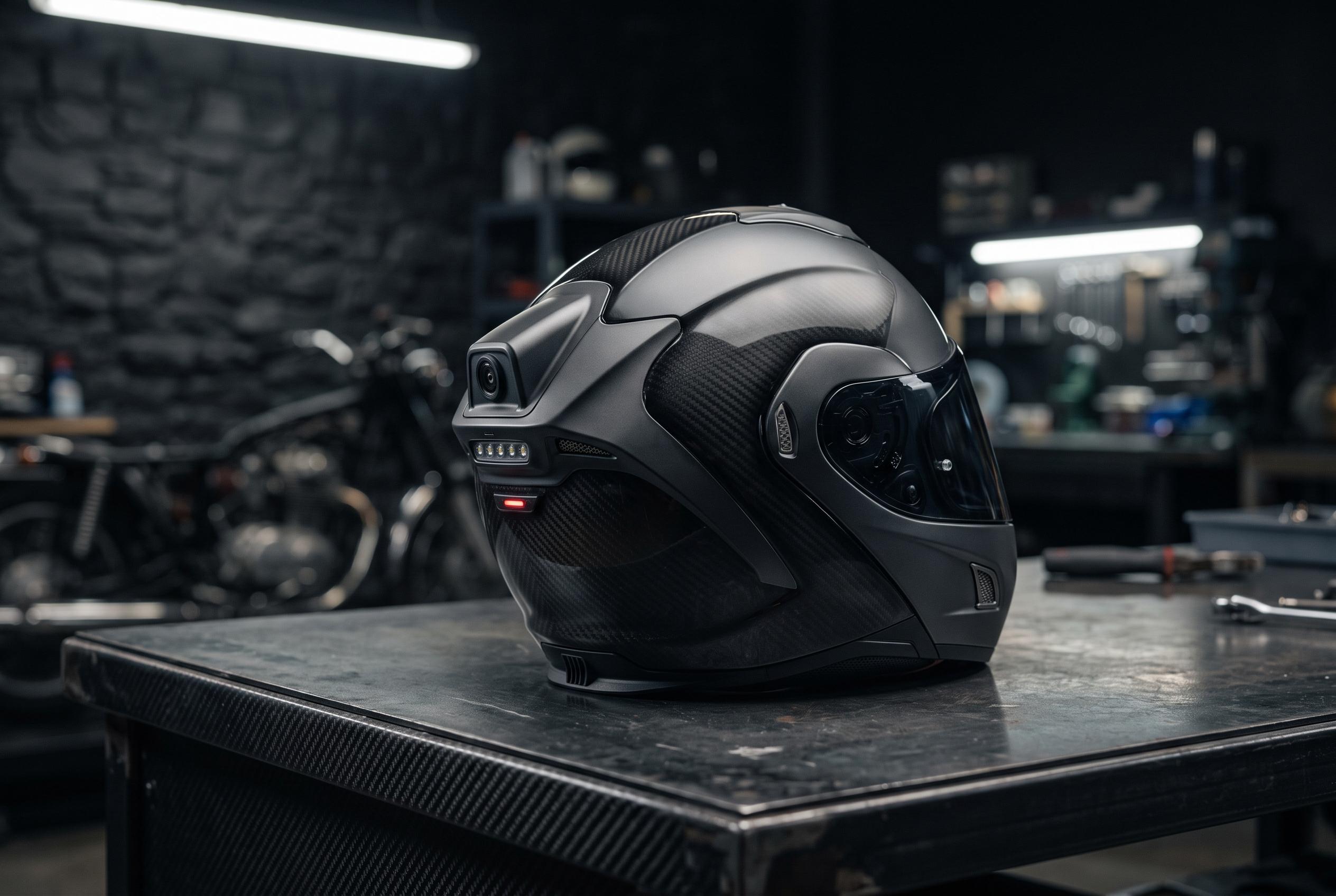

The latest smart helmets now combine front and rear recording, enhanced low-light sensors, weather resistance, and extended battery life, offering riders improved safety and footage clarity for touring and commuting.
Helmet-mounted rear cameras are becoming a practical addition for riders who want more than simple video capture. The strongest models in this category now combine front and rear recording, low-light sensors, weather sealing and battery lives long enough for touring or daily commuting. According to the guide, the main appeal is not just footage after an incident, but a clearer view of traffic and a more reliable record of what happened on the road.
Among the options highlighted, the MUFU V40S stands out for long-distance use. It pairs dual 2K cameras with an F1.7 aperture, a 4,000mAh battery and up to eight hours of recording, while the IP66 rating gives it a measure of protection against rain, mud and dust. The same broad specification applies to the MUFU V40T, which is aimed at top-mounted helmet setups. Both models are pitched at riders who want extended capture time without moving to a fixed bike-mounted system.
For riders who want something more ambitious than a camera, the E6+ goes much further. It adds a head-up display, GPS, rear-view camera support and wireless connectivity, with CarPlay and Android Auto integration for navigation and media. Industry reviews of similar integrated systems suggest that latency, display clarity and fit matter as much as feature count, because a smart helmet that is awkward to wear or slow to respond quickly loses its value on the road.
The LKT 2K front-and-rear camera is positioned as a more balanced choice for commuting. It uses a 2K front sensor and 1080P rear recording, alongside a Sony Starvis sensor for improved daylight performance, and a battery rated at roughly five to six hours. That makes it more suitable for routine use than for all-day touring, but it should be enough for most urban riders who want continuous dual-angle coverage.
Not every product in the field is a camera system. The Brake Free Helmet Light is a wireless rear-facing LED brake light rather than a recording device, but it addresses a different problem: visibility. That distinction matters. The guide treats it as a useful supplement for riders who want to be seen more clearly from behind, not as a replacement for a rear camera. For some users, that may be the simpler and more immediate safety upgrade.
Broader coverage in the category shows a clear trend towards integration. Reviews of the Forcite MK1S, Forcite’s earlier MK1 and the Livall MC1 Pro all point to the same direction of travel: cameras, intercoms, navigation and alert systems are being bundled into the helmet itself. The trade-off is greater complexity, higher cost and a stronger need to check helmet fit, ventilation and mounting quality before buying. For most riders, the best choice will still come down to whether the priority is recording, live rear-view awareness or a full smart-helmet package.
Disclaimer: This content is intended for informational purposes only. Readers are advised to exercise their own judgement, conduct due diligence, or consult a qualified expert before acting on any information provided.