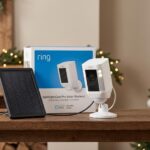
As smart home and wearable technology proliferate, experts warn that expanding digital environments and AI capabilities are heightening privacy concerns and vulnerability to surveillance and data misuse, prompting calls for stricter permission management and hardware breaches.
Privacy is no longer a question of whether a phone is listening in. As connected devices spread across homes, cars and workplaces, the larger issue is the expanding digital environment around each user. Smart watches, headphones, glasses, household assistants and modern vehicles all contain sensors, microphones or network connections that can collect, process or transmit data in different ways, sometimes continuously and sometimes only when a feature is activated. According to Al Arabiya, Egyptian cyber security specialists say this shift has moved the debate from the old idea of a single personal device to the much broader problem of an entire connected perimeter. [2], [7]
Experts quoted by Al Arabiya stress that the presence of a microphone does not automatically mean a device is recording everything nearby. Audio capture, storage, transmission and analysis are separate functions, each governed by different permissions and technical settings. The distinction matters because the real risk is not simply that a device can hear a conversation, but that voice data can be retained, searched, linked with other information and used in ways the user never intended. That is where the security discussion becomes more serious than a simple yes-or-no question about surveillance. [1], [2], [7]
The rise of artificial intelligence has made that risk more acute. Audio can now be transcribed, speaker identities can be separated, and speech can be analysed for context and intent. In parallel, voice-cloning tools have become sufficiently convincing to support impersonation and social engineering attacks. Security specialists told Al Arabiya that even a short recording can reveal a name, workplace, family links or routine details that appear trivial on their own but become far more useful once assembled into a broader profile. That is why small fragments of data have become strategically valuable. [1], [4], [6]
This is also why wearables and household devices are now treated as part of the attack surface in cyber security. LG has denied accusations that its smart televisions record users without consent, saying hands-free voice functions only activate on a wake word and that audio is not stored or sent unless that trigger is detected. The company also says its automatic content recognition feature relies on consent and can be disabled. Even so, the controversy shows how quickly confidence can be lost when users are unsure what is being collected, when, and for what purpose. [2], [7]
The same caution applies beyond televisions. Meta has filed a patent for a hardware-based privacy lock for smart glasses, an acknowledgment that software controls alone may not be enough to reassure users about cameras and microphones worn on the face. Researchers in the United States and Japan have also shown that some microphones can leak radio interference that may be captured and converted back into speech, raising the possibility of eavesdropping without physical tampering. Taken together, these developments point to the same conclusion: privacy now depends on careful permission management, timely updates, trusted software and a clear understanding of what each connected device can do. [5], [6], [3]
Disclaimer: This content is intended for informational purposes only. Readers are advised to exercise their own judgement, conduct due diligence, or consult a qualified expert before acting on any information provided.