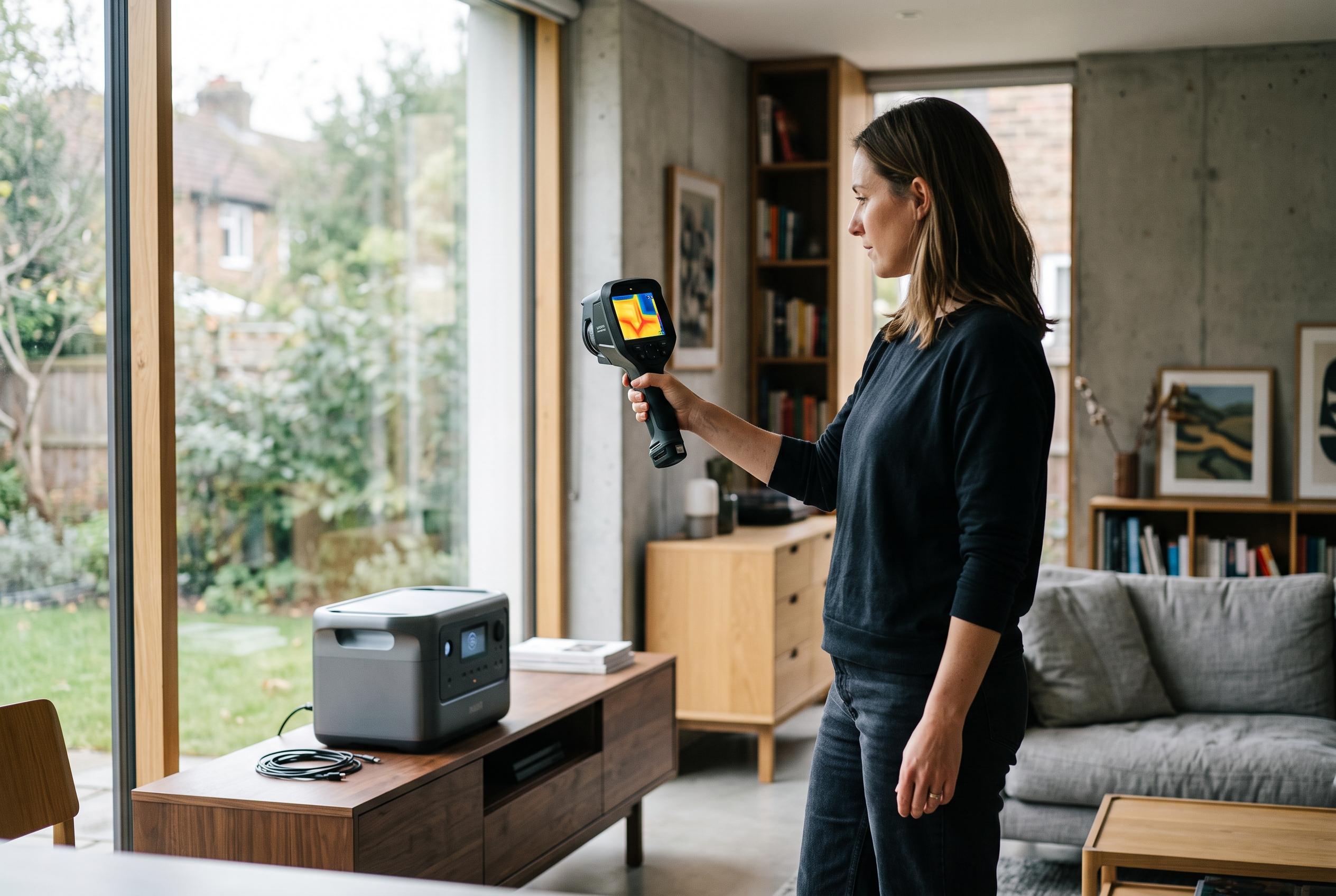

From thermal imaging cameras to portable power stations, innovative consumer devices are helping households identify waste and optimise energy use in response to rising bills, though long-term savings depend on behavioural changes and retrofit investments.
Rising household energy bills are pushing more people to look for practical ways to cut consumption rather than simply endure higher costs. The most effective approach is often the least glamorous: reducing demand at the source. In that context, a handful of consumer devices can make a measurable difference by exposing waste, shortening daily routines or shifting energy use to cheaper periods.
One of the most useful purchases is a thermal imaging camera, particularly a smartphone-connected model. These devices make hidden heat loss visible, which can help identify draughts, missing insulation, air leaks around windows or doors, and problem areas in heating and cooling systems. Home Depot’s listing for a USB-C thermal imager for Android devices describes it as a plug-and-play diagnostic tool for leaks, HVAC faults and electrical checks, while other buying guides note that compact thermal cameras are now widely available for DIY home inspections. TechRadar’s review of a newer dual-lens phone accessory also shows how far these devices have progressed, with higher-resolution imaging and multiple measurement modes.
Another useful category is the instant hot water dispenser. Stiebel Eltron says its UltraHot model provides near-boiling water on demand and includes setback settings and an insulated tank to limit standby losses. The energy logic is straightforward: if you need hot water only in short bursts, heating it when required can be more efficient than boiling a kettle repeatedly or running the tap until it warms. A separate running-cost calculator for under-sink dispensers also highlights how insulation quality, tank size and temperature settings affect long-term operating costs.
Portable power stations paired with solar panels can serve a different purpose. Rather than directly cutting a home’s base electricity load, they can help shift when and how power is used. In practice, that can mean charging devices from stored solar energy, avoiding generator fuel during outages or taking advantage of lower off-peak electricity tariffs. For households on time-of-use plans, this kind of battery backup can move small but frequent loads, such as phones, laptops and gaming devices, away from expensive peak periods.
Air circulation is another area where relatively modest equipment can reduce the strain on heating and cooling systems. Ceiling fans remain one of the simplest examples, because they use very little electricity while helping rooms feel warmer in winter and cooler in summer. Battery-powered floor fans go a step further by adding flexibility, especially in rooms without overhead fans. The underlying benefit is not dramatic on a single bill, but it is cumulative: every device that helps air move more effectively allows HVAC systems to run less often, and that is where the savings begin to add up.
The larger point is that these purchases do not replace a serious retrofit or a full solar installation. They are incremental tools that change behaviour, reduce waste and make energy use more visible. As the article notes, the pay-off is rarely immediate. But for households trying to make a dent in long-term costs, the right technology can still be part of the answer.
Disclaimer: This content is intended for informational purposes only. Readers are advised to exercise their own judgement, conduct due diligence, or consult a qualified expert before acting on any information provided.